
Ruptured Ectopic Pregnancy Surgery: What Happens Inside OT
Dr Mannan Gupta
Medically Reviewed by Dr. Mannan Gupta On July 13, 2026
There is a very specific kind of fear that brings a woman into our emergency room: sudden, one-sided pain; a racing pulse; and a sense that something is deeply wrong.
If you or someone you love is facing ectopic pregnancy surgery in New Delhi right now, I want you to know this: what feels like the scariest moment of your life is also one we are trained, every single day, to handle with speed and precision.
Key Takeaways
- A ruptured ectopic pregnancy is a surgical emergency, but it is highly treatable when caught in time
- Laparoscopic surgery is now the preferred approach for most stable patients
- The decision to save or remove the fallopian tube is often made in the operating theatre itself
- Recovery is usually faster than patients expect, especially with minimally invasive surgery
- Future pregnancy is very much possible for most women after this procedure
What Actually Happens When an Ectopic Pregnancy Rupture Occurs?
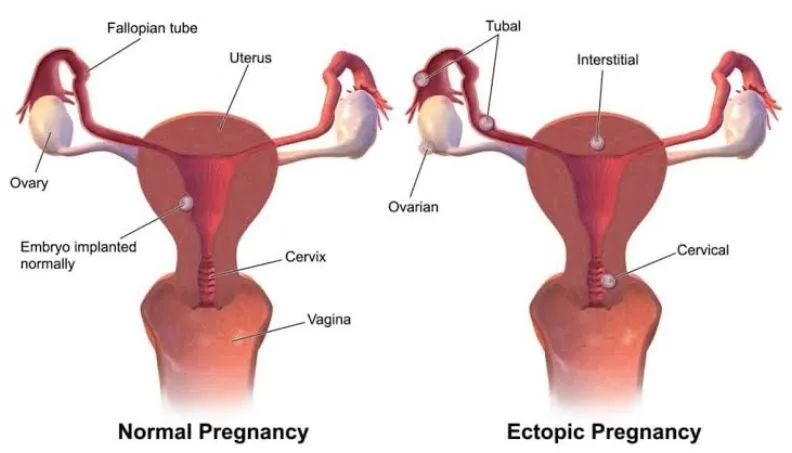
An ectopic pregnancy happens when a fertilised egg implants somewhere outside the uterus , almost always inside the fallopian tube, and rupture occurs when that tube can no longer stretch to hold the growing tissue.
The tube tears, and blood begins to leak into the abdominal cavity. This isn’t a slow process. Internal bleeding from a ruptured tube can be rapid and significant, which is exactly why this condition is treated as a true surgical emergency rather than something that can wait for a scheduled appointment.
For the patient, this often means going from mild discomfort to severe, one-sided abdominal pain within hours , sometimes with dizziness, fainting, or shoulder-tip pain, which is a classic but often misunderstood sign of internal bleeding irritating the diaphragm.
What Causes an Ectopic Pregnancy to Rupture in the First Place?
Most ruptures happen because the ectopic pregnancy simply outgrows the space it was never meant to occupy.
Several factors raise this risk: a history of pelvic infection, previous tubal surgery, endometriosis, or conception through assisted reproduction such as IVF, where the tube’s normal transport function may already be compromised.
Scar tissue from prior surgeries can also narrow the tube, trapping the embryo in a way that makes rupture more likely as it grows.
Understanding these risks before a rupture occurs — including the early warning signs and how hCG monitoring helps detect ectopic pregnancies before they become emergencies — is something every woman in this risk group should know.
Our companion guide on ectopic pregnancy after IVF: signs, risks and what happens when it ruptures covers this earlier stage of the condition in full, including what to watch for in the days following an embryo transfer.
It’s worth saying clearly: this is not something a woman causes or could have prevented through anything she did. Ectopic pregnancy is a structural and biological event, not a result of lifestyle choices.
Dr Mannan IVF Centre
Experience world-class fertility care with Dr. Mannan Gupta at the Best IVF Centre in Delhi
How Quickly Can Things Turn Serious, and What Are the Warning Signs?
The honest answer is very quickly, which is why we always ask patients to treat certain symptoms as non-negotiable reasons to come in immediately.
Sudden, severe abdominal pain on one side, particularly paired with lightheadedness, a rapid heartbeat, or fainting, should never be waited out.
Shoulder-tip pain, despite having nothing to do with the shoulder itself, is one of the most reliable signs of internal bleeding and should prompt an emergency visit, not a next-day appointment.
We’ve found that many patients delay coming in simply because the pain doesn’t “make sense” to them , it’s in the belly, so why would the shoulder hurt? Understanding this connection ahead of time can genuinely save critical hours.
How Do We Confirm It's a Rupture Before Going Into OT?
Before any surgery, we confirm the diagnosis using a combination of clinical examination, ultrasound, and blood tests , usually within minutes, given the urgency.
A transvaginal ultrasound helps us look for free fluid in the abdomen (a sign of internal bleeding) and confirm that the pregnancy is not inside the uterus. Blood tests, particularly beta-hCG levels, along with a check of blood pressure and pulse, tell us how unstable the patient is and how urgently we need to move.
In a genuinely ruptured case with signs of significant internal bleeding, we rarely wait for further confirmation , the patient is stabilised with IV fluids, and preparation for surgery begins in parallel with diagnosis, not after it.
What Actually Happens Inside the Operating Theatre?
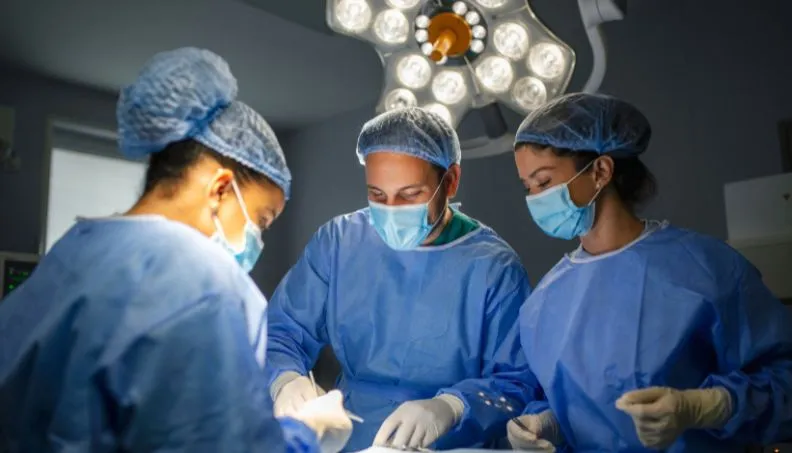
Inside OT, our first priority is always to stop the bleeding and stabilise the patient , everything else follows from that.
Under general anaesthesia, we typically proceed with laparoscopic surgery , small incisions, a camera, and specialised instruments , which allows less blood loss, less post-operative pain, and a noticeably faster recovery compared to traditional open surgery.
In cases where bleeding is severe and the patient is haemodynamically unstable, we may need to convert to open surgery (laparotomy) for faster, more direct control.
One decision patients are often surprised to learn happens during surgery, not before it: whether we remove the entire tube (salpingectomy) or preserve it by removing only the ectopic tissue (salpingostomy).
This depends on how damaged the tube is, how much bleeding has occurred, and the condition of the other tube , a judgment made in real time by the operating surgeon.
For women concerned about what these decisions mean for their future fertility, our Fertility treatment Surgery in New Delhi page explains the full range of surgical and post-surgical options available to protect and restore reproductive health.
What Does Recovery Look Like After This Surgery?
Recovery after laparoscopic surgery for a ruptured ectopic pregnancy is generally quicker than most patients expect , often a hospital stay of just one to a few days, followed by a few weeks of gradual return to normal activity.
Pain is usually well-controlled with medication, and most women resume light daily activities within one to two weeks.
We monitor hCG levels after surgery to confirm they’re falling as expected, which tells us no ectopic tissue was left behind.
Once physical recovery is complete, many women begin asking an important question: what does my remaining ovarian reserve look like, and what does that mean for IVF or future conception?
An AMH test is the most practical starting point for answering that. Our guide on what AMH levels mean and how they predict IVF success explains how to interpret your result after a procedure like this and what it means for your options going forward.
Emotional recovery, however, often takes longer than physical recovery and we treat that as equally important.
How Does This Experience Affect a Woman and Her Family Emotionally?
This is the part that’s rarely spoken about enough: this isn’t just a surgery, it’s the sudden loss of a pregnancy, often within hours of learning about it.
Many women carry a quiet guilt , wondering if they missed a sign, or could have come in sooner. This guilt is almost never warranted. Rupture is a biological event that unfolds on its own timeline, not a failure of attention.
Families in the waiting room, too, often experience real fear watching a loved one go into emergency surgery with little warning, acknowledging that fear, rather than rushing past it, is part of genuine care.
We encourage every patient and family to ask questions openly during recovery, including about grief, future fertility, and timing of trying again , these conversations matter as much as the surgery itself.
Can Future Pregnancies Be Protected from This Same Risk?
While no method guarantees an ectopic pregnancy won’t happen again, several steps meaningfully lower the risk and improve outcomes if it does.
Prompt treatment of pelvic infections, careful management if you conceive through IVF, and an early confirmatory ultrasound in your next pregnancy , ideally between 5 to 7 weeks , allow us to confirm the pregnancy’s location well before any risk of rupture.
For women who’ve had one tube removed, natural conception with the remaining tube remains very much possible, and IVF offers an additional path when needed and because IVF transfers embryos directly into the uterus, it bypasses the fallopian tubes entirely, making it a particularly relevant option after tubal surgery.
You can learn more about what that pathway looks like through our IVF Treatment in New Delhi page, including what to expect when planning a cycle following a previous ectopic pregnancy.
Final Thoughts
A ruptured ectopic pregnancy is frightening precisely because it moves fast , but that speed is matched, step for step, by how quickly it can be treated when caught in time.
From diagnosis to OT to recovery, every stage of this journey is built around one goal: getting you safely through it, with your long-term health and future fertility protected as much as possible.
If you’re facing this right now, know that you are not alone in it, and that recovery , physical and emotional , is genuinely within reach.
If you have questions about ectopic pregnancy, laparoscopic surgery, or fertility after treatment, our team at Dr. Mannan IVF Centre is here to talk through it with you directly.
You can reach us and learn more at drmannanivfcentre.com , serving patients across New Delhi and nearby areas with the urgency and care this condition deserves.
Frequently Asked Questions
Can an ectopic pregnancy be missed on an early ultrasound?
Yes, in very early pregnancy the ectopic tissue can be too small to see clearly, which is why we sometimes repeat scans a few days apart along with hCG tracking. This is a normal part of confirming diagnosis, not a sign something was overlooked.
Will I definitely need surgery, or can medication work instead?
Medication like methotrexate can work for early, unruptured, and stable cases, but once rupture and internal bleeding occur, surgery becomes necessary. The choice always depends on how stable you are and how far the pregnancy has progressed.
Can I still get pregnant naturally with only one fallopian tube?
Yes, many women conceive naturally using just one healthy tube, since the remaining tube and ovary continue functioning normally. Your individual chances depend on the health of the remaining tube and ovary.
How soon can I try to conceive again after this surgery?
Most doctors recommend waiting for one to two normal menstrual cycles before trying again, giving your body time to heal and hCG levels to return to zero. Your specific timeline should always be confirmed with your treating doctor.
Does having had an ectopic pregnancy mean I'll have another one?
Not necessarily, though the risk is somewhat higher than for someone who hasn’t had one before. Early ultrasound confirmation in your next pregnancy helps catch any recurrence well before it becomes an emergency.
Is laparoscopic surgery safe for someone who is already unstable from blood loss?
It depends on the degree of instability , significantly unstable patients may need open surgery (laparotomy) for faster bleeding control. Your surgical team makes this call in real time based on your vital signs during the procedure.
Will this affect my ability to do IVF in the future?
No, having had an ectopic pregnancy or even losing one tube does not prevent future IVF treatment. In fact, IVF can bypass the fallopian tubes entirely, which is often a reassuring option for women in this situation.
How much blood loss is considered dangerous in a ruptured ectopic pregnancy?
Blood loss becomes dangerous once it starts causing a drop in blood pressure, rapid heart rate, or dizziness, indicating the body is struggling to compensate. This is exactly why symptoms like fainting or severe dizziness require emergency care immediately.
Can stress or exercise cause an ectopic pregnancy to rupture?
No, rupture happens due to the physical growth of tissue inside a tube not built to hold it, not because of stress, exercise, or anything the patient did. This is a structural issue, not a behavioral one.
Will I have visible scars after laparoscopic surgery?
Laparoscopic surgery typically leaves only a few small scars, usually under a centimetre each, which fade significantly over time. This is one of the key advantages over traditional open surgery, which requires a larger incision.
