

Dr Mannan Gupta
Medically Reviewed by Dr. Mannan Gupta On May 13, 2026
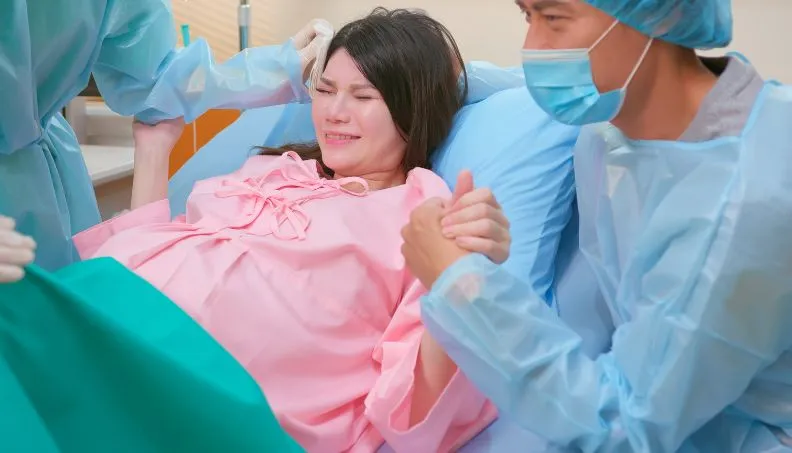
No — episiotomy is not always necessary during normal delivery, and routine episiotomy is no longer recommended by the World Health Organization or major obstetric guidelines worldwide.
It is a surgical procedure that should be used selectively, only when there is a clear clinical need — not as a default step in every vaginal birth.
At Dr. Mannan IVF Centre, New Delhi, Dr. Mannan Gupta, Obstetric and IVF Specialist, addresses this question with every expectant mother during birth planning. Understanding what an episiotomy is, when it is genuinely needed, and when it is not, is a vital part of preparing for Normal Delivery treatment.
Key Takeaways
- Routine episiotomy is medically outdated and not recommended by WHO or ACOG
- It is a surgical cut made at the vaginal opening — performed only when clinically justified
- Selective episiotomy leads to fewer complications than routine use
- Natural tearing, in many cases, heals better than a surgical incision
- Perineal massage and proper pushing technique can reduce the need for episiotomy
- Always discuss your birth preferences with your doctor before delivery
What Exactly Is an Episiotomy and Why Was It Done Routinely?
Episiotomy is a surgical incision made in the perineum — the tissue between the vaginal opening and the anus — during the second stage of labour, just before the baby’s head crowns.
For decades, it was performed routinely under the belief that a clean surgical cut healed better than a natural tear, prevented severe perineal trauma, and protected the baby from prolonged head compression.
That thinking has since been overturned by evidence. A landmark Cochrane review involving over 5,000 women found that selective episiotomy results in less severe perineal trauma, less need for suturing, and fewer complications compared to routine episiotomy.
The practice of cutting every woman “just in case” is no longer defensible by current science.
When Is Episiotomy Actually Medically Necessary?
This is the question that matters most — and the honest answer is: in specific, clearly defined situations.
As a normal delivery doctor in New Delhi, I perform episiotomy only when the clinical picture genuinely calls for it. These situations include:
- Foetal distress — when the baby’s heart rate shows signs of compromise and delivery must happen immediately
- Instrumental delivery — when forceps or a ventouse (vacuum) is used, additional space is often required
- Shoulder dystocia — when the baby’s shoulder gets stuck after the head delivers, and urgent manoeuvres are needed
- Imminent severe tear — when the perineum is visibly about to sustain a significant third or fourth-degree tear that would be more damaging than a controlled incision
- Preterm delivery — in some cases, to reduce pressure on a premature baby’s fragile skull
Outside these indications, watchful management, perineal support, and guided pushing are far preferable to routine cutting.
Dr Mannan IVF Centre
Experience world-class fertility care with Dr. Mannan Gupta at the Best IVF Centre in Delhi
What Are the Types of Episiotomy and Which Is Safer?
There are two main types:
Mediolateral episiotomy — the incision is made at a 45–60 degree angle from the vaginal opening. This is the more commonly used type internationally and carries a lower risk of extending toward the anal sphincter.
Median (midline) episiotomy — the cut goes straight down toward the anus. While it is easier to repair, it carries a significantly higher risk of extending into the anal sphincter, causing third or fourth-degree tears with long-term consequences for bowel control.
Most evidence-based obstetric practice favours the mediolateral approach when episiotomy is genuinely needed.
Does a Natural Tear Heal Better Than an Episiotomy?
This surprises many patients — but yes, in most cases, a spontaneous perineal tear heals better than an episiotomy.
Natural tears tend to be superficial, irregular in shape, and follow the path of least tissue resistance. Surgical incisions, by contrast, cut through healthy tissue at a fixed depth and angle, often requiring more sutures and carrying a slightly higher risk of infection and pain during recovery.
Research published in the BMJ confirms that women who deliver without episiotomy — even with minor tears — report less perineal pain at 3 months postpartum and return to comfortable sexual activity sooner than those who had routine episiotomies.
This does not mean all tears are acceptable. Severe third and fourth-degree tears are serious injuries that affect the anal sphincter and rectal lining — but these are precisely the tears that skilled perineal support during delivery aims to prevent.
Worried about episiotomy or planning a normal delivery? Speak with Dr. Mannan Gupta and get a personalised birth plan that prioritises your comfort and safety. Dr. Mannan Gupta at Dr. Mannan IVF Centre, New Delhi.
How Can You Reduce the Chances of Needing an Episiotomy?
This is where preparation genuinely makes a difference — and it begins weeks before your due date.
Perineal massage, performed from 34–36 weeks of pregnancy, has strong evidence behind it. Studies show it reduces the likelihood of perineal trauma and episiotomy in first-time mothers by up to 10–15%. Your midwife or obstetrician can teach you the correct technique.
During labour itself, the following significantly influence outcomes:
- Pushing position — upright, lateral, or all-fours positions reduce perineal pressure compared to the traditional lithotomy (lying on your back) position
- Slow, controlled pushing — bearing down gradually during crowning, rather than in one forceful push, allows the perineum to stretch progressively
- Warm perineal compresses — applied by the midwife or doctor during the second stage, shown in trials to reduce severe tears
- Epidural management — for women choosing painless normal delivery, careful pushing guidance under epidural is essential, as reduced sensation requires more coached effort
The birth environment and your care team’s skill matter enormously here. At the best normal delivery hospital in New Delhi, active perineal management is a standard part of every delivery protocol — not an afterthought.
What Happens During Episiotomy Recovery?
If an episiotomy was performed or a tear occurred and required suturing, recovery is typically straightforward with proper care.
Dissolvable sutures are used in almost all cases — they do not need removal and dissolve within 2–4 weeks. Pain and swelling are most significant in the first 48–72 hours.
Practical recovery guidance includes:
- Apply an ice pack (wrapped in cloth) to the perineum in the first 24 hours to reduce swelling
- Keep the area clean and dry — rinse with warm water after using the toilet
- Avoid constipation with adequate hydration and fibre; straining puts direct pressure on the sutured area
- Avoid sitting on hard surfaces for extended periods in the first week
- Pelvic floor exercises (Kegel exercises) can begin within days of delivery and significantly speed up tissue healing and muscle recovery
Most women feel comfortable within 2–3 weeks. If pain worsens, there is discharge, or the wound looks inflamed, contact your doctor — wound infection, while uncommon, requires prompt treatment.
For those navigating their delivery options, it may be helpful to compare these considerations with our guides on What Happens Inside the OT During a C-Section or the safety profiles of VBAC versus Repeat C-Sections.
How Does Episiotomy Affect Long-Term Pelvic Health?
This is a concern that does not get enough attention in routine postpartum conversations.
Poorly placed or inadequately repaired episiotomies can contribute to dyspareunia (painful intercourse), perineal scar tissue, and in severe cases, pelvic floor dysfunction. These are not inevitable — but they are real risks when episiotomy is overused or improperly managed.
Episiotomy during childbirth, when performed by experienced hands with precise technique and meticulous repair, carries minimal long-term risk. The problem historically has been overuse, not the procedure itself.
Women who experience ongoing pain, urinary leakage, or discomfort months after delivery should seek evaluation — these symptoms are treatable and should never be dismissed as “normal after childbirth.”
Conclusion
Episiotomy is a tool — not a routine. When used selectively and appropriately, it is a safe and sometimes essential part of managing difficult deliveries.
When used without clear indication, it causes unnecessary pain, longer recovery, and preventable complications.
At Dr. Mannan IVF Centre, every birth plan is built around the individual woman — her history, her preferences, and what the clinical situation genuinely requires.
Our goal is always the least intervention necessary for the safest outcome possible.
If you are preparing for a normal delivery and have questions about episiotomy, perineal care, or your birth options, come speak with us. You deserve honest answers — not assumptions made on your behalf.
Frequently Asked Questions
1. Can I specifically request that no episiotomy be performed during my delivery?
Yes, and you should discuss this during your birth planning consultation. While your doctor cannot guarantee it in every situation — emergencies can override preferences — your wishes should be documented and respected unless there is an urgent clinical reason to proceed otherwise.
2. Is episiotomy more common in first-time mothers?
Yes. First-time mothers have less perineal elasticity and a longer second stage of labour on average, which historically led to higher episiotomy rates. However, with good perineal support and optimal pushing positions, many first-time mothers deliver without any incision or only minor superficial tears.
3. Does an episiotomy affect future pregnancies or deliveries?
Not significantly, if repaired well. Scar tissue at the episiotomy site is generally not a barrier to future vaginal delivery. However, your obstetrician will assess the scar during your next pregnancy as part of routine evaluation.
4. Is it true that epidurals increase the chance of needing an episiotomy?
The relationship is indirect. Epidurals can prolong the second stage of labour and reduce the urge to push effectively, which may increase the likelihood of instrumental delivery — and instrumental delivery does increase episiotomy rates. This is not a reason to avoid epidurals, but it does underscore the importance of active coaching during the pushing phase.
5. Why do some doctors still perform routine episiotomy despite the evidence against it?
This is a genuine and important question. Habits in obstetric practice change slowly, and some practitioners were trained in an era when routine episiotomy was standard. Additionally, in high-volume public hospitals with time pressure, episiotomy can feel like a faster solution than guided perineal support. Choosing a doctor who practices evidence-based obstetrics and discusses this with you beforehand is the most effective safeguard.
