

Dr Mannan Gupta
Medically Reviewed by Dr. Mannan Gupta On Aug 24, 2026
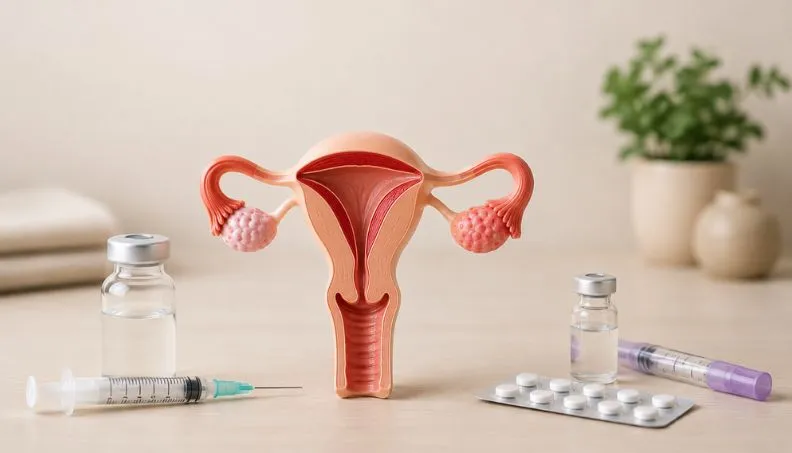
If your doctor has mentioned GnRH agonists or antagonists as a next step for your endometriosis and both terms sound almost identical, you’re not the only one confused by the naming.
I’m Dr. Mannan Gupta, IVF Specialist in New Delhi, at Dr. Mannan IVF Centre, and this is exactly the kind of question I sit down and explain properly with patients, because the difference genuinely matters for your treatment.
IVF injection treatment in Delhi is usually considered when standard hormonal options haven’t given enough relief, and the two work in meaningfully different ways.
Key Takeaways
- GnRH agonists and antagonists both lower estrogen, but they get there through opposite mechanisms
- Agonists often cause a temporary “flare” of symptoms before they start working, while antagonists don’t
- Antagonists are available as oral medication, unlike the injectable agonists
- These drugs also play a role in IVF stimulation protocols for women with endometriosis-related infertility
- Neither is automatically “better.” The right choice depends on your symptoms, your goals, and how you tolerate side effects
What's the Actual Difference Between GnRH Agonists and Antagonists?
Both drug types reduce estrogen to calm endometriosis activity, but they reach that result through opposite actions on your body’s hormone signals.
This distinction, along with how each fits into the broader landscape of hormonal endometriosis treatments, is reviewed in a published clinical review hosted by the NIH’s National Library of Medicine.
GnRH Agonists vs Antagonists at a Glance
Feature | GnRH Agonists | GnRH Antagonists |
How they work | Initially stimulate, then suppress pituitary hormone signals | Block pituitary hormone signals directly, no initial stimulation |
Onset of action | Slower, suppression builds over 1–2 weeks | Faster, more immediate suppression |
Flare effect | Yes, brief symptom worsening before improvement | No flare effect |
How it’s taken | Usually injectable (monthly) | Available as oral medication |
Typical use case | Longer-established option, often used pre-surgery or when other treatments haven’t worked | Newer option, increasingly used for pain and as part of IVF stimulation |
Side effect profile | Higher reported rate of side effects (hot flashes, bone density concerns) with prolonged use | Generally milder side effect profile, though still hypoestrogenic |
Role in IVF stimulation | Long-established protocol option, some data show higher retrieved oocyte numbers | Shorter stimulation duration, lower risk of ovarian hyperstimulation |
Reversibility | Reversible after stopping, effects wear off gradually | Reversible after stopping, effects wear off more quickly |
How Do GnRH Agonists Work, and What's the "Flare Effect" Everyone Mentions?
GnRH agonists work by initially over-stimulating your hormone system before shutting it down, which briefly makes symptoms worse before they improve.
- In the first week or two, agonists can cause a temporary surge in estrogen, sometimes making pain or bleeding briefly worse. This is the flare effect, and it’s expected, not a sign something’s wrong.
- After that initial phase, the drug puts your body into a low-estrogen, temporarily menopause-like state, which reduces endometriosis activity.
- These are typically given as injections, often monthly, rather than a daily pill.
- I always prepare patients for the flare effect in advance, because being caught off guard by it is far more unsettling than knowing to expect it.

Dr Mannan IVF Centre
Experience world-class fertility care with Dr. Mannan Gupta at the Best IVF Centre in Delhi
How Do GnRH Antagonists Work Differently?
GnRH antagonists block the same hormone pathway immediately, without triggering the flare effect that agonists cause.
- Because they work by direct blockade rather than initial stimulation, symptom relief tends to begin sooner and more predictably.
- Newer GnRH antagonists are available as oral medication, which many patients find more convenient than a scheduled injection.
- Since their action can also be reversed more quickly once stopped, some doctors find them easier to adjust if side effects become difficult to manage.
- These medications are a newer addition to endometriosis treatment, and I’ve found the lack of a flare phase genuinely improves the early treatment experience for patients.
Which One Actually Works Better for Endometriosis Pain?
Research suggests the two options perform differently depending on which specific symptom you’re trying to manage.
- Some research indicates GnRH antagonists may have an edge for non-menstrual pelvic pain and painful periods specifically, when compared with other hormonal treatments.
- Other findings suggest agonists may be more effective for pain during intercourse, a symptom that doesn’t always respond the same way as period-related pain.
- This tells us there’s no single “better” option across the board. The right choice depends on which symptoms are affecting you the most.
- I make this decision with each patient individually, based on their dominant symptoms rather than a blanket recommendation.
How Do These Drugs Factor In If You're Doing IVF for Endometriosis-Related Infertility?
Beyond symptom control, GnRH agonists and antagonists also play a direct role in the ovarian stimulation protocols used during IVF for women with endometriosis.
- In IVF, these medications are used to prevent your body from releasing eggs too early during the stimulation cycle, which is a completely different purpose from long-term symptom management.
- If endometriosis is affecting your fertility, this is worth raising directly so we can plan the right stimulation approach for your case, as part of the broader picture covered on our IVF Treatment in New Delhi page.
- Some research suggests the choice between an agonist-based or antagonist-based stimulation protocol may influence egg retrieval numbers and pregnancy outcomes in women with endometriosis, though findings vary and this decision is highly individual.
- Whichever protocol is used, close tracking through the cycle matters, something we’ve written about in Skipping This Procedure Can Reduce IVF Success.
- This is a separate clinical decision from using these drugs for pain management, and it’s one I discuss specifically when we’re planning an IVF cycle, not during general symptom treatment.
- If endometriosis is affecting your fertility, this is worth raising directly so we can plan the right stimulation approach for your case.
What Side Effects Should You Know About Before Starting Either One?
Both drug classes create a low-estrogen state, which comes with predictable side effects that are worth understanding upfront.
- Hot flashes are common with both, since they’re a direct result of lowered estrogen.
- Bone density can be affected with longer-term use, which is why these treatments are typically used for a defined period rather than indefinitely.
- Add-back therapy, meaning a small dose of hormones given alongside treatment, can help offset some of these side effects while keeping the main treatment effective.
- Agonists have generally shown a higher rate of side effects in research compared to some antagonist regimens, though individual experience varies, and this is something we monitor closely together.
If you’re weighing GnRH treatment for endometriosis symptoms, or trying to understand how it fits into an IVF plan, I discuss both pathways individually with patients at Dr. Mannan IVF Centre. You can reach the clinic directly at 97116 81986 to talk through what makes sense for your case.
Which Option Might Be Right for You?
The right choice comes down to your dominant symptoms, your comfort with injections versus pills, and whether fertility planning is part of the picture.
- If convenience and avoiding the flare effect matter most to you, an antagonist may be worth discussing.
- If your case has already been evaluated and an agonist-based protocol fits your specific IVF plan, that’s a separate, equally valid path.
- This isn’t a decision to make from general research alone. Your history, symptom pattern, and treatment goals all shape which option actually makes sense, and that includes how advanced your endometriosis is. We’ve covered how staging affects treatment choice more broadly in Endometriosis Stages Explained and Treatment by Stage.
Conclusion
GnRH agonists and antagonists both work toward the same outcome, calming down estrogen-driven endometriosis activity, but they get there differently, and that difference shows up in your day-to-day experience of treatment.
Whether you’re managing pain or planning an IVF cycle around your endometriosis, this is a decision worth making with a full explanation, not just a prescription handed over quickly.
You deserve to understand why a particular option is being recommended for you specifically.
Frequently Asked Questions
How long do you usually stay on a GnRH agonist or antagonist?
Treatment duration is typically limited to a defined period, often several months, and your doctor will reassess based on your symptoms and bone health over that time.
Can I switch from an agonist to an antagonist if the side effects are too much?
Yes, switching is possible and sometimes recommended if side effects are difficult to tolerate, and your doctor can guide that transition safely.
Do these medications affect my ability to get pregnant later?
No, their effects are temporary and reversible once you stop, and fertility typically returns after treatment ends.
Is add-back therapy always needed with these medications?
Not always, but it’s commonly used for longer treatment courses specifically to reduce bone density loss and hot flashes.
Are GnRH antagonists more expensive than agonists?
Cost can vary depending on the specific medication and formulation, so it’s worth discussing pricing directly with your clinic before starting treatment.
Can I take a GnRH antagonist if I've already tried birth control without success?
Yes, this is actually a common next step when standard hormonal options haven’t controlled symptoms adequately.
Will I go into early menopause permanently from these drugs?
No, the low-estrogen state they create is temporary and reverses once you stop the medication.
Do these treatments shrink endometriosis lesions or just manage pain?
They can reduce disease activity and sometimes shrink lesions to some degree, but like other hormonal therapies, they don’t eliminate the underlying disease permanently.
Can I use these medications before endometriosis surgery?
Yes, some doctors use them before surgery in specific cases to help manage disease activity beforehand, though this depends on your individual treatment plan.
Is one option safer for younger patients trying to preserve bone health?
This depends on treatment duration and individual risk factors, so bone health monitoring is typically part of the conversation regardless of which option is chosen.
Medical Disclaimer:
Content regarding GnRH therapies, endometriosis care, and IVF protocols is for informational and educational purposes only. It is not a substitute for clinical advice, diagnosis, or treatment. Always consult a qualified IVF specialist or gynaecologist for personalized medical guidance regarding hormonal medications and reproductive care.
