

Dr Mannan Gupta
Medically Reviewed by Dr. Mannan Gupta On Sept 24, 2026
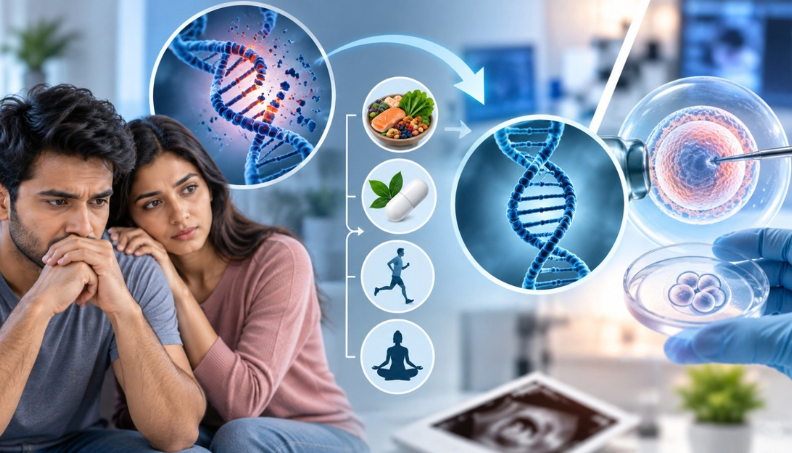
If your fertility report shows high sperm DNA fragmentation, you may immediately worry that IVF won’t work.
I often tell my patients that high sperm DNA fragmentation can sometimes be improved before IVF, but the right approach depends on what is causing the DNA damage.
As an IVF Specialist at Dr. Mannan IVF Centre, Delhi, I look at the complete fertility picture rather than treating one test result in isolation.
Key Takeaways
- High sperm DNA fragmentation doesn’t mean you cannot become a biological parent.
- Treating an underlying cause may improve sperm DNA quality in selected men.
- Lifestyle changes can support healthier sperm, but they don’t replace medical treatment when a specific condition is present.
- Improvement usually takes several weeks because sperm production takes time.
- IVF or ICSI may still be possible when DNA fragmentation remains elevated.
Can high DNA fragmentation be treated before IVF?
Yes, high sperm DNA fragmentation can sometimes be reduced before IVF, particularly when a reversible cause is identified.
Treatment may involve correcting lifestyle factors, managing a varicocele, treating an identified infection, addressing certain hormonal problems or changing the approach to sperm preparation.
A high result isn’t a verdict on your fertility. It is a reason to investigate why the sperm DNA is being damaged and whether anything can be corrected before treatment.
Research suggests that elevated sperm DNA fragmentation may be associated with poorer outcomes in some assisted reproduction settings, although results vary between studies and treatment types.
What causes sperm DNA fragmentation to become high?
Oxidative stress is one of the important contributors to sperm DNA damage. It occurs when damaging reactive molecules outweigh the body’s natural antioxidant defences.
Factors I consider during an evaluation include:
- Varicocele, or enlarged veins around the testicle
- Genital or reproductive tract infections
- Smoking and tobacco exposure
- Excess body weight and poor metabolic health
- Excessive heat exposure
- Certain illnesses or medications
- Increasing paternal age
A high result doesn’t automatically identify the cause. I review your medical history, examination findings, semen analysis and fertility history before deciding what should be addressed.

Dr Mannan IVF Centre
Experience world-class fertility care with Dr. Mannan Gupta at the Best IVF Centre in Delhi
How is high DNA fragmentation diagnosed?
Sperm DNA fragmentation is assessed through specialised semen testing.
Different laboratories may use tests such as SCSA, TUNEL, sperm chromatin dispersion or Comet testing.
These tests don’t all measure DNA damage in exactly the same way. This is why there isn’t one universal cut-off that can be applied to every laboratory and every testing method.
A routine semen analysis is also important. It evaluates sperm count, movement and shape, while DNA fragmentation looks at the integrity of the genetic material within sperm.
If you’re considering a sperm DNA fragmentation test in Delhi, I recommend discussing whether testing is appropriate and how the result could affect your treatment plan.
What treatments can lower DNA fragmentation before IVF?
Treatment should focus on the underlying cause rather than the DNA fragmentation number alone.
- Treating varicocele
A clinically important varicocele can affect sperm production and quality.
When appropriate, varicocele treatment may improve sperm parameters and reduce DNA fragmentation. This is supported by a meta-analysis hosted by the NIH’s National Library of Medicine, which found that varicocelectomy significantly reduced DNA fragmentation across the included studies. Not every man with a varicocele needs treatment.
Not every man with a varicocele needs treatment. I consider its clinical significance, fertility history and other findings before recommending an intervention.
- Treating infection
An identified infection may need appropriate medical treatment.
I don’t recommend taking antibiotics simply because a DNA fragmentation result is high. Treatment should be based on symptoms, examination and relevant investigations.
- Improving lifestyle factors
Smoking, excess alcohol, obesity and poor metabolic health can negatively affect sperm quality.
Stopping tobacco, maintaining a healthy weight, exercising regularly and managing metabolic problems can support healthier sperm.
Lifestyle changes may help, but they don’t guarantee that DNA fragmentation will return to a normal range.
- Antioxidant therapy
Antioxidants are sometimes considered when oxidative stress may be contributing to sperm damage.
However, research on antioxidant treatment is mixed, and there isn’t one supplement combination that I recommend for every patient.
I prefer to consider your overall health, diet, medications and fertility findings before recommending supplementation.
- Hormonal treatment
Some men with specific hormonal or testicular problems may benefit from medical treatment.
FSH treatment, for example, may be considered in selected patients after appropriate evaluation. Hormonal treatment isn’t a routine solution for everyone with high DNA fragmentation.
How long does it take to improve sperm DNA fragmentation?
Improvement generally takes several weeks to a few months because sperm production is a continuous process.
A new group of sperm takes roughly 10 to 12 weeks to develop. For this reason, when we treat a reversible factor, I may allow enough time for new sperm to develop before considering whether repeat testing is useful.
This doesn’t mean every couple should delay IVF for three months.
The decision depends on both partners. Female age, ovarian reserve, previous IVF outcomes and the reason for infertility can all affect whether waiting is appropriate.
What if DNA fragmentation remains high after treatment?
Persistent high DNA fragmentation doesn’t mean that IVF is impossible.
If reversible causes have been addressed but the result remains elevated, we may consider modifying the assisted reproduction strategy.
Depending on your circumstances, this can include:
- ICSI, where an individual sperm is injected directly into the egg
- Selected sperm-selection methods
- Adjusting sperm collection timing
- Testicular sperm retrieval in carefully selected cases
These approaches aren’t guaranteed solutions. I choose them based on your fertility history, previous treatment outcomes and the likely source of the sperm DNA damage.
Evidence for using testicular sperm or advanced sperm-selection methods in high-fragmentation cases remains mixed, so these options should be considered selectively.
Can high DNA fragmentation affect IVF success?
High sperm DNA fragmentation may be associated with poorer outcomes in some IVF and ICSI studies, but it doesn’t predict the outcome of an individual IVF cycle.
Studies have reported associations between elevated sperm DNA damage and outcomes such as pregnancy loss or reduced treatment success in certain groups.
We’ve covered a specific case where this pattern showed up in practice in If We Missed This… IVF Would Have Failed.
I never tell a patient that IVF will fail simply because their DNA fragmentation is high.
Egg quality, embryo development, female reproductive factors, sperm characteristics and the underlying cause of infertility all influence treatment outcomes.
Can high DNA fragmentation increase miscarriage risk?
Some research has linked elevated sperm DNA fragmentation with an increased risk of pregnancy loss, but a high result doesn’t prove that sperm DNA damage caused an individual miscarriage.
If you’ve experienced recurrent pregnancy loss, I recommend evaluating both partners and looking at all possible contributing factors rather than focusing on sperm DNA alone. Current guidance allows consideration of DNA fragmentation testing in selected cases of otherwise unexplained recurrent pregnancy loss.
Should you delay IVF because of high DNA fragmentation?
Not necessarily.
This is an important decision because time can matter in fertility treatment.
For example, if your partner has reduced ovarian reserve or reproductive age is an important factor, delaying treatment only to try to improve the DFI may not always be the best approach.
If a treatable male-factor condition has been identified, treating it first may be reasonable.
I make this decision by considering both partners rather than looking at the sperm report alone.
What can you do before IVF to support healthier sperm?
Start with the factors that you can change.
I generally advise patients to:
- Stop smoking and tobacco use
- Keep alcohol intake low
- Maintain a healthy weight
- Exercise regularly
- Eat a balanced diet
- Manage diabetes and other metabolic problems
- Avoid unnecessary heat exposure to the testicles
- Treat diagnosed infections
- Follow medical advice for a clinically relevant varicocele
- Take fertility supplements only when medically recommended
Don’t try to correct a high DFI by taking multiple supplements without medical guidance.
The goal is to improve overall sperm health, not simply to chase a particular laboratory number
When should you see an IVF specialist?
A fertility consultation is particularly useful if you have repeated IVF failure, recurrent pregnancy loss, unexplained infertility or other concerns about male fertility.
DNA fragmentation testing isn’t necessary for every man undergoing IVF. It is more useful when the result could influence the next treatment decision.
The goal isn’t simply to lower the DFI. The goal is to improve your overall reproductive prospects and choose the treatment approach that makes sense for you and your partner.
If repeated IVF failure, recurrent pregnancy loss, or unexplained infertility describes your situation, that’s when a DNA fragmentation result actually changes the treatment plan, and it needs a proper consultation to interpret. Book an Appointment with Dr. Mannan Gupta at Dr. Mannan IVF Centre, Delhi, or Call Now.
What should you expect during a fertility consultation?
Your doctor will usually interpret the DNA fragmentation result alongside your semen analysis and medical history.
Depending on your situation, the evaluation may include:
- Reviewing your previous fertility and IVF history
- Checking for factors such as varicocele or infection
- Reviewing medications and lifestyle factors
- Assessing other male fertility findings
- Considering the female partner’s reproductive factors
- Deciding whether treatment should happen before IVF
- Planning whether repeat testing would be useful
A high DFI result should lead to a plan, not panic.
Can high DNA fragmentation be treated before IVF in Delhi?
Yes, selected causes of high sperm DNA fragmentation can be treated before IVF.
If you’ve received a high result and aren’t sure whether you should treat it first or proceed with IVF, I recommend discussing the result with an IVF specialist. You can read more about how we approach this on our DNA Fragmentation Treatment page.
I, Dr. Mannan Gupta, IVF Specialist at Dr. Mannan IVF Centre, Delhi, can assess the male and female fertility factors together and help you decide whether treatment before IVF is appropriate for your situation.
Frequently Asked Questions
Can high DNA fragmentation affect natural conception?
Yes, it may reduce the chance of conception in some couples, but natural pregnancy is still possible.
I consider the result alongside sperm count, motility, female fertility factors and the duration of infertility.
Does abstinence affect sperm DNA fragmentation?
Yes, the duration of abstinence can influence sperm DNA fragmentation in some men.
Some research suggests that shorter abstinence may reduce DNA fragmentation in selected patients, but the ideal interval isn’t the same for everyone.
Can frequent ejaculation improve sperm DNA quality?
In some men, a shorter interval between ejaculations may reduce the proportion of sperm with DNA damage.
This can be considered as part of an individual treatment plan, but it doesn’t correct medical conditions such as varicocele or infection.
Can fever temporarily increase sperm DNA fragmentation?
Yes, a significant fever or illness can temporarily affect sperm production and quality.
When I review a high result, I ask whether you’ve recently had a fever, infection or significant illness because these factors can affect the sperm sample.
Does male age affect sperm DNA fragmentation?
Sperm DNA damage tends to become more common with increasing paternal age.
Age is only one factor, though. Lifestyle, medical conditions and testicular health can also influence sperm DNA integrity.
Can diet alone correct high DNA fragmentation?
No, diet alone cannot correct every cause of high DNA fragmentation.
A balanced diet supports general and reproductive health, but conditions such as varicocele, infection or hormonal disorders may require specific treatment.
Does ICSI repair damaged sperm DNA?
No, ICSI doesn’t repair damaged sperm DNA.
It allows the embryologist to select an individual sperm for injection into the egg. Whether ICSI is appropriate depends on the complete fertility assessment.
Can testicular sperm have less DNA damage?
In selected men, testicular sperm may show lower DNA fragmentation than sperm found in the ejaculate.
Testicular sperm retrieval is an invasive procedure, so I consider it only in specific clinical situations rather than as a routine treatment for high DFI.
Can sperm DNA fragmentation improve after lifestyle changes?
Yes, it may improve in some men after addressing lifestyle and medical factors.
The amount of improvement varies. I usually allow sufficient time for new sperm to develop before judging the effect of an intervention.
Should every man undergoing IVF have a DNA fragmentation test?
No, DNA fragmentation testing isn’t necessary for every man undergoing IVF.
I consider it when the result could help explain a fertility problem or change the treatment approach, particularly in selected cases involving repeated ART failure or recurrent pregnancy loss.
Final Thoughts
High sperm DNA fragmentation can be concerning, but it doesn’t mean that you have lost your chance of becoming a parent.
In my clinical practice, I focus first on identifying the possible cause, treating what can be treated and then deciding whether any change to the IVF approach is necessary.
You don’t need to make a fertility decision based on one number alone. A complete assessment can put your result into context and help you move forward with a clear and personalised plan.
Medical Disclaimer:
This article is intended for general educational purposes and doesn’t replace an individual consultation with a qualified fertility specialist.
Sperm DNA fragmentation results should always be interpreted according to the testing method, laboratory reference range, medical history and overall fertility assessment.
Treatment decisions, including lifestyle changes, medications, supplements, varicocele treatment, ICSI, sperm-selection techniques or testicular sperm retrieval, should be made under appropriate medical guidance.
