
Can Sperm DNA Damage Cause IVF Failure? What Couples Should Know

Dr Mannan Gupta
Medically Reviewed by Dr. Mannan Gupta On July 23, 2026
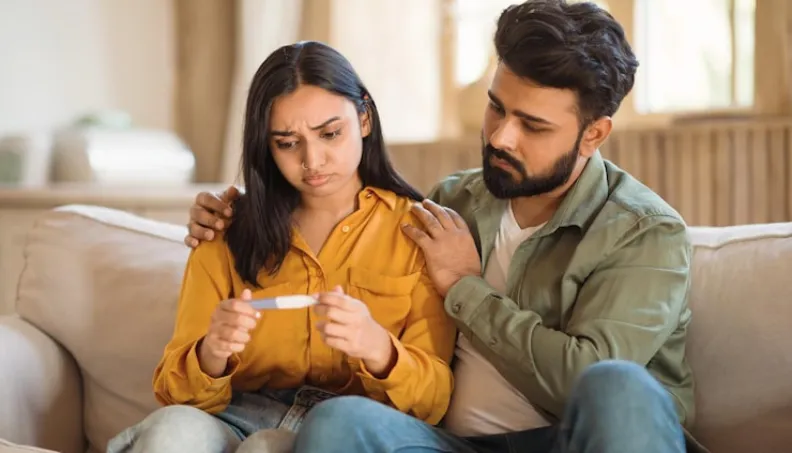
Picture this: every semen analysis came back “normal” good count, good motility, good shape and yet the embryos kept failing to implant, or pregnancies kept ending early.
This is one of the most frustrating and least explained scenarios I encounter as an IVF specialist offering sperm DNA fragmentation testing in New Delhi, and it usually comes down to one overlooked factor: the sperm can look completely healthy under a microscope while its DNA is quietly damaged. Here’s exactly what that means and why catching it changes everything.
Key takeaways:
- A standard semen analysis cannot detect sperm DNA fragmentation; it only checks count, motility, and shape
- Sperm DNA fragmentation is linked to lower fertilization rates, poor embryo development, and higher miscarriage risk
- A DNA Fragmentation Index (DFI) above 30% is generally considered a concerning level
- Fragmentation is often improvable within 2-3 months through targeted lifestyle and antioxidant changes
- Testing is specifically recommended after unexplained failure or recurrent miscarriage, not as a routine first-step test for every man
What Is Sperm DNA Fragmentation, and Why Wasn't It Caught Earlier?
Sperm DNA fragmentation means the genetic material inside the sperm has breaks or damage, even though the sperm itself may look completely normal under a standard semen analysis. This is the exact gap that leaves couples confused when every basic test says “normal” but IVF keeps failing.
A standard semen analysis only measures count, motility (how well sperm move), and morphology (shape) , it has no way of looking inside the sperm at the DNA itself.
Detecting fragmentation requires specialized laboratory tests that specifically assess DNA integrity, which are not part of routine fertility workups unless specifically requested.
This is precisely why the issue gets missed in a first round of testing , not because of any oversight, but because it genuinely sits outside what a routine semen report checks for.
For men in New Delhi who have had normal semen reports but are facing unexplained IVF failure or recurrent miscarriage, a comprehensive male fertility evaluation that includes DNA integrity testing is the next logical step. Our Male Infertility Treatment in New Delhi page outlines the full diagnostic pathway available.
What Causes Sperm DNA to Become Damaged?
The most common cause of sperm DNA fragmentation is oxidative stress , an imbalance where harmful molecules damage sperm cells faster than the body can repair them. This single mechanism explains most cases, though several factors can drive it.
Age plays a role, with fragmentation levels generally rising as men get older. Lifestyle factors, smoking, heavy alcohol use, obesity, and prolonged heat exposure (like frequent sauna or hot tub use) , all contribute to oxidative stress in sperm.
Medical conditions such as varicocele (enlarged veins in the scrotum) are also linked to elevated fragmentation, as are infections and certain prior cancer treatments.
Notably, some men with high fragmentation have no identifiable cause at all , which doesn’t mean nothing can be done about it, just that a single root cause isn’t always found.

Dr Mannan IVF Centre
Experience world-class fertility care with Dr. Mannan Gupta at the Best IVF Centre in Delhi
How Serious a Factor Is This in IVF or ICSI Failure?
High sperm DNA fragmentation is associated with lower fertilization rates, poorer embryo development, higher miscarriage rates, and lower live birth rates , even when using ICSI. This is a well-documented pattern across multiple studies, not a fringe theory.
Research comparing couples using standard ejaculated sperm with high fragmentation against those using sperm with low fragmentation found meaningfully higher miscarriage rates and lower live births in the high-fragmentation group.
This matters because it explains failures that otherwise look completely “unexplained” , the embryo may form, even reach a good-looking stage, and still fail to implant or result in early loss because of DNA damage invisible to standard grading.
It is worth knowing that sperm DNA damage is one of several causes of IVF failure that a standard post-cycle review often misses; our guide on why IVF fails: 7 real reasons doctors don’t always explain covers the full picture, including uterine, embryo, hormonal, and microbiome factors for couples trying to understand which investigation to prioritise next.
How Is Sperm DNA Fragmentation Actually Tested?
Sperm DNA fragmentation is measured through specialized lab techniques , most commonly SCSA (Sperm Chromatin Structure Assay), TUNEL, or the Comet assay , each measuring DNA damage through a different laboratory method.
These aren’t tests every man needs, but they matter significantly for the right group of patients.
Testing is generally recommended for men with unexplained infertility, a history of recurrent miscarriage, poor embryo quality despite normal semen parameters, or repeated failed IVF/ICSI cycles.
The result is usually reported as a DNA Fragmentation Index (DFI) , the percentage of sperm with fragmented DNA. A DFI above 30% is generally considered concerning and associated with reduced IVF success, though the exact threshold used can vary slightly between labs and clinical guidelines.
Before testing, doctors typically recommend 2-7 days of abstinence, since both very short and very long gaps can distort the result.
What Treatment Options Exist Once High Fragmentation Is Found?
The encouraging part of this diagnosis is that sperm DNA fragmentation is often improvable, sometimes significantly, within 2-3 months through targeted lifestyle changes and antioxidant therapy.
This is meaningfully different from many fertility diagnoses that feel fixed and unchangeable.
A landmark study found that after two months of daily vitamin C and vitamin E supplementation, a majority of men with elevated fragmentation showed measurable improvement.
Broader lifestyle interventions, quitting smoking, reducing alcohol, managing weight, avoiding excessive heat exposure, and taking antioxidant supplements like coenzyme Q10 and omega-3 have also shown improvement in fragmentation levels in structured programs.
Because sperm is continuously produced, roughly every 2-3 months, this timeframe isn’t arbitrary; it reflects how long it actually takes for a new, less-damaged batch of sperm to be generated.
For men with persistently high fragmentation despite these interventions, surgical sperm retrieval directly from the testicle (rather than using ejaculated sperm) has shown improved outcomes in some studies, since testicular sperm often carries less DNA damage than sperm that has already passed through the reproductive tract.
For a full overview of the investigation and treatment pathway available in New Delhi, our DNA Fragmentation Treatment in New Delhi page covers exactly what this process involves from testing through to protocol adjustment.
What Does the Next IVF or ICSI Cycle Look Like After Treatment?
This retest is what determines whether standard ejaculated sperm is appropriate again or whether alternative approaches, like testicular sperm retrieval, are worth considering.
It’s worth being direct here: treatment improves the odds, but it isn’t a guarantee.
Ask your fertility team specifically what your retested DFI showed and how that changes their recommended approach for your next cycle; a vague “let’s just try again” isn’t a sufficient answer once fragmentation has been identified as a likely contributing factor.
How Does This Affect Couples Emotionally?
Discovering that a “normal” semen report was hiding a real, contributing factor creates a specific kind of frustration, realizing months or years of an incomplete picture went into decisions that didn’t have all the information. This deserves acknowledgment, not just clinical explanation.
I want to say this plainly: this diagnosis does not mean the female partner’s body was ever “the problem,” even if she was the one who initially underwent more invasive testing or treatment.
In many couples, this discovery shifts a quiet, unspoken weight of blame that had settled on one partner, and openly naming that shift matters for both of you moving forward.
Supporting a male partner through this diagnosis often means treating it as a solvable, shared issue, not a personal failing, since much of it responds to lifestyle changes he can actively take part in.
If you are also processing the grief and uncertainty of a recent failed cycle, our guide on what to do next after a failed embryo transfer and how to cope addresses both the practical clinical steps and the emotional navigation that follows, including how to approach the conversation with your doctor about what changes before the next attempt.
Can Sperm DNA Fragmentation Be Prevented Before Starting Treatment?
The most effective way to catch this early is requesting DNA fragmentation testing proactively if you’ve had even one round of unexplained failure or pregnancy loss, rather than waiting through multiple cycles first.
Given that fragmentation can be present even with a fully normal standard semen analysis, this isn’t something that gets caught by chance.
Beyond testing, addressing modifiable lifestyle factors, smoking, heat exposure, alcohol, and general metabolic health before starting any IVF or ICSI cycle can meaningfully lower fragmentation levels going in, giving your next attempt a stronger starting position.
Final Thoughts
A completely normal semen analysis can still miss the one factor quietly working against your IVF success: sperm DNA fragmentation. It’s measurable, it’s often improvable within a few months, and identifying it turns an “unexplained” failure into an actual, addressable finding.
If this is the piece that was missing from your fertility workup, it’s not too late to test for it and adjust your approach before your next cycle.
If you and your partner have faced unexplained IVF or ICSI failure or repeated miscarriage despite normal reports, I’d encourage you to book a consultation with me, Dr. Mannan Gupta, at Dr. Mannan IVF Centre, New Delhi. We can review whether sperm DNA fragmentation testing makes sense for your specific situation.
Frequently Asked Questions
Can sperm DNA fragmentation happen even if I have a high sperm count?
Yes, fragmentation is unrelated to count, motility, or shape, so a man can have excellent numbers on a standard report and still have significant DNA damage.
Is sperm DNA fragmentation testing painful or invasive?
No, it uses a standard semen sample collected the same way as a routine semen analysis; the difference is entirely in the specialized lab processing, not the collection method.
Does age alone cause high sperm DNA fragmentation?
Age is a contributing factor since fragmentation tends to rise over time, but younger men can also have elevated levels due to lifestyle or medical factors, so age alone doesn’t determine your result.
Will fixing sperm DNA fragmentation guarantee my next IVF cycle succeeds?
No, improving fragmentation raises the odds of success but doesn’t guarantee a specific outcome, since other maternal and embryo factors also play a role.
Can varicocele surgery help lower sperm DNA fragmentation?
In men where varicocele is a contributing cause, treating it has been associated with improved fragmentation levels in some studies, though results vary by individual case.
Should I get tested even if we haven't started IVF yet?
It can be worth discussing with your doctor if you have risk factors like a history of miscarriage or unexplained infertility, even before your first IVF or ICSI cycle.
Do all fertility clinics offer sperm DNA fragmentation testing?
Not universally; it’s a specialized test, so availability varies by clinic and lab, and it’s worth confirming directly whether your fertility center offers it.
Can stress make sperm DNA fragmentation worse?
Chronic stress can contribute to oxidative stress in the body generally, which is one of the pathways linked to fragmentation, though it’s usually one of several contributing factors rather than the sole cause.
Is IUI still an option if I have high sperm DNA fragmentation?
High fragmentation has been linked to poorer IUI outcomes specifically, which is one reason doctors may recommend moving to IVF or ICSI once significant fragmentation is confirmed.
How quickly can antioxidant supplements start improving my results?
Most studies showing improvement used a treatment period of about two months before retesting, so meaningful change is generally not expected in just a few weeks.
