

Dr Mannan Gupta
Medically Reviewed by Dr. Mannan Gupta On Sept 22, 2026
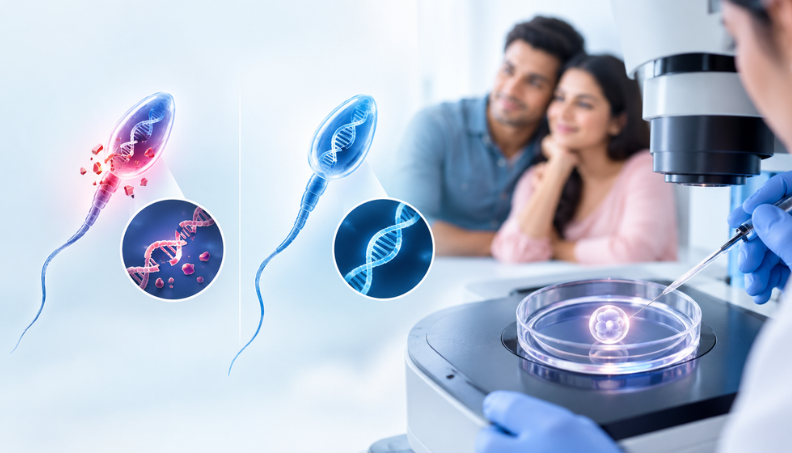
If you’re going through fertility treatment and you’ve been told that your sperm DNA fragmentation is high, you may immediately wonder whether IVF can still work.
I’m Dr. Mannan Gupta, IVF Specialist at Dr. Mannan IVF Centre, Delhi, and I often tell my patients that a high DNA fragmentation result is a reason to look more closely at sperm health, not a reason to lose hope.
Sperm DNA fragmentation means that the genetic material inside some sperm cells has breaks or damage. This is different from simply having a low sperm count or poor sperm movement, because a man can sometimes have a fairly normal semen analysis while still having sperm DNA damage.
Key Takeaways
- Sperm DNA damage can occur even when a routine semen analysis looks acceptable.
- Oxidative stress, varicocele, infections, smoking and other factors can contribute to DNA fragmentation.
- A high result doesn’t automatically mean that IVF will fail.
- Testing is more useful in selected fertility situations than as a routine test for everyone.
- Treatment focuses on finding the cause and improving the quality of sperm used for conception.
What does sperm DNA fragmentation mean?
Sperm DNA fragmentation means that the DNA carried inside sperm has been damaged or broken. DNA contains the genetic instructions needed after fertilisation, so sperm DNA integrity is one part of overall sperm quality.
A routine semen analysis usually checks sperm count, movement and shape. It doesn’t directly tell us how intact the sperm’s DNA is.
This is why some men with an apparently reasonable semen report may still have another male fertility factor that needs attention.
I look at DNA fragmentation as one piece of the fertility picture, not as a standalone diagnosis.
Why can sperm DNA become damaged?
Oxidative stress is one of the important mechanisms associated with sperm DNA damage. This happens when harmful molecules called reactive oxygen species outweigh the body’s ability to control them.
Several factors can contribute, including:
- Varicocele, a condition involving enlarged veins around the testicle
- Genital or reproductive tract infections
- Smoking and tobacco exposure
- Excessive alcohol intake
- Obesity and metabolic health problems
- High heat or certain environmental exposures
- Some medical conditions and treatments
- Increasing paternal age
Poor lifestyle habits don’t explain every case. If your DNA fragmentation is high, I prefer to look for an underlying cause rather than simply blaming lifestyle.
Research reviews describe oxidative stress, abnormal sperm maturation and problems with DNA packaging as important contributors to sperm DNA fragmentation.

Dr Mannan IVF Centre
Experience world-class fertility care with Dr. Mannan Gupta at the Best IVF Centre in Delhi
Does sperm DNA fragmentation affect IVF?
It can affect reproductive outcomes, but a high result does not mean that IVF cannot succeed.
Research has found associations between higher sperm DNA fragmentation and outcomes such as pregnancy, embryo development and miscarriage in some IVF and ICSI studies.
However, the evidence is not completely consistent, and the effect can differ depending on the test, patient group and fertility treatment used.
This is consistent with a meta-analysis hosted by the NIH’s National Library of Medicine, which found associations with poorer outcomes but noted meaningful inconsistency across the included studies. This is why I don’t use one DNA fragmentation number to predict your entire IVF outcome.
A 2026 umbrella meta-analysis found associations between elevated fragmentation and poorer clinical pregnancy outcomes in IVF, while the evidence for live birth remained limited and the overall certainty was low.
We’ve written about a real case where catching this factor changed the treatment plan in If We Missed This… IVF Would Have Failed.
What tests may be needed before IVF?
The right tests depend on the suspected cause of azoospermia.
Hormone testing can help assess testicular function. In selected men, genetic testing such as karyotyping or Y-chromosome microdeletion testing is recommended because certain genetic findings can affect the chance of sperm retrieval and may have implications for future children.
Men with suspected congenital absence of the vas deferens may also require CFTR-related genetic evaluation.
I don’t recommend ordering every test for every patient. The evaluation should be guided by the clinical findings.
This is why I don’t use one DNA fragmentation number to predict your entire IVF outcome.
Your age, egg quality, ovarian reserve, embryo development, sperm count and motility, medical history and previous treatment history all matter.
When should sperm DNA fragmentation be tested?
Sperm DNA fragmentation testing is usually considered when the result could change how we manage fertility treatment.
I may discuss this test in situations such as:
- Repeated IVF or ICSI failure
- Recurrent pregnancy loss
- Unexplained infertility
- Varicocele or other suspected male reproductive problems
- Some cases where semen parameters don’t explain the fertility problem
- Selected men with lifestyle or medical risk factors
Clinical guidance has particularly discussed SDF testing in situations such as recurrent ART failure, recurrent pregnancy loss and varicocele.
Not every man undergoing IVF needs this test. I prefer to recommend it when the result can provide useful information for the couple’s treatment plan.
How is sperm DNA fragmentation tested?
A sperm DNA fragmentation test measures the proportion of sperm with damaged or fragmented DNA.
Several laboratory methods are available, including:
- SCSA, or sperm chromatin structure assay
- SCD, or sperm chromatin dispersion test
- TUNEL assay
- Comet assay
These tests don’t all measure DNA damage in exactly the same way.
There is no single universal cut-off that can be applied to every test. The result needs to be interpreted according to the particular laboratory method and the clinical situation.
This is an important point because patients sometimes see a percentage on a report and assume that the same number has the same meaning in every laboratory.
What does a high sperm DNA fragmentation result mean?
A high result suggests that a greater proportion of the tested sperm have damaged DNA, but it doesn’t tell us that pregnancy is impossible.
I explain this carefully because the report can sound frightening when you first see it.
A high result tells us that we may need to pay more attention to male fertility factors. We then look for potentially treatable causes and decide whether any change in fertility treatment is appropriate.
The result should be interpreted together with the semen analysis, medical history and previous fertility outcomes.
Can high sperm DNA fragmentation be reduced?
In some men, addressing the underlying cause and improving sperm health can reduce DNA fragmentation.
Depending on the cause, management may include:
- Stopping smoking and tobacco use
- Improving weight and metabolic health
- Reducing excessive alcohol intake
- Treating an identified infection
- Managing a clinically important varicocele
- Reviewing medicines or medical conditions that may affect sperm
- Improving sleep, diet and regular physical activity
- Considering antioxidant treatment when clinically appropriate
Recent clinical reviews describe lifestyle modification, treatment of infections or varicocele, selected antioxidant therapy and other approaches as possible management strategies.
I don’t recommend supplements blindly. If an underlying medical problem is present, treating that problem is often more meaningful than simply adding supplements.
Can IVF or ICSI work when DNA fragmentation is high?
Yes, pregnancy can still occur when sperm DNA fragmentation is high.
In selected cases, an IVF specialist may consider ICSI, where a single sperm is injected directly into an egg, depending on the overall fertility picture.
For some men with persistently high DNA fragmentation, particularly in specific clinical situations such as repeated IVF failure, specialist evaluation may also lead to discussion of alternative sperm-selection strategies or the use of testicular sperm for ICSI. Evidence and recommendations vary, so this isn’t appropriate for everyone.
The goal is not simply to chase a lower DNA fragmentation number. The goal is to improve the couple’s overall chance of a healthy pregnancy.
Can high sperm DNA fragmentation cause miscarriage?
High sperm DNA fragmentation has been associated with an increased risk of pregnancy loss in some studies, but it isn’t the only cause of miscarriage.
We’ve covered the fuller picture of recurrent pregnancy loss investigation, including where sperm DNA fragmentation fits alongside other causes, in Repeated Miscarriage: The Hidden Cause Most Doctors Miss (And What to Do Next).
Embryo chromosome abnormalities, egg-related factors, uterine factors, hormonal problems and other medical conditions can also contribute to pregnancy loss.
Recent evidence continues to show an association between higher SDF and miscarriage in some ART populations, but studies differ in quality and methodology.
If you’ve experienced recurrent pregnancy loss, both partners should be assessed rather than assuming that sperm DNA damage is the sole explanation.
What can you do to protect sperm DNA before IVF?
The best approach is to reduce avoidable factors that can affect sperm health and address medical problems early.
I usually advise patients to focus on:
- Avoiding smoking and tobacco
- Maintaining a healthy body weight
- Exercising regularly
- Eating a balanced diet
- Limiting excessive alcohol
- Managing medical conditions properly
- Seeking evaluation for symptoms suggestive of varicocele or infection
- Following the fertility specialist’s advice about ejaculation and the timing of the semen sample
Sperm production takes time, so changes in lifestyle or medical treatment don’t necessarily produce an immediate change in a semen report. Your fertility specialist can advise when repeat testing is useful.
Should every IVF patient get a sperm DNA fragmentation test?
No, sperm DNA fragmentation testing isn’t automatically necessary for every IVF patient.
The test is most useful when there is a clinical reason to suspect that sperm DNA integrity may be contributing to infertility or previous treatment problems.
An abnormal result should lead to a proper male fertility evaluation rather than panic or immediate assumptions about treatment failure.
When should you discuss sperm DNA fragmentation with an IVF specialist?
You should discuss the test if you’ve had repeated IVF failure, recurrent pregnancy loss, unexplained infertility or a male fertility concern that isn’t fully explained by routine semen analysis.
When patients ask me whether they should have the test, I first review their fertility history and previous reports. The right test is the one that can answer a meaningful clinical question and potentially change the treatment plan.
If you’re considering sperm DNA fragmentation testing in Delhi, I recommend discussing your semen reports, previous treatment outcomes and medical history with an IVF specialist before deciding on testing.
Can sperm DNA fragmentation be treated before IVF?
Yes, management is possible in selected cases, but treatment depends on why the DNA fragmentation is high.
There isn’t one treatment that works for every man. The focus may be lifestyle correction, treatment of an underlying condition, medical management or changes in the sperm-selection approach used during assisted reproduction.
A high result should start a conversation about the cause and the next step, not end the conversation about having a child.
If you’re concerned about sperm DNA quality or repeated fertility treatment failure, you can consult Dr. Mannan Gupta, IVF Specialist at Dr. Mannan IVF Centre in Delhi, for an assessment of your fertility history and treatment options. I can help you understand whether DNA fragmentation testing is appropriate and what the result may mean in the context of your IVF plan.
Frequently Asked Questions
Can a man have high sperm DNA fragmentation with a normal semen analysis?
Yes, it is possible. A routine semen analysis checks count, movement, and shape, while DNA fragmentation testing assesses the integrity of sperm DNA.
Does high sperm DNA fragmentation mean a man is infertile?
No, it doesn’t automatically mean infertility. It indicates a possible sperm-quality problem that should be interpreted alongside other fertility factors.
Can sperm DNA fragmentation improve without treatment?
It can improve in some men after correcting contributing factors. Lifestyle changes and treatment of conditions such as varicocele or infection may help when these are involved.
Can diet affect sperm DNA quality?
Yes, overall diet and metabolic health can influence sperm health. I generally recommend a balanced diet rather than relying on a single food, vitamin or supplement.
Does smoking increase sperm DNA damage?
Yes, smoking is associated with oxidative stress and poorer sperm quality, including DNA damage. Stopping tobacco is an important step for men preparing for fertility treatment.
Does frequent ejaculation lower sperm DNA fragmentation?
In some men, shorter periods of sperm storage may reduce measured DNA fragmentation. The appropriate ejaculation interval depends on the individual and the type of fertility treatment, so I advise patients based on their specific situation.
Can varicocele cause sperm DNA fragmentation?
Yes, varicocele can be associated with increased sperm DNA damage. If a clinically important varicocele is present, a male fertility specialist can assess whether treatment may be helpful.
Is sperm DNA fragmentation testing painful?
No, the test itself is generally performed on a semen sample. The main consideration is following the laboratory’s instructions for sample collection and abstinence.
Can high sperm DNA fragmentation affect embryo quality?
It may be associated with poorer embryo development in some studies, but embryo quality depends on both sperm and egg factors. A high SDF result should therefore never be used to judge embryo potential on its own.
Should I repeat the sperm DNA fragmentation test after treatment?
Sometimes, yes, if the result is expected to change management. Your specialist can decide whether repeat testing is useful based on the treatment given, timing and the original test method.
Final Thoughts
Sperm DNA fragmentation is an important part of male fertility assessment in selected patients, but it is not a verdict on your ability to become a father.
I encourage couples to look at the complete fertility picture rather than focusing on one test result. With the right evaluation and an individualized treatment plan, there may still be several paths forward, even when sperm DNA quality is not ideal.
Medical Disclaimer:
This article is intended for general medical education and does not replace an individual consultation with an IVF specialist or reproductive medicine professional. Sperm DNA fragmentation tests use different laboratory methods, and results should be interpreted according to the specific test, medical history and fertility treatment plan. Do not start supplements or fertility treatment based only on information in this article.
