
Laparoscopy for Endometriosis: What to Expect Before, During, and After
Dr Mannan Gupta
Medically Reviewed by Dr. Mannan Gupta On Aug 27, 2026
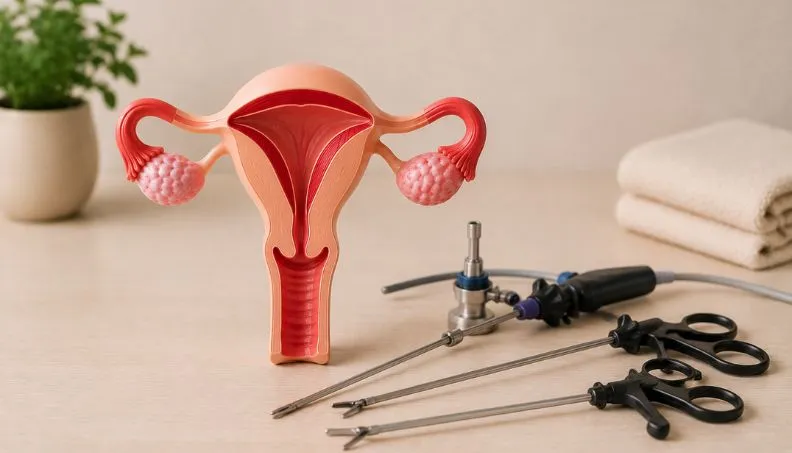
If your doctor has recommended laparoscopy and you’re picturing something far scarier than what it actually involves, let’s walk through this together properly.
I’m Dr. Mannan Gupta, IVF Specialist and Obstetrician & Gynaecologist at Dr. Mannan IVF Centre in New Delhi, and I’ve guided many patients through this exact procedure.
Laparoscopy for endometriosis treatment is a minimally invasive surgery, done through small incisions, and for most patients, it’s far less disruptive to daily life than they expect.
Key Takeaways
- Laparoscopy uses small incisions and a camera, not open surgery, and most patients go home the same day
- You’ll need to fast for about 8 hours before the procedure, and arrange a ride home afterward
- Shoulder pain after surgery is common and expected, caused by the gas used during the operation, not a sign of a problem
- Excision, removing tissue rather than just burning it away, is generally preferred, especially if fertility preservation matters to you
- Full recovery typically takes one to two weeks, though this varies based on how extensive the surgery was
What Is Laparoscopy, and Why Is It Used for Endometriosis?
Laparoscopy is a minimally invasive surgery that lets your doctor see and, if needed, remove endometriosis tissue directly, through a few small incisions rather than a large surgical cut.
- A thin tube with a camera, called a laparoscope, is inserted through a small incision, usually near the belly button.
- This gives your surgeon a direct, magnified view of the pelvic organs, which is still the most reliable way to confirm and treat endometriosis.
- This is consistent with the NIH’s National Library of Medicine, which also names laparoscopy as the most common surgery used to confirm the diagnosis.
- This isn’t usually the first step in treatment. Most patients try hormonal or pain-focused options first, and laparoscopy comes into the picture when symptoms persist or fertility is a specific concern.
- If you’re earlier in the process and wondering how a diagnosis even gets confirmed, we’ve covered that separately in How Endometriosis Is Diagnosed: What to Actually Expect.
- In my practice, I explain that this procedure serves two purposes at once, confirming the diagnosis and treating what’s found, in the same surgery.
How Do You Prepare for the Procedure?
Preparation is fairly simple, mainly involving fasting beforehand and arranging support for the day of surgery.
- You’ll typically be asked to stop eating and drinking about 8 hours before the procedure, since you’ll be under general anesthesia.
- Arrange for someone to drive you home afterward. You won’t be in a state to manage this yourself once the anesthesia wears off.
- Plan time off work. Even though it’s minimally invasive, your body still needs real recovery time, not just the day of surgery.
- Write down your questions beforehand. This is a good time to clarify what your surgeon expects to find and what decisions might need to be made during the procedure itself.
Dr Mannan IVF Centre
Experience world-class fertility care with Dr. Mannan Gupta at the Best IVF Centre in Delhi
What Actually Happens During Surgery?
You’ll be under general anesthesia the entire time, so you won’t feel or remember anything during the procedure itself.
- Your surgeon makes one or more small incisions, usually in the belly button and sometimes the lower abdomen, and fills your abdomen with gas to create space for a clear view.
- The laparoscope is inserted to locate endometriosis lesions, and specialized instruments are used through the other small incisions to treat what’s found.
- Two main techniques exist, excision and ablation. Excision physically removes the tissue, while ablation uses heat to destroy it on the surface. Excision is generally the preferred approach, particularly when fertility preservation and longer-term pain relief matter to you.
- The procedure can take anywhere from 30 minutes to several hours, depending on how extensive your case turns out to be once your surgeon can actually see it.
What Does Recovery Look Like in the First Few Days?
The first few days involve managing gas-related discomfort, mild pain, and simply giving your body permission to rest.
- Shoulder tip pain is one of the most common post-surgery surprises, and it’s caused by the gas used during the procedure irritating a nerve near the diaphragm. It’s expected, temporary, and not a sign of internal injury.
- Gentle walking actually helps, since movement helps your body absorb and expel the remaining gas faster.
- Light bleeding or spotting is normal in the first few days. Avoid tampons during this time, and use pads instead.
- Feeling emotional is common too. Some patients cry as the anesthesia wears off, and separately, many feel genuine relief or validation, especially after years of unclear symptoms finally being addressed directly.
How Long Until You're Fully Back to Normal?
Most patients return to their normal routine within one to two weeks, though the exact timeline depends on how much surgery was actually needed.
- Days 0 to 3 are mostly about pain control, rest, and gentle movement.
- Week 1 to 2 usually brings steady improvement, with many patients easing back into light activity and work during this window.
- If your case required more extensive tissue removal, recovery may take a bit longer, and that’s a normal variation, not a complication.
- A follow-up appointment, usually within two to six weeks, is when we discuss what was found and plan your next steps, whether that’s ongoing hormonal management or fertility planning.
- You can see the full range of options we draw from at that stage on our Endometriosis Treatment in New Delhi page.
What Are the Risks, and How Common Are Complications?
Laparoscopy is considered a low-risk procedure, and serious complications are genuinely uncommon.
- Complication rates are low, and when they do occur, they’re usually minor issues like a small incision infection, which can typically be managed without further surgery.
- Bleeding, infection, or injury to nearby organs are the more serious, though rare, risks your surgeon will discuss with you beforehand.
- If you notice worsening pain, fever, or unusual discharge after going home, that’s worth contacting your surgical team about promptly, rather than waiting it out.
- I go through these risks honestly with every patient, because informed comfort matters more than vague reassurance.
If you’re weighing whether laparoscopy is the right next step for your endometriosis, or preparing for a scheduled procedure and want clarity on what to expect, I guide patients through this decision at Dr. Mannan IVF Centre in New Delhi. You can get in touch with the clinic directly at 97116 81986 to talk through your specific case.
What Happens After Surgery, Emotionally and for Long-Term Planning?
Laparoscopy often brings both physical relief and a real emotional shift, and both deserve space in your recovery.
- For many patients, finally having a clear surgical diagnosis after years of uncertainty is genuinely validating. That reaction is completely normal, even if it comes with unexpected tears.
- Surgery is often one part of an ongoing plan, not a single fix. Many patients continue with some form of hormonal management afterward to help prevent recurrence, an approach we go through in more detail in Hormonal Therapy for Endometriosis: Pills, IUDs, and What Actually Helps.
- If fertility is part of your goals, this is the natural point to discuss what was found and how it shapes your path forward, whether that’s trying naturally or considering assisted options.
- Endometriosis can return even after successful surgery. This doesn’t mean the procedure failed. It reflects the nature of the condition, and ongoing monitoring remains part of your care.
Conclusion
Laparoscopy for endometriosis is a well-established, minimally invasive procedure, and for most patients, it’s a far more manageable experience than they initially fear.
Expect small incisions, a same-day discharge, some gas-related discomfort in the first few days, and a genuine return to normal life within a couple of weeks.
What matters most going in is having realistic expectations and a clear plan for what comes after, so the surgery becomes one confident step in your care, not an isolated event you’re facing without a roadmap.
Frequently Asked Questions
Will I have visible scars after laparoscopy?
The incisions are small, usually just a few millimeters each, and they typically fade significantly over time, though some minor marking can remain.
Can I shower normally after the surgery?
Most patients can shower within a day or two, though your surgeon will give specific guidance based on your incisions and dressing type.
Do I need to stay in the hospital overnight?
Most patients go home the same day, though your surgeon may recommend an overnight stay if your case required more extensive surgery.
Is it normal to feel bloated for a while after the procedure?
Yes, some bloating from the gas used during surgery is common and usually settles within a few days.
Can I drive myself home after the procedure?
No, you’ll need someone else to drive you, since the effects of general anesthesia make driving unsafe immediately afterward.
How soon can I resume exercise after laparoscopy?
Light activity like walking is encouraged early on, but more strenuous exercise is usually best delayed until your follow-up appointment confirms you’re ready.
Will I need another laparoscopy in the future?
Not necessarily, though if symptoms return over time, your doctor may discuss whether further evaluation or treatment makes sense at that point.
Can laparoscopy improve my chances of getting pregnant?
For some patients, particularly when adhesions or endometriomas are affecting the pelvic anatomy, removing them can improve natural conception chances, though this varies by individual case.
Is laparoscopy painful during recovery?
Most patients experience manageable discomfort rather than severe pain, and this is typically controlled well with prescribed pain relief in the first few days.
How do I know if laparoscopy is even the right option for me?
This depends on your specific symptoms, prior treatments tried, and whether fertility is a current concern, which is exactly the kind of individual assessment worth discussing directly with your gynaecologist.
Medical Disclaimer:
Content regarding endometriosis pain management, NSAID usage, and pelvic floor therapies is for informational and educational purposes only. It is not a substitute for clinical advice, diagnosis, or treatment. Always consult a qualified gynaecologist or pain specialist for personalized medical guidance regarding medication timing, pain protocols, and reproductive care.
