
Dr Mannan Gupta
Medically Reviewed by Dr. Mannan Gupta On Aug 18, 2026
If you’ve been told your period pain is “just normal” for years, and something in you doesn’t quite believe that, I want you to know you’re not imagining it.
I’m Dr. Mannan Gupta, IVF Specialist and Obstetrician & Gynaecologist at Dr. Mannan IVF Centre in New Delhi, and one of the most common conversations I have in clinic starts exactly this way.
When severe or recurring period pain raises concerns about endometriosis, getting the right endometriosis diagnosis in Delhi can help identify the cause and guide the right treatment.
It doesn’t have to take years, but it does require knowing what steps actually help confirm it.
Key Takeaways
- Endometriosis is frequently missed for years because its symptoms overlap with several other conditions
- A normal ultrasound doesn’t rule it out. This is a real limitation of imaging, not a sign nothing’s wrong
- Surgery isn’t always the first step. Many doctors, myself included, often start treatment based on symptoms and imaging before considering laparoscopy
- Laparoscopy remains the only way to confirm it definitively, but it’s not always the starting point
- Endometriosis is closely linked to fertility challenges, which is often what finally brings women in for evaluation
What Is Endometriosis, and Why Does It Get Missed So Often?
Endometriosis happens when tissue similar to the lining of your uterus grows outside it, on the ovaries, fallopian tubes, or other pelvic structures.
- This tissue still responds to your monthly hormone cycle, which means it can bleed, inflame, and scar the surrounding area, even though it’s not inside the uterus.
- The biggest reason it’s missed is that its main symptom, painful periods, gets dismissed as normal, both by patients and sometimes by the people around them.
- In my practice, I regularly see women who assumed years of severe cramping was just “how their body is,” when it was actually a treatable condition all along.
- Symptoms can also overlap with conditions like IBS or pelvic inflammatory disease, which sends the diagnostic search down the wrong path initially.
What Causes It, and Who's More Likely to Get It?
We don’t have one confirmed cause for endometriosis, but we do know certain factors raise your likelihood of having it.
- A family history matters. If your mother or sister has endometriosis, your own risk is meaningfully higher.
- An early first period, shorter menstrual cycles, or heavier periods are all patterns I look for when a patient describes her history.
- It affects women broadly across their reproductive years, from the first period through to menopause.
- It is not caused by anything you did. I say this directly because I’ve had patients quietly blame themselves, and there’s no evidence to support that.
Dr Mannan IVF Centre
Experience world-class fertility care with Dr. Mannan Gupta at the Best IVF Centre in Delhi
How Serious Can It Get If It Goes Undiagnosed?
Left undiagnosed, endometriosis doesn’t just mean ongoing pain, it can also affect your fertility over time.
- Chronic pelvic pain and painful intercourse are the symptoms that usually push someone to finally seek help.
- Scar tissue from long-standing endometriosis can affect how the ovaries release eggs or how the fallopian tubes function.
- Endometriosis is one of the more common findings in women being evaluated for infertility. I’ve seen this pattern repeatedly in my own consultations, and research on infertility patients backs it up.
- The pain itself is not something you have to simply tolerate for years while waiting for things to get “bad enough.”
How Do Doctors Actually Diagnose Endometriosis?
Diagnosis usually starts with a detailed conversation about your symptoms, followed by a physical exam and imaging, not surgery.
- Medical history first. I ask about pain patterns, cycle length, bleeding, and whether periods disrupt your daily life or work.
- A pelvic exam helps check for tenderness, nodules, or anything unusual in the pelvic area.
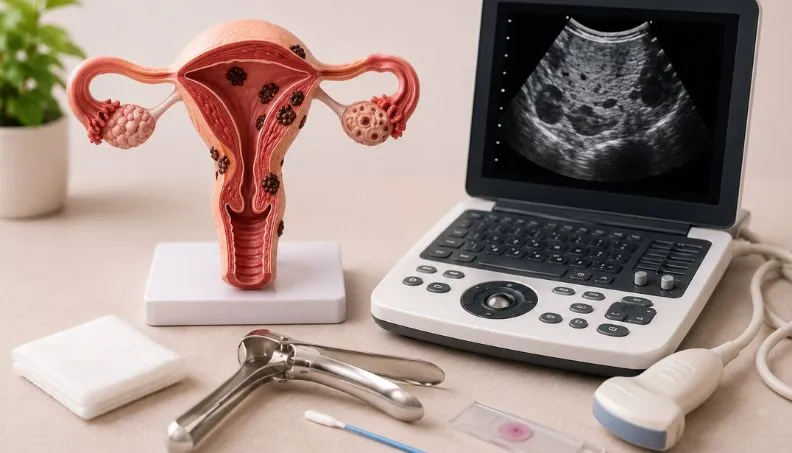
- Transvaginal ultrasound is usually the next step, and it can pick up larger endometriosis-related cysts on the ovaries.
- Here’s what most patients aren’t told clearly: a normal ultrasound does not rule out endometriosis. Smaller implants often don’t show up on standard imaging at all.
- MRI may be recommended in specific cases, particularly if we suspect deeper involvement of the bladder or bowel.
Do You Need Surgery to Confirm the Diagnosis?
Not always, and this is something I think patients deserve to hear upfront.
- Laparoscopy, a minimally invasive surgery, remains the only way to definitively confirm endometriosis, since it allows direct visualization and, if needed, a tissue biopsy.
- This is consistent with guidance from MedlinePlus (U.S. National Library of Medicine), which also confirms there is currently no blood test that reliably diagnoses the condition.
- However, many gynaecologists, myself included, will often start treatment based on your symptoms and imaging findings first, especially if surgery isn’t otherwise needed.
- This is called a clinical diagnosis, and it’s a reasonable, evidence-based way to begin managing your symptoms without jumping straight to an operating table.
- If treatment doesn’t help, or if fertility is a concern, laparoscopy becomes a more relevant conversation.
- There currently isn’t a reliable blood test for endometriosis, despite what you may read online. Research into this is ongoing, but nothing is clinically dependable yet.
What Treatment Looks Like Once You Have a Diagnosis
Treatment depends on your symptoms, your age, and whether you’re trying to conceive, and it’s rarely one-size-fits-all.
- Hormonal therapies, including certain birth control methods, are often the first line if pregnancy isn’t an immediate goal.
- Pain management is addressed directly, not as an afterthought, because ongoing pain affects your ability to function day to day.
- Surgical removal of endometriosis tissue may be recommended in more significant cases or when fertility is the priority.
- You can read more about how we approach this at our Endometriosis Treatment in New Delhi page, where options are matched to your specific findings rather than applied as a standard protocol.
- This is a manageable condition. I want to be clear about that. A diagnosis is not the end of your plans, it’s the start of a clearer plan.
If you’ve been living with period pain that doesn’t add up, or you’re trying to understand what’s affecting your fertility, I see patients for endometriosis evaluation and management at Dr. Mannan IVF Centre in New Delhi. You can reach the clinic directly at 97116 81986 to book a consultation.
How Does It Affect Daily Life and Your Fertility Plans?
Endometriosis can affect work, relationships, and how you plan your family, and all three deserve to be part of the conversation with your doctor.
- Missed workdays or social plans due to pain are common, and they’re a valid reason to seek evaluation, not something to push through silently.
- Intimacy can become physically painful, which understandably affects relationships and mental wellbeing.
- If you’re planning a family, getting evaluated earlier gives you more options, rather than discovering the connection only after struggling to conceive.
- This is a pattern we see often in patients who come in after repeated IVF attempts, where an undiagnosed uterine issue turns out to be part of the picture. We’ve written more about this in Failed IVF: The Problem Was Inside the Uterus, which covers how conditions like this get missed until fertility treatment brings them to light.
- You don’t need to wait until things feel unbearable to bring this up with a doctor.
Final Thoughts
Endometriosis is common, and it’s treatable, but it’s also one of the most underdiagnosed conditions I see in practice, mainly because the pain gets normalized for far too long.
A normal ultrasound doesn’t mean nothing’s wrong, and you don’t need to go straight to surgery to start getting answers.
If your periods, your pain, or your fertility plans don’t feel right to you, that instinct is worth acting on. The sooner we start the conversation, the more options you have.
Frequently Asked Questions
Can endometriosis go away on its own?
No, it doesn’t resolve on its own, but symptoms can be well managed with the right treatment plan, and many women live comfortably once they’re properly diagnosed.
Is endometriosis the same as adenomyosis?
No, they’re related but different conditions. Adenomyosis is when the uterine lining grows into the muscular wall of the uterus itself, while endometriosis involves tissue growing outside the uterus.
At what age can endometriosis start?
It can start as early as a girl’s first period, though it’s most commonly diagnosed during the reproductive years.
Does having endometriosis mean I definitely can't get pregnant?
No, it doesn’t mean that at all. Many women with endometriosis do conceive, sometimes on their own and sometimes with fertility support, depending on severity.
Can endometriosis come back after surgery?
Yes, it’s possible for it to recur even after surgical removal, which is why ongoing follow-up care matters after treatment.
Why do doctors sometimes wait before recommending laparoscopy?
Because starting with symptom-based treatment is often reasonable and less invasive, and surgery is considered when that approach isn’t enough or when fertility is a specific concern.
Is period pain that stops you from going to work always endometriosis?
Not always, but it’s never something to dismiss. It’s a good enough reason on its own to get evaluated properly.
Can lifestyle changes help manage endometriosis symptoms?
They can support overall symptom management alongside medical treatment, but they aren’t a substitute for a proper diagnosis and treatment plan.
Does endometriosis affect only the pelvic area?
In most cases yes, but in rarer situations it can appear in other parts of the body, which is one reason unusual or persistent symptoms should always be discussed with your doctor.
How soon should I see a gynaecologist if I suspect endometriosis?
As soon as your symptoms are affecting your daily life or fertility plans, there’s no reason to wait years to get evaluated.
Medical Disclaimer
This article has been medically reviewed by Dr. Mannan Gupta, IVF Specialist and Obstetrician & Gynaecologist at Dr. Mannan IVF Centre, New Delhi. If persistent pelvic pain or fertility concerns are affecting your life, book a consultation with our expert team today for an accurate diagnosis and personalized care plan.
