
C-Section Delivery Clinic in New Delhi
Safe, modern C-section delivery with attentive pre- and post-operative care.
Protecting maternal health while welcoming your baby into the world safely.
Key Facts
- Surgical delivery
- Maternal safety
- Fetal safety
- Planned or emergency
- Controlled birth
For any IVF / Fertility related query, concern or help, just call us
At Dr Mannan IVF Centre in New Delhi, I often speak with expectant parents who have mixed feelings about Caesarean sections (C-sections).
For some, it is a planned and welcome route to meet their baby; for others, it is an unexpected detour from their birth plan.
Regardless of how you arrive at this decision, my priority remains constant: the safety of the mother and the safe arrival of a healthy baby.
A C-section is a major surgery, but it is also one of the most common and safest procedures performed today.
Whether it is a medical necessity or a planned choice, I want you to feel empowered, informed, and supported. My goal is to demystify the operating theatre and show you that a surgical birth can be just as beautiful and joyous as a vaginal one.
Key Takeaways
- A Safe Alternative: C-sections are life-saving procedures when a vaginal birth carries risks for mother or baby.
- Planned vs. Emergency: Understanding the difference helps reduce anxiety. Planned procedures are calm and scheduled; emergencies are swift but managed with expert control.
- Pain Management: Modern anaesthesia ensures you are comfortable during surgery and awake to meet your baby immediately.
- Recovery is Key: While recovery takes longer than vaginal birth, our enhanced recovery protocols get you moving and bonding quickly.
What is a C-Section Delivery?
A Caesarean section is the surgical delivery of a baby through an incision made in the mother’s abdomen and uterus. It is distinct from a vaginal delivery, where the baby exits through the birth canal.
While natural birth is often the primary goal, a C-section is sometimes the safest path. In my practice, we treat this not as a “backup plan,” but as a specialised mode of delivery that requires skill, precision, and a gentle touch to ensure the best start for your newborn.
When is a C-Section Necessary?
The decision to perform a C-section is never taken lightly. It usually falls into two categories: Planned (Elective) and Emergency.
Planned C-Sections
We schedule these in advance when we know vaginal birth poses a risk. Common reasons include:
- Breech Presentation: The baby is feet or bottom first.
- Placenta Previa: The placenta covers the cervix, blocking the baby’s exit.
- Multiple Pregnancy: Carrying twins or triplets often necessitates surgical delivery.
- Previous C-Section: While Vaginal Birth After Caesarean (VBAC) is possible, some mothers opt for a repeat C-section for safety or peace of mind.
- Maternal Infections: Certain infections (like active herpes or high viral load HIV) can be transmitted during vaginal birth.
Emergency C-Sections
These happen during labour when complications arise. Reasons include:
- Fetal Distress: The baby’s heart rate drops, indicating they are not tolerating labour well.
- Labour Dystocia: Labour stalls or stops progressing completely despite strong contractions.
- Cord Prolapse: The umbilical cord drops through the cervix before the baby, cutting off oxygen supply.
- Placental Abruption: The placenta separates from the uterine wall too early.
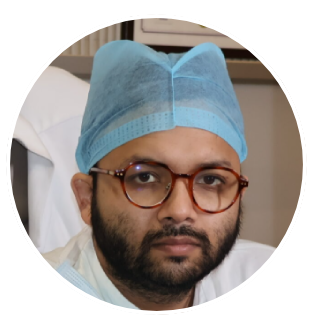
Dr Mannan IVF Centre
Experience world-class fertility care with Dr. Mannan Gupta at the Best IVF Centre in Delhi
The Procedure: What Happens in the Theatre?
I believe knowing what to expect reduces fear. Here is a step-by-step walk-through of a typical C-section at our centre:
- Preparation:
You will be prepped for surgery, and a catheter will be placed to drain the bladder. - Anaesthesia:
An anaesthetist will administer a spinal block or epidural. This numbs you from the waist down, so you will feel no pain, but you will remain awake and alert to hear your baby’s first cry. - The Incision:
A screen is placed across your chest so you don’t have to watch the surgery. I make a horizontal incision just above the bikini line (a “bikini cut”), which heals cosmetically well. - Delivery:
You may feel some tugging or pressure, but no pain. Within minutes of the start, your baby is lifted out. - Immediate Bonding:
If the baby is stable, we encourage immediate skin-to-skin contact or bring the baby to your cheek while I complete the surgery. - Closing Up:
The repair of the uterus and abdominal layers takes about 30-45 minutes. We use dissolvable stitches that do not need to be removed later.
Recovery: Healing After Surgery
Recovery from a C-section is different from vaginal birth. It is, after all, abdominal surgery.
- In Hospital (3-4 Days):
You will stay with us for monitoring. We manage your pain meticulously so you can focus on breastfeeding and bonding. We encourage you to get out of bed and walk gently within 12-24 hours to promote circulation and healing. - At Home (4-6 Weeks):
You will need to take it easy. Avoid heavy lifting and strenuous exercise. The incision site needs to be kept clean and dry. - Emotional Recovery:
Hormones can fluctuate wildly after birth. We check in on your mental well-being just as much as your physical healing.
Cost of C-Section Delivery in Delhi
We believe in transparent pricing so families can plan without hidden financial surprises.
Procedure | Approximate Cost in Delhi |
Planned (Elective) C-Section | ₹70,000 – ₹1,00,000 |
Emergency C-Section | ₹85,000 – ₹1,20,000 |
High-Risk C-Section (e.g., Twins) | ₹1,00,000 – ₹1,50,000 |
Understanding the Cost Variation:
The cost varies based on the room category chosen (private vs. suite), the duration of the stay, and the complexity of the surgery. Emergency procedures often cost slightly more due to the rapid mobilisation of the surgical team and unscheduled theatre time. Costs for the baby (paediatrician, vaccinations, potential NICU care) are typically billed separately.
Parenthood Starts with One Brave Conversation
Schedule a consultation with Dr. Mannan Gupta for honest answers and personalized fertility care.
Why Choose Dr Mannan IVF Centre?
Choosing where to deliver is one of the biggest decisions of your pregnancy. Here is why families in Delhi trust us:
- Surgical Excellence:
As a specialist, I use techniques that minimise tissue damage, reduce bleeding, and ensure the neatest possible scar (the “cosmetic close”). - Safety First Protocols:
Our operating theatres are equipped with advanced monitoring technology to handle any maternal or fetal complication instantly. - Family-Centred Approach:
We believe birth is a celebration, not just a medical event. We strive to make the environment in the theatre as warm and welcoming as possible. - Comprehensive Post-Op Care:
Our nursing team is specially trained in post-caesarean care, helping you with everything from wound care to finding comfortable breastfeeding positions that protect your incision.
Emotional Support: It’s Okay to Feel Disappointed
Some mothers feel a sense of loss if they planned for a natural birth but ended up with a C-section. I want to validate those feelings.
It is okay to mourn the birth experience you wanted, even while you celebrate the arrival of your healthy baby.
We offer supportive counselling to help you process the birth experience and feel proud of your body’s journey.
Conclusion
A C-section is a modern medical miracle that has saved countless lives. It is a valid, brave, and beautiful way to bring life into the world.
Whether your C-section is scheduled months in advance or decided in the heat of the moment, you are in safe, capable hands.
At Dr Mannan IVF Centre, we are honoured to be part of your story, ensuring your delivery is safe, your recovery is smooth, and your baby gets the best possible welcome.
Planning your delivery? Let’s discuss your options.
Ensure you and your baby are in expert hands. Book a consultation with Dr Mannan Gupta to discuss your birth plan and C-section options.
Frequently Asked Questions (FAQs)
1. Can I have a vaginal birth after a C-section (VBAC)?
Yes, many women are good candidates for VBAC. It depends on the reason for your first C-section, the type of incision used, and your current pregnancy health. We can discuss your specific chances during a consultation.
2. Will I be unconscious during the surgery?
In most cases, no. We use spinal or epidural anaesthesia, which numbs your lower body but keeps you awake. General anaesthesia (where you are asleep) is only used in extreme emergencies where there isn’t time for a spinal block.
3. How soon can I breastfeed after a C-section?
Ideally, immediately. As soon as you are in the recovery room, our nurses will help you latch the baby. We support skin-to-skin contact in the theatre whenever possible.
4. Is there a limit to how many C-sections a woman can have?
While there is no hard “legal” limit, the risks (like placenta accreta or scar tissue) increase with each surgery. Generally, doctors advise caution after 3 C-sections, but each case is unique and depends on how well you healed previously.
5. How long will the scar be?
The incision is typically about 10 to 15 centimetres long—just big enough for the baby’s head to pass through. It is usually made low on the abdomen so it is hidden by underwear or bikini bottoms.
