
Mini IVF vs Conventional IVF for Poor Ovarian Responders: Which Is Better?

Dr Mannan Gupta
Medically Reviewed by Dr. Mannan Gupta On Nov. 24, 2026
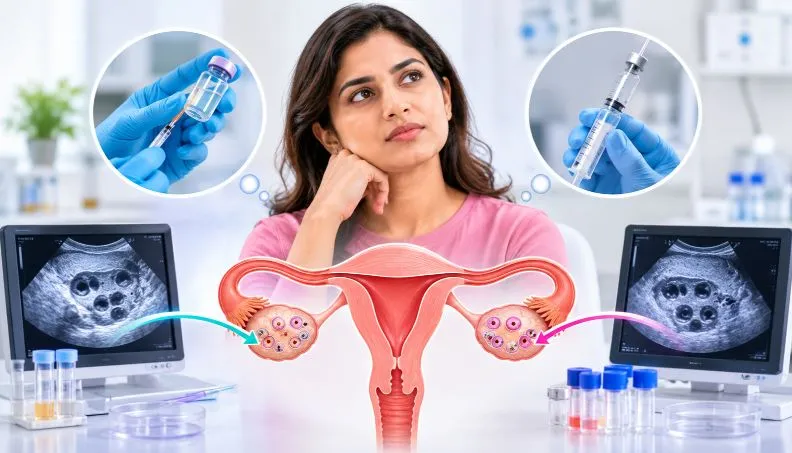
This image is AI-generated and intended for illustrative purposes only.
Mini IVF and conventional IVF are two approaches that may be considered for women with a poor ovarian response, but neither is automatically better for every patient.
Mini IVF uses a lower-intensity stimulation approach, while conventional IVF generally uses higher doses of ovarian stimulation medicines to encourage the development of multiple follicles.
For women with diminished ovarian reserve or a previous poor response to stimulation, the decision depends on age, ovarian reserve tests, previous IVF cycle results, expected egg yield, treatment cost and personal preferences. A lower medicine dose does not necessarily mean better egg quality or a higher chance of pregnancy.
The most useful comparison is not simply how many eggs each method may produce. It is whether the treatment approach offers a reasonable chance of obtaining usable embryos and a live birth for the individual patient, while considering cost, medication burden and treatment time.
Key Takeaways
- Mini IVF uses a lower-intensity ovarian stimulation approach, while conventional IVF generally uses higher doses of stimulation medicines.
- Both approaches may be considered for women with poor ovarian response or diminished ovarian reserve.
- Mini IVF may reduce medication use and treatment costs, but it can result in fewer eggs being retrieved and a higher chance of cycle cancellation.
- Conventional IVF may aim to recruit more follicles, but increasing medicine doses does not necessarily improve live birth chances in poor responders.
- Current Indian Fertility Society guidance considers mild stimulation and conventional stimulation reasonable options for poor responders.
- The most appropriate protocol depends on age, AMH, antral follicle count, previous IVF response and the overall treatment goal.
What Is Mini IVF for Poor Ovarian Responders?
Mini IVF is a form of mild ovarian stimulation that uses lower doses of fertility medicines to encourage the development of a smaller number of follicles. It is sometimes called minimal stimulation IVF or mild stimulation IVF.
In a conventional IVF cycle, higher doses of gonadotropin medicines are generally used to stimulate multiple follicles. Mini IVF aims to achieve a more moderate response while reducing the amount of medication required.
Depending on the protocol, mini IVF may involve:
- Oral medicines such as clomiphene citrate or letrozole.
- Lower doses of injectable gonadotropins.
- Medicines to prevent premature ovulation.
- Ultrasound monitoring to assess follicle development.
- A trigger injection before egg retrieval.
The aim is not necessarily to collect as many eggs as possible. It is to obtain eggs that may be suitable for fertilisation and embryo development.
However, the term Mini IVF is not used consistently by every clinic. Some centres use it for low-dose stimulation, while others may use it to describe modified natural-cycle treatment. Ask which medicines and procedures are included in the proposed protocol.
What Is Conventional IVF for Poor Ovarian Responders?
Conventional IVF uses injectable fertility medicines to stimulate the ovaries to develop multiple follicles before egg retrieval.
The doctor selects the medication dose and stimulation protocol based on ovarian reserve, age, previous treatment response and other medical findings.
A conventional IVF cycle generally includes:
- Baseline ultrasound and hormone assessment, when indicated.
- Ovarian stimulation with injectable gonadotropins.
- Monitoring of follicle growth through ultrasound scans.
- Medicines to prevent premature ovulation, if required.
- A trigger injection to support final egg maturation.
- Egg retrieval under appropriate sedation or anaesthesia.
- Fertilisation and embryo development in the laboratory.
- Fresh or frozen embryo transfer, depending on the treatment plan.
For women with poor ovarian response, the doctor may adjust the stimulation protocol after reviewing previous cycle results.
Using a higher dose does not guarantee that more eggs will develop. The number of follicles available for stimulation is also influenced by the woman’s ovarian reserve.

Dr Mannan IVF Centre
Experience world-class fertility care with Dr. Mannan Gupta at the Best IVF Centre in Delhi
What Does Poor Ovarian Response Mean in IVF?
Poor ovarian response means that the ovaries produce fewer follicles or eggs than expected during ovarian stimulation. It may be associated with diminished ovarian reserve, increasing age or a previous limited response to IVF medicines.
Doctors use a combination of medical history, blood tests and ultrasound findings to assess the possibility of a poor response.
Common indicators include:
Assessment | What It Helps Evaluate |
AMH test | Provides an estimate of ovarian reserve |
Antral follicle count (AFC) | Counts small follicles visible on ultrasound |
FSH test | Helps assess ovarian function when interpreted with other findings |
Previous IVF response | Shows how the ovaries responded to earlier stimulation |
Age | Provides important context when assessing reproductive potential |
The Bologna criteria are one recognised way to identify poor ovarian response. They generally require at least two of the following:
- Advanced maternal age of 40 years or older, or another risk factor for poor response.
- A previous poor ovarian response, generally three or fewer eggs retrieved after conventional stimulation.
- An abnormal ovarian reserve test, such as a low antral follicle count or AMH level.
- The Indian Fertility Society’s 2024 guideline discusses these criteria and the assessment of poor ovarian response. Read the guideline.
Mini IVF vs Conventional IVF: What Is the Difference?
The main difference is the intensity of ovarian stimulation and the number of follicles the treatment aims to develop.
Comparison Factor | Mini IVF | Conventional IVF |
Stimulation approach | Mild or lower-intensity stimulation | Conventional ovarian stimulation |
Medication | Lower doses of injectable medicines, often with oral medicines | Usually higher doses of injectable gonadotropins |
Expected egg yield | Often fewer eggs | May aim to retrieve more eggs |
Medication cost | Generally lower | Generally higher |
Cycle cancellation | May be more frequent in some poor-responder groups | May be lower in some comparisons |
Monitoring | Ultrasound and other tests as advised | Ultrasound and other tests as advised |
Egg retrieval | Required when suitable follicles develop | Required when suitable follicles develop |
Embryo development | Depends on egg maturity, fertilisation and embryo development | Depends on egg maturity, fertilisation and embryo development |
Suitability | May be considered for selected poor responders | May also be suitable for poor responders |
Neither approach guarantees a particular number of eggs, embryos or a live birth. The treatment decision should consider the patient’s complete fertility assessment.
Is Mini IVF Better Than Conventional IVF for Poor Responders?
Mini IVF is not universally better than conventional IVF for poor ovarian responders. Both approaches can be considered, and current evidence does not establish one stimulation strategy as superior for every patient.
The Indian Fertility Society’s 2024 guideline states that mild stimulation using low-dose gonadotropins and conventional stimulation are equally recommended for poor responders. It also considers mild stimulation with letrozole or clomiphene citrate combined with low-dose gonadotropins a reasonable option.
A systematic review and meta-analysis published in 2021 compared mild and conventional stimulation in poor responders. It included 15 randomised controlled trials.
The researchers found broadly comparable fresh and cumulative live birth outcomes, although the evidence quality varied. Mild stimulation was associated with fewer eggs retrieved and a higher cycle cancellation rate in the pooled analysis. Read the research.
This means the decision should not be based only on the amount of medication used or the number of eggs expected.
- When May Mini IVF Be Considered?
A doctor may discuss mild stimulation when:
- The patient has diminished ovarian reserve.
- Previous conventional IVF cycles produced a limited number of eggs.
- The patient wants to reduce injectable medication use.
- The expected response to higher stimulation doses is limited.
- Treatment cost and medication burden are important considerations.
Mini IVF may also be considered when the doctor believes that a lower-intensity approach is appropriate based on previous treatment results.
However, fewer eggs may mean fewer opportunities to obtain embryos from that particular retrieval. The possibility of cycle cancellation should also be discussed.
- When May Conventional IVF Be Considered?
Conventional stimulation may be considered when:
- The doctor believes a conventional protocol is suitable based on ovarian reserve and previous response.
- There is a reasonable possibility of recruiting multiple follicles.
- The patient and doctor want to assess whether a conventional approach may produce more eggs.
- Previous mild stimulation did not produce a suitable response.
- The expected benefits and medication requirements have been reviewed.
It is important to understand that using very high doses of gonadotropins does not necessarily improve outcomes in poor responders. The Indian Fertility Society guideline does not recommend increasing gonadotropin doses beyond standard doses to improve live birth rates in this group.
Does Mini IVF Have a Higher Success Rate for Poor Responders?
There is no reliable evidence that Mini IVF consistently produces a higher live birth rate than conventional IVF in women with poor ovarian response.
Some studies have reported similar pregnancy and live birth outcomes with the two approaches. However, results depend on the patient population, stimulation protocol and how treatment outcomes are measured.
A 2021 meta-analysis found comparable fresh and cumulative live birth outcomes between mild and conventional stimulation in poor responders. It also reported fewer eggs retrieved and a higher cancellation rate with mild stimulation. The researchers noted that the overall quality of evidence ranged from low to moderate. View the published study.
When discussing IVF success rates, I encourage patients to look at more than the number of eggs collected. Important outcomes include:
- Number of mature eggs retrieved.
- Fertilisation rate.
- Number of embryos suitable for transfer or freezing.
- Pregnancy rate after embryo transfer.
- Live birth rate.
- Cumulative live birth rate from the treatment or egg retrieval.
A higher egg count does not automatically mean a higher chance of having a baby. Similarly, a lower egg count does not mean that pregnancy is impossible.
Does Mini IVF Reduce the Cost of Fertility Treatment?
Mini IVF may cost less than conventional IVF because it generally uses fewer injectable stimulation medicines. However, the total treatment cost depends on the clinic, medication requirements, laboratory procedures and number of treatment cycles.
Some expenses may still apply to both approaches:
- Initial fertility consultation and investigations.
- Ultrasound monitoring.
- Egg retrieval and anaesthesia.
- IVF or ICSI laboratory procedures, when indicated.
- Embryo culture.
- Fresh or frozen embryo transfer.
- Embryo freezing and storage, if required.
A mini IVF cycle may have a lower medication cost, but fewer eggs or a cancelled cycle may mean that more than one attempt is needed. The total cost across multiple cycles should therefore be considered.
Ask the clinic for a written estimate that explains which services are included and which may be charged separately.
What Are the Possible Disadvantages of Mini IVF?
Mini IVF may reduce medication use, but it also has limitations.
1. Fewer Eggs May Be Retrieved
Mild stimulation often aims to develop fewer follicles than conventional stimulation. As a result, the number of eggs collected may be lower.
This can reduce the number of opportunities for fertilisation and embryo development during that cycle.
2. Cycle Cancellation May Occur
A cycle may be cancelled if follicle development is inadequate, premature ovulation occurs or no suitable egg can be retrieved.
Some research has found a higher cancellation rate with mild stimulation in poor responders compared with conventional stimulation.
3. More Than One Cycle May Be Needed
If only a small number of eggs or embryos are obtained, the patient may need to discuss another stimulation cycle. This can affect the overall cost and time required for treatment.
4. It Does Not Improve Egg Quality Automatically
Using fewer medicines does not reverse age-related changes in egg quality or increase the underlying ovarian reserve.
The quality and developmental potential of eggs are influenced by several biological factors, including age.
What Are the Possible Disadvantages of Conventional IVF in Poor Responders?
Conventional IVF may involve more injectable medicines, but a higher medication dose does not guarantee a stronger ovarian response.
Potential limitations include:
- Higher medication requirements and associated costs.
- Daily injections over the stimulation period.
- Repeated monitoring appointments.
- The possibility of a limited response despite stimulation.
- The possibility of cycle cancellation or no suitable embryo for transfer.
For patients with poor ovarian reserve, the doctor needs to consider whether increasing the medication dose is likely to provide a meaningful benefit.
The Indian Fertility Society’s 2024 guideline advises against increasing gonadotropin doses beyond standard levels solely to improve live birth rates in poor responders. See the guideline recommendations.
What Tests Help Decide Between Mini IVF and Conventional IVF?
The choice of IVF protocol begins with a review of ovarian reserve and previous treatment response.
Your doctor may recommend:
- AMH Test
The anti-Müllerian hormone test helps estimate ovarian reserve. A lower AMH level may indicate a reduced number of eggs available for stimulation, but it does not independently determine whether natural conception or IVF will result in pregnancy.
We’ve gone into this distinction in more depth in Repeated IVF Failures? Your Egg Quality May Be the Problem.
- Antral Follicle Count
An ultrasound is used to count small follicles in the ovaries. This helps estimate how the ovaries may respond to stimulation medicines.
- FSH Test
Follicle-stimulating hormone is assessed in the context of other hormone results and menstrual-cycle timing. It may provide additional information about ovarian function.
- Previous IVF Cycle Reports
If you have undergone IVF before, your doctor may review the stimulation dose, number of follicles, eggs retrieved, mature eggs, fertilisation and embryo development.
- Age and Medical History
Age, previous pregnancy history, menstrual pattern, reproductive conditions and other health factors help guide the treatment decision.
No single test can determine the ideal stimulation protocol on its own.
Which IVF Approach Should You Choose for Poor Ovarian Response?
There is no universal answer to whether Mini IVF or conventional IVF is better for poor ovarian responders. Both are recognised approaches, and the Indian Fertility Society recommends considering them according to the patient’s clinical circumstances.
Mini IVF may be suitable when reducing medication use is a priority and the doctor considers a mild stimulation protocol appropriate. Conventional IVF may be considered when a conventional stimulation approach is clinically suitable and the expected response has been assessed.
The decision should account for age, ovarian reserve, previous IVF results, expected egg yield, embryo development, treatment cost and the patient’s preferences.
At Dr. Mannan IVF Centre, patients considering IVF treatment in New Delhi can discuss their fertility investigations, previous treatment reports and possible stimulation approaches with the specialist.
If you have been advised that you have low AMH or poor ovarian response, a consultation can help clarify what your test results mean and which treatment options may be appropriate. Learn more about IVF treatment in New Delhi.
Frequently Asked Questions
1. Is Mini IVF suitable for women with low AMH?
Mini IVF may be considered for women with low AMH, depending on their age, antral follicle count and previous treatment response. Low AMH alone does not determine which IVF protocol is appropriate.
2. Can Mini IVF improve egg quality?
Mini IVF does not automatically improve egg quality. It uses a lower-intensity stimulation approach, but egg quality is influenced by age and other biological factors.
3. Does conventional IVF produce more eggs than Mini IVF?
Conventional IVF may produce more eggs because it generally uses higher-intensity stimulation. However, the actual response varies, particularly in women with diminished ovarian reserve.
4. Is Mini IVF less expensive than conventional IVF?
Mini IVF may cost less because it usually requires fewer stimulation medicines. However, the total expense depends on the clinic’s charges, laboratory procedures and whether additional cycles are required.
5. Can poor ovarian responders achieve pregnancy through Mini IVF?
Pregnancy may be possible with Mini IVF, but the outcome depends on several factors, including age, egg quality, fertilisation and embryo development. No protocol can guarantee pregnancy.
6. How many eggs are collected during Mini IVF?
There is no fixed number. Mini IVF generally aims for a smaller number of developing follicles than conventional stimulation, but the actual number of eggs retrieved depends on ovarian reserve and treatment response.
7. Does a higher dose of IVF injections improve results in poor responders?
Not necessarily. Higher doses do not guarantee more eggs or a higher live birth rate. The Indian Fertility Society’s 2024 guideline advises against increasing gonadotropin doses beyond standard levels solely to improve live birth outcomes in poor responders.
8. Can I switch from conventional IVF to Mini IVF after a failed cycle?
Your doctor may consider a different stimulation protocol after reviewing your previous cycle results. The decision should be based on the ovarian response, egg retrieval findings and overall treatment goals.
9. Is Mini IVF the same as natural-cycle IVF?
No. Mini IVF generally uses mild ovarian stimulation medicines, while natural-cycle IVF attempts to retrieve an egg from a follicle developing during the natural menstrual cycle. Modified natural-cycle IVF may involve additional medicines.
10. Which IVF protocol has a better live birth rate for poor responders?
Current evidence does not establish a consistent live birth advantage for Mini IVF or conventional IVF in poor responders. The appropriate protocol depends on the patient’s clinical assessment and treatment history.
Medical Disclaimer:
This article is intended for general educational purposes and does not replace medical consultation, diagnosis or treatment. Mini IVF and conventional IVF protocols must be selected by a qualified fertility specialist based on individual medical findings. Treatment outcomes vary, and no stimulation protocol can guarantee egg retrieval, embryo development, pregnancy or live birth.
