
IUI for PCOS Patients in Delhi: Success Tips and Treatment Protocols
Dr Mannan Gupta
Medically Reviewed by Dr. Mannan Gupta On Feb 23, 2026
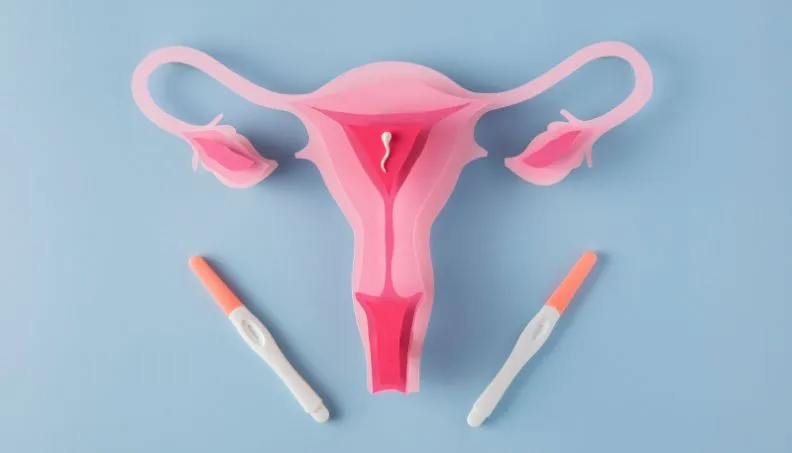
Polycystic Ovary Syndrome (PCOS) is one of the most common hurdles on the path to parenthood, yet it is also one of the most treatable.
For many women, the primary challenge is irregular ovulation, which makes timing conception difficult.
Intrauterine Insemination (IUI) is a highly effective first-line treatment for PCOS patients because it combines specialized ovulation-inducing medications with precise timing, ensuring that healthy sperm are placed in the uterus exactly when the egg is released.
I am Dr. Mannan Gupta, and with over 10 years of experience at Dr. Mannan IVF Centre, I have seen how a structured protocol tailored to the unique metabolic and hormonal needs of PCOS can turn a complex journey into a successful pregnancy.
Key Takeaways
- Ovulation Induction: The core of IUI for PCOS is regulating the menstrual cycle with medication.
- Controlled Monitoring: Frequent scans prevent the risk of multiple pregnancies (twins/triplets).
- Lifestyle Synergy: Success rates improve when clinical treatment is paired with metabolic management.
- Cost-Effective: IUI is a less invasive and more affordable start compared to advanced ART.
Why is PCOS a common cause of infertility?
In a typical cycle, the ovaries develop a few follicles, one of which becomes “dominant” and releases an egg.
In PCOS, hormonal imbalances—often involving insulin resistance and higher levels of androgens—prevent these follicles from maturing.
Instead, the ovaries may contain many small, immature follicles (often described as a “string of pearls” on an ultrasound), leading to irregular or absent periods.
As an IUI specialist in New Delhi, I focus on correcting this “traffic jam” in the ovaries to allow a single, healthy egg to emerge.
What are the best treatment protocols for PCOS in Delhi?
The foundation of PCOS Treatment involves “ovulation induction.” We typically start with oral medications like Letrozole, which has shown superior results for PCOS patients compared to older drugs.
In some cases, we use a “low-dose” gonadotropin protocol—injectable hormones that directly stimulate the ovaries.
The goal is to recruit only one or two follicles to minimize the risk of Ovarian Hyperstimulation Syndrome (OHSS), a condition where ovaries overreact to medication.
Dr Mannan IVF Centre
Experience world-class fertility care with Dr. Mannan Gupta at the Best IVF Centre in Delhi
How does the IUI procedure work for women with PCOS?
Once we have confirmed via ultrasound that your follicles are the right size, we use a “trigger shot” to induce ovulation. About 36 hours later, the IUI is performed at our IUI treatment hospital in New Delhi.
The male partner’s sample is “washed” to concentrate the strongest sperm. Using a tiny, flexible catheter, we bypass the cervix to place the sperm directly into the uterine cavity.
This is particularly helpful for PCOS patients who may also have “hostile cervical mucus” caused by hormonal fluctuations.
Can lifestyle changes improve my IUI success rate?
Clinical treatment works best when the body’s internal environment is stable. Because PCOS is often linked to insulin resistance, even a 5% reduction in body weight or a shift to a low-glycemic diet can significantly improve how your ovaries respond to medication.
Managing stress and ensuring adequate sleep are not just “wellness” tips; they are biological imperatives that help regulate the endocrine system.
At the Fertility Clinic New Delhi, we often integrate nutritional guidance into our medical protocols to ensure your body is fully prepared for implantation.
Take Control of Your Fertility Journey
PCOS doesn’t have to define your future. At Dr. Mannan IVF Centre, we provide compassionate, expert-led care to help you navigate hormonal challenges and achieve a healthy pregnancy.
Book Your Consultation with Dr. Mannan Gupta | Call: +91 9711681986
What is the difference between IUI and IVF for PCOS?
It is important to understand when IUI is the right choice and when it might be time to consider more advanced options like IVF.
Feature | IUI for PCOS | IVF for PCOS |
Primary Goal | To induce ovulation and aid fertilization inside the body. | To retrieve eggs and fertilize them in a lab. |
Complexity | Simple, office-based procedure. | Multi-stage process involving surgical egg retrieval. |
Risk of Multiples | Higher if not monitored carefully. | Lower, as we control the number of embryos transferred. |
When to Choose | As a first-line treatment if fallopian tubes are open. | If IUI fails 3–6 times or if there is severe male factor infertility. |
For a detailed look at how these numbers compare to other fertility diagnoses, read our guide on Understanding IUI Success Rates: How to Compare Fertility Clinics.
How do we manage the risk of high-risk pregnancy in PCOS?
Pregnancies conceived via IUI in PCOS patients require careful monitoring. PCOS is sometimes associated with an increased risk of gestational diabetes or pregnancy-induced hypertension.
Our care doesn’t end with a positive pregnancy test. We monitor our patients closely to mitigate these risks.
If complications arise, we are equipped for high-risk pregnancy care, ensuring that from the first trimester to the delivery room—whether it results in a natural birth or a C-section delivery—the safety of both mother and child is prioritized.
What are the recovery expectations after the procedure?
The beauty of the IUI procedure is that it requires virtually no downtime. You may experience very mild spotting or “implantation-like” cramping, which is perfectly normal as the body adjusts.
Most of our patients return to their routine in New Delhi immediately after the procedure.
We generally advise avoiding high-impact activities for a few days to keep the pelvic area relaxed, but “bed rest” is a myth that is no longer medically recommended.
How can patients stay emotionally strong during treatment?
Dealing with PCOS can feel like an uphill battle against your own biology. The “two-week wait” after IUI can be particularly taxing. We encourage a patient-first approach that prioritizes mental health.
Seeking support groups or talking openly with your specialist can help demystify the process.
Remember, PCOS is a manageable condition, and with the right medical partnership, the vast majority of women are able to successfully conceive and carry a healthy baby to term.
Conclusion
IUI offers a powerful and accessible pathway for those navigating the challenges of PCOS.
By combining the latest ovulation induction protocols with a deep understanding of metabolic health, we can overcome the barriers that irregular cycles present.
At Dr. Mannan IVF Centre, Delhi, our goal is to provide you with a clear, scientifically-backed roadmap to parenthood.
Your journey may require a little extra patience and precise medical tailoring, but with the right care, that dream of a family is well within reach.
Frequently Asked Questions
1. Does IUI work for PCOS if I don't have a period at all?
Yes. We use medications to “restart” your cycle. Once we induce a withdrawal bleed, we can begin the stimulation process to help your ovaries produce an egg.
2. Is Metformin used during an IUI cycle for PCOS?
Often, yes. Metformin helps manage insulin resistance, which can make your ovaries more responsive to the fertility medications used during IUI.
3. What is the success rate of IUI for PCOS compared to other causes?
PCOS patients often have some of the highest success rates with IUI because the primary issue—ovulation—is something we can directly and effectively control with medication.
4. Can IUI cause me to have triplets?
While there is a risk of multiples with any stimulated cycle, we use “low-dose” protocols and perform frequent ultrasounds. If too many follicles develop, we may cancel the cycle to prevent the health risks associated with triplets.
5. How many rounds of IUI should a PCOS patient try?
Most specialists recommend trying 3 to 6 rounds of IUI. If success is not achieved within this timeframe, it may be time to evaluate other factors and consider IVF.
