
How to Prepare for Successful IVF Treatment | New Delhi
Dr Mannan Gupta
Medically Reviewed by Dr. Mannan Gupta On Mar 30, 2026

Embarking on an In Vitro Fertilisation (IVF) journey is a significant step, and many couples ask what they can do to improve their chances of success.
As Dr. Mannan Gupta, an IVF Specialist with over 10 years of experience, I can assure you that proactive preparation is key.
The most effective way to prepare for a successful IVF treatment in new delhi is by focusing on your physical, emotional, and lifestyle well-being at least three months before your cycle begins.
This holistic approach helps optimise your body for treatment and builds resilience for the journey ahead.
At Dr. Mannan IVF Centre, New Delhi, we believe in empowering our patients with knowledge. A well-prepared patient is often more confident and at ease during the process.
Key Takeaways
- Start Early: Begin making lifestyle and health adjustments at least three months before your IVF cycle. This timeframe aligns with the development cycle of eggs and sperm.
- Focus on Health: A balanced diet, moderate exercise, and adequate sleep are foundational. Address any underlying medical conditions with your specialist.
- Mind Your Mental Health: IVF can be emotionally demanding. Build a strong support system and practise stress-reduction techniques.
- Understand the Process: Familiarise yourself with the IVF stages, from diagnostics to embryo transfer, to feel more in control.
What is IVF, and who can benefit from it?
In Vitro Fertilisation, or IVF, is a series of procedures used to help with fertility or prevent genetic problems and assist with the conception of a child. It is the most effective form of assisted reproductive technology (ART).
During IVF, mature eggs are collected (retrieved) from ovaries and fertilised by sperm in a lab. Then the fertilised egg (embryo) or eggs (embryos) are transferred to a uterus. One full cycle of IVF takes about three weeks.
Our IVF specialist clinic in New Delhi commonly recommends this treatment for various fertility challenges, including:
- Blocked or damaged fallopian tubes
- Ovulation disorders
- Endometriosis
- Low sperm count or motility
- Unexplained infertility
- Age-related fertility decline
It’s important to remember that success rates vary depending on factors like age and the specific cause of infertility. A detailed consultation helps set realistic expectations.
Why is preparation so crucial for IVF success?
While the medical procedures are handled by your clinical team, the preparations you undertake can significantly influence the outcome.
Think of it as preparing fertile ground before planting a seed.
Proper preparation helps in several ways. Physically, it can improve the quality of both eggs and sperm, which are the building blocks of a healthy embryo. It also helps balance hormones and ensures your body responds optimally to the medications.
Emotionally, being prepared helps you navigate the highs and lows of the treatment with greater strength. Financial and logistical planning reduces external stressors, allowing you to focus completely on your well-being.
Dr Mannan IVF Centre
Experience world-class fertility care with Dr. Mannan Gupta at the Best IVF Centre in Delhi
What medical evaluations are necessary before starting IVF?
Before beginning treatment, we conduct a thorough evaluation to create a personalised plan. This baseline assessment is critical for tailoring the treatment to your specific needs.
Key Diagnostic Steps:
- Fertility Assessment: This includes blood tests to check hormone levels (like AMH to assess ovarian reserve) and a series of transvaginal ultrasounds to examine your uterus and ovaries. For the male partner, a semen analysis is essential to evaluate sperm count, motility, and shape.
- Health Screening: We screen for underlying conditions like thyroid disorders, diabetes, or Polycystic Ovary Syndrome (PCOS) that could impact fertility or pregnancy.
- Infectious Disease Screening: Standard tests for both partners are required to ensure a safe process for you and your future child.
- Uterine Cavity Evaluation: A hysteroscopy or saline infusion sonogram might be recommended to ensure the uterine lining is receptive for embryo implantation.
Feeling informed and ready for your IVF journey is the first step towards success. If you have questions about your fertility health or want to understand your options, our team is here to provide expert guidance.
Take the next step with confidence. Schedule a consultation at Dr. Mannan IVF Centre in New Delhi today. Visit our website at or call us to book your appointment and begin your personalised path to parenthood.
How can I optimise my lifestyle for IVF success?
Simple lifestyle changes can have a profound impact on your fertility. We recommend both partners adopt these habits ideally three months prior to starting IVF.
- Adopt a Balanced Diet: Focus on a diet rich in antioxidants, vitamins, and minerals. Include plenty of leafy greens, fruits, whole grains, lean proteins, and healthy fats like those found in avocados and nuts. Minimise processed foods, excessive sugar, and trans fats.
- Engage in Moderate Exercise: Regular, moderate physical activity like walking, swimming, or fertility yoga can improve blood flow, reduce stress, and help maintain a healthy weight. Avoid high-intensity workouts during treatment, as they can sometimes interfere with the process.
- Prioritise Sleep: Aim for 7-8 hours of quality sleep per night. Sleep is when your body repairs itself and regulates hormones, including those essential for reproduction.
- Avoid Harmful Substances: It is critical to stop smoking, consuming alcohol, and using recreational drugs, as these can severely damage egg and sperm quality. We also advise limiting caffeine intake to one or two cups per day.
What emotional and mental preparations should I make?
The emotional aspect of IVF is just as important as the physical one. It is normal to feel a mix of hope, anxiety, and frustration. Acknowledging these feelings is the first step toward managing them.
At our Fertility Clinic in New Delhi, we encourage patients to build a robust support system.
- Seek Professional Support: Consider counselling or therapy with a professional who understands infertility. This provides a safe space to process your emotions.
- Practise Stress Reduction: Incorporate mindfulness, deep breathing exercises, or meditation into your daily routine. These techniques can help lower stress hormones and promote a sense of calm.
- Communicate with Your Partner: IVF is a shared journey. Maintain open communication with your partner about your fears, hopes, and needs. Decide together how you will support each other.
- Set Boundaries: Decide who you want to share your journey with. It is perfectly okay to limit conversations that you find stressful or unhelpful.
What should I expect during the IVF process?
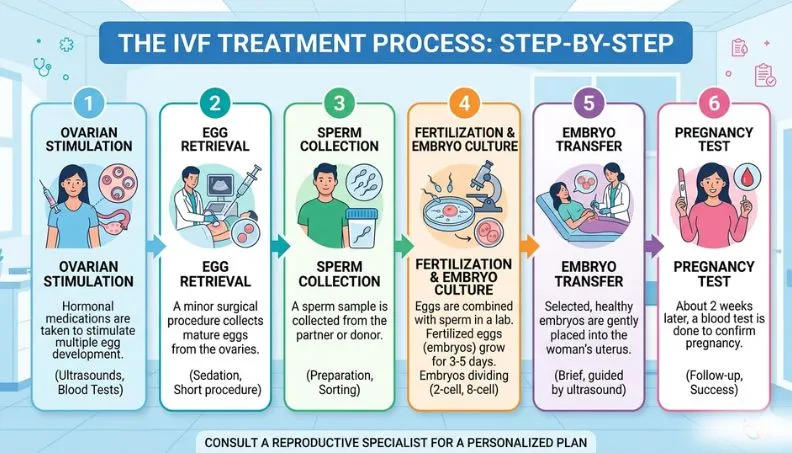
Understanding the steps involved can make the IVF process feel less daunting. While your protocol will be personalised, a typical cycle includes:
- Ovarian Stimulation: You will self-administer injectable hormones for about 8-12 days to encourage multiple eggs to mature. We will monitor your progress closely with ultrasounds and blood tests.
- Egg Retrieval: This is a minor surgical procedure performed under sedation. A thin needle is guided through the vagina to retrieve the mature eggs from your ovaries.
- Fertilisation: In our lab, the retrieved eggs are combined with sperm. In many cases, we use Intracytoplasmic Sperm Injection (ICSI), where a single healthy sperm is injected directly into each egg.
- Embryo Culture: The resulting embryos are grown in an incubator for 3-5 days. During this time, they are monitored for healthy development. Many couples also consider options at a freezing eggs hospital for future family planning.
- Embryo Transfer: The healthiest embryo (or embryos) is transferred into your uterus using a thin, soft catheter. This procedure is quick and usually painless.
- The Two-Week Wait: After the transfer, you will wait about two weeks before a blood test can confirm pregnancy. This period can be emotionally challenging, and it is important to continue your stress-management practices.
Conclusion
Preparing for IVF is a journey of partnership—between you, your partner, and your clinical team.
By taking proactive steps to nurture your physical and emotional health, you create the best possible foundation for a successful outcome.
At Dr. Mannan IVF Centre, our commitment is to provide you with expert, compassionate care every step of the way.
We are here to answer your questions, support you through the challenges, and guide you with clarity and trust towards your goal of building a family.
Frequently Asked Questions
1. Do IVF babies have a higher risk of birth defects?
While some medical studies suggest a very slight increase in the risk of certain birth defects, the overall risk remains incredibly low. The absolute risk is comparable to that of naturally conceived children, and experts believe this slight increase is often tied to the parents’ underlying fertility issues rather than the IVF procedure.
2. Can IVF affect a child’s intelligence or development?
No, extensive research shows that IVF does not negatively affect a child’s intelligence. Children conceived through IVF perform similarly to their naturally conceived peers in cognitive, motor, and academic assessments.
3. Are there long-term health risks for IVF children?
Most IVF children grow up healthy into adulthood. While doctors continue to study minor differences in cardiovascular markers, there are currently no significant long-term health risks that should deter you from using IVF to build your family.
4. Does the type of embryo transfer matter?
Both fresh and frozen embryo transfers are highly safe procedures. They have slight differences in outcomes—such as frozen transfers occasionally resulting in higher birth weights—but both are standard, successful practices when performed by experienced fertility specialists.
5. How can I ensure a healthy pregnancy with IVF?
You can promote a healthy pregnancy by maintaining a nutritious diet, taking necessary prenatal vitamins, attending all medical consultations, and discussing Single Embryo Transfer (SET) with your doctor to lower the risk of complications associated with carrying multiples.
