
Fibroid and Pregnancy: Can You Carry a Baby Safely With a Large Fibroid?

Dr Mannan Gupta
Medically Reviewed by Dr. Mannan Gupta On June 17, 2026
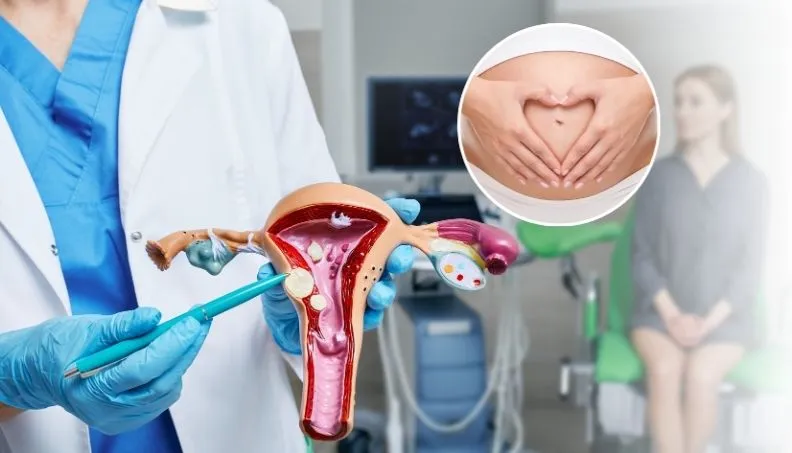
You have just been told you have a fibroid — and you are pregnant, or hoping to be. The first question in your mind is probably the most important one you will ask all year: is my baby going to be safe?
The honest, evidence-based answer is that most women with fibroids — even large ones — go on to have successful pregnancies and healthy babies.
But the word “most” deserves a proper explanation. For women seeking clarity on fibroid and pregnancy treatment in New Delhi, understanding the specific risks, the role of your fibroid’s location, and what close monitoring looks like can make all the difference between anxiety and confidence.
Key Takeaways
- Why fibroid location often matters more than size
- The real, documented risks — and how common they actually are
- What “red degeneration” is and why it causes sudden severe pain
- Whether you should remove a fibroid before trying to conceive
- What delivery options look like — and what happens to fibroids after birth
What Exactly Is a Uterine Fibroid — and Why Does It Matter in Pregnancy?
What Fibroids Are and Where They Grow?
A uterine fibroid, medically called a leiomyoma, is a non-cancerous growth made of smooth muscle tissue that develops within or on the wall of the uterus.
Fibroids are never malignant — they do not turn into cancer. They can be as small as a pea or as large as a grapefruit, and they can appear singly or in clusters.
Their location is typically described by where they grow: inside the uterine cavity, within the muscular wall itself, or on the outer surface of the uterus.
How Common They Are in Women of Reproductive Age?
Fibroids are far more common than most women realise. Research suggests that approximately 40–60% of women develop fibroids by the age of 35, rising to nearly 80% by menopause.
Among pregnant women specifically, fibroids are detected in an estimated 1.6–11% of pregnancies — a wide range because many fibroids cause no symptoms and are found only when a scan is performed.
Why Fibroids Behave Differently During Pregnancy?
Pregnancy hormones — particularly oestrogen and progesterone — create an environment in which fibroids can change in behaviour, and sometimes in size.
Research shows that roughly one third of fibroids grow during the first trimester, when hormonal levels rise most sharply, while the majority remain stable for the rest of the pregnancy.
The expanding uterus also alters the mechanical relationship between the fibroid and its surroundings, which is why complications that were not present before pregnancy can emerge as the pregnancy progresses.
Does the Location of the Fibroid Matter More Than Its Size?
Submucosal Fibroids — The Highest-Risk Type
A submucosal fibroid is one that grows into the uterine cavity — the space where the baby develops — and it carries the highest pregnancy risk of all fibroid types.
Even a relatively small submucosal fibroid can distort the shape of the cavity, interfere with implantation, and significantly raise the risk of miscarriage. These fibroids are the most likely to require treatment before a pregnancy is attempted.
Intramural and Subserosal Fibroids — the Nuance
Intramural fibroids grow within the muscular wall of the uterus and are the most common type. Their impact on pregnancy depends heavily on how large they are and whether they press against the uterine cavity.
Subserosal fibroids, which grow on the outer surface of the uterus, tend to have the least direct impact on pregnancy — though large subserosal fibroids can cause pain and, in some cases, torsion (twisting on their stalk), which is a surgical emergency.
Fibroids Near the Cervix and Placenta — the Critical Zone
Fibroids located in the lower segment of the uterus — near the cervix — are clinically significant because they can obstruct the birth canal, making vaginal delivery unsafe.
Fibroids adjacent to the placenta are similarly important because of their association with placental abruption, a condition where the placenta separates from the uterine wall before delivery.
The proximity of a fibroid to both the cervix and the placenta is one of the most closely watched parameters throughout a high-risk pregnancy.
Dr Mannan IVF Centre
Experience world-class fertility care with Dr. Mannan Gupta at the Best IVF Centre in Delhi
What Are the Real Risks of Having a Large Fibroid During Pregnancy?
Miscarriage Risk in the First Trimester
Women with fibroids have a higher rate of first-trimester miscarriage than those without — approximately 14% compared to 7.6% in the general population, according to research published in BMC Pregnancy and Childbirth.
This risk is higher when fibroids are submucosal, multiple, or very large. However, it is equally important to state that the majority of women with fibroids do not miscarry — these are statistical elevations, not certainties.
If you have experienced more than one pregnancy loss and fibroids are part of your history, our article on repeated miscarriage and the hidden causes most doctors miss examines the full investigation pathway — including the role fibroids and uterine factors play alongside other causes.
Preterm Labour and Premature Delivery
Large fibroids — particularly those above 5 cm — are associated with a higher rate of preterm contractions and premature rupture of membranes (when the waters break before 37 weeks).
As the uterus expands to accommodate a growing baby, fibroids in certain locations can trigger uterine irritability.
Women with large or multiple fibroids are typically offered more frequent monitoring and may be counselled on the signs of preterm labour to watch for.
If you are unsure whether your fibroid profile means your pregnancy should be classified as high-risk, our article on what actually makes a pregnancy high-risk in India explains the clinical criteria in clear, accessible terms.
Placental Abruption — the Hidden Danger
Placental abruption — where the placenta tears away from the uterine wall before delivery, cutting off the baby’s blood and oxygen supply — occurs more frequently in pregnancies complicated by fibroids, especially when the fibroid lies behind or adjacent to the placenta.
It is a serious obstetric emergency, and while it remains uncommon, its association with fibroids is well-established in published meta-analyses. Regular ultrasound monitoring of placental position throughout the pregnancy is essential.
Fetal Malpresentation and Difficult Delivery
When a large fibroid occupies space inside the uterine cavity, the baby may not be able to turn into the standard head-down position for delivery — a condition called malpresentation. Breech babies (bottom-down) or transverse presentations (lying sideways) are more common in fibroid pregnancies.
Studies indicate that women with fibroids have a roughly 3.7-fold higher likelihood of requiring a caesarean section, partly for this reason.
What Is Red Degeneration — and Why Does It Cause Sudden Severe Pain?
What Actually Happens Inside the Fibroid?
Red degeneration is a specific type of fibroid change that occurs almost exclusively during pregnancy.
As the uterus enlarges rapidly, the blood supply to a fibroid can become insufficient for the growth demands of the tissue.
When the fibroid outgrows its blood supply, the inner tissue begins to break down — a process medically called haemorrhagic infarction.
The fibroid’s tissue takes on a red or mahogany colour internally, which gives the condition its name.
When It Occurs and What Symptoms It Causes?
Red degeneration typically occurs during the late first trimester or early second trimester and is more commonly seen in fibroids larger than 5 cm.
The hallmark symptom is sudden, severe localized pain over the area of the fibroid, which may come on without warning and feel alarmingly acute.
It can be accompanied by nausea, vomiting, low-grade fever, and a tender uterus on examination — symptoms that can mimic appendicitis or other urgent abdominal conditions, making it a genuine diagnostic challenge. nih
How It Is Safely Managed During Pregnancy?
The reassuring truth is that red degeneration is almost always managed conservatively. Treatment involves bed rest, adequate hydration, and analgesics — with paracetamol (acetaminophen) preferred for pain relief as it is considered safe throughout pregnancy.
NSAIDs such as ibuprofen must be avoided during pregnancy due to risks of miscarriage, reduced amniotic fluid, and fetal heart complications — this is a critical safety point that patients managing fibroid pain at home must know.
In most cases, the pain resolves within 48–72 hours and the pregnancy continues without further intervention.
How Is a Fibroid Monitored During Pregnancy?
Ultrasound — Routine Mapping Through Each Trimester
Every woman with a known fibroid should have her fibroid mapped — its size, type, number, and location recorded — at her first prenatal scan, typically around 6–8 weeks. Follow-up ultrasounds are then used to track whether the fibroid is growing, whether it is approaching the placenta or cervix, and how the baby is positioned relative to it. In a well-managed pregnancy, this mapping becomes a powerful tool for anticipating and preventing complications.
When MRI Is Used and Why?
In select cases — particularly when the fibroid is very large, when its exact location is ambiguous on ultrasound, or when surgical intervention is being considered — MRI offers superior detail over ultrasound for evaluating fibroid characteristics during pregnancy.
It provides clearer information about the relationship between the fibroid, the placenta, the cervix, and the developing baby.
It is radiation-free and safe for use in pregnancy, particularly in the second and third trimesters.
What Your Specialist Is Watching For at Each Stage?
A high-risk pregnancy specialist monitoring a fibroid pregnancy is tracking several specific parameters: fibroid growth trajectory, placental location and health, fetal position and growth, cervical length (to assess preterm labour risk), and the presence of any degeneration signs.
For women in New Delhi managing this kind of monitoring, ourHigh-Risk Pregnancy Care in New Delhi page outlines the structured antenatal surveillance protocol offered at Dr. Mannan IVF Centre and what to expect at each stage of care.
Should You Remove a Fibroid Before Getting Pregnant?
When Myomectomy Before Pregnancy Is Recommended?
Myomectomy — the surgical removal of fibroids while preserving the uterus — is most strongly recommended before pregnancy when a submucosal fibroid is distorting the uterine cavity, when a fibroid is large enough to significantly compress the cavity space, or when a patient has a history of prior miscarriages attributable to fibroid-related factors.
The goal of pre-pregnancy myomectomy in these cases is to restore a normal uterine cavity and improve the chance of successful implantation and pregnancy maintenance.
If you are trying to understand all available options before making this decision, our dedicated page on Uterine Fibroids Treatment in New Delhi covers the full range of surgical and non-surgical approaches, including what to expect from a specialist evaluation.
The Risks of Surgery Itself on Future Fertility
Myomectomy is not a risk-free procedure, and this is an important balance to understand.
Uterine surgery can cause scarring (adhesions), and if any fibroid cells are left behind, fibroids carry a roughly 50% chance of regrowing within months — creating a limited conception window before the problem may recur.
Surgeries that involve deep cuts into the uterine wall can also weaken it, sometimes requiring future deliveries to be via caesarean section.
How to Make This Decision With Your Specialist?
The decision to perform myomectomy before pregnancy should never be made based on fibroid size alone — it must be individualized based on fibroid type, location, the patient’s reproductive history, and her fertility goals.
A thorough consultation with a reproductive medicine specialist who can review 3D ultrasound findings, discuss IVF implications if relevant, and model the risk-benefit balance for your specific case is the only responsible approach to this decision.
Can You Have a Normal Delivery With Fibroids?
When Vaginal Delivery Is Safe?
The majority of women with fibroids — particularly those with intramural or subserosal fibroids that are not blocking the birth canal — can deliver vaginally and at full term.
Over 70% of women with fibroids have full-term deliveries, and many deliver naturally without surgical intervention.
The key determining factors are fibroid location relative to the cervix, the baby’s presentation, and how the labour progresses.
When Caesarean Section Is Necessary?
Caesarean delivery is recommended when a fibroid blocks the lower uterine segment or cervix, when the baby is in a malpresentation that cannot be corrected, or when labour is not progressing normally due to fibroid interference with uterine contractions.
The decision is made collaboratively with the obstetric team based on the specific clinical picture, not on fibroid size alone.
If your baby is currently in a breech position and you are also carrying a fibroid, understanding your delivery options in detail is important — our guide on what to do when your baby is breech at 34 weeks covers the available approaches and how the decision is reached in consultation with your care team.
What Happens to Fibroids After Delivery?
The post-pregnancy period brings good news for most women: research shows that approximately 76% of fibroids shrink significantly after delivery, as oestrogen and progesterone levels fall sharply.
For women who have had significant fibroids during pregnancy, a postpartum review with their gynaecologist at 6–9 months after delivery is recommended to assess the extent of shrinkage and decide whether any further treatment — myomectomy, medication, or monitoring — is appropriate at that stage.
Final Thoughts
A fibroid diagnosis during pregnancy — or before it — is not a reason to abandon hope or assume the worst.
The clinical evidence is clear: most women with fibroids, including large ones, carry healthy pregnancies and deliver healthy babies.
What matters most is understanding your fibroid’s type and location, receiving specialist monitoring throughout the pregnancy, and knowing the warning signs — particularly red degeneration — so you can respond promptly.
The decision about whether to treat a fibroid before pregnancy is nuanced and deeply personal, requiring a specialist conversation rather than a generic answer.
With the right team around you, fibroids and successful pregnancies are far more compatible than most people fear.
Your Next Step Starts Here
You deserve expert guidance, not uncertainty. Whether you are trying to conceive with fibroids, currently pregnant, or weighing up treatment options, Dr. Mannan Gupta and the team at Dr. Mannan IVF Centre are here to help you make informed, confident decisions. Book a specialist consultation at Dr Mannan IVF Centre and get a clear, personalised plan built around your specific case.
Frequently Asked Questions
1. Do fibroids grow bigger during pregnancy?
Some fibroids do grow during pregnancy — but most do not. Research shows that approximately one-third of fibroids grow during the first trimester when oestrogen and progesterone levels peak, while the majority remain stable in size. Fibroids rarely grow in the second or third trimester. Importantly, even fibroids that do grow during pregnancy typically shrink back after delivery as hormone levels normalise.
2. Can a fibroid cause a miscarriage?
Yes, certain fibroids — particularly submucosal fibroids that distort the uterine cavity — are associated with a higher miscarriage risk. Women with fibroids have approximately double the miscarriage rate of women without them (14% vs 7.6%), according to published research. However, this does not mean miscarriage is inevitable. Many women with fibroids, including submucosal ones, carry pregnancies successfully, especially with appropriate monitoring and specialist care.
3. What size fibroid is considered dangerous during pregnancy?
There is no single “dangerous” size — location is often more important than size alone. That said, fibroids above 5 cm are associated with higher rates of red degeneration and preterm labour. Fibroids above 10 cm, or those positioned near the cervix or placenta regardless of size, require particularly close monitoring. Your specialist will evaluate your fibroid’s risk profile based on both its size and its exact position in relation to the baby.
4. Can I do IVF if I have fibroids?
Yes, IVF is possible with fibroids — but the approach depends on fibroid type and location. Submucosal fibroids that distort the uterine cavity are typically treated before IVF to restore a normal implantation environment. Intramural and subserosal fibroids that do not affect the cavity are often managed with monitoring rather than surgery before IVF. Your fertility specialist will review imaging findings and design a personalised protocol that accounts for your fibroids specifically.
5. Is it safe to take pain medication for fibroid pain during pregnancy?
Paracetamol (acetaminophen) is the safe, recommended choice for managing fibroid pain during pregnancy. NSAIDs such as ibuprofen and diclofenac should be avoided — particularly in early pregnancy and after 32 weeks — because they carry documented risks of miscarriage, reduced amniotic fluid, and fetal heart complications. If your fibroid pain is severe or accompanied by fever, vomiting, or bleeding, do not self-medicate — contact your obstetric team immediately, as these symptoms may indicate red degeneration requiring assessment.
