
Donor Egg IVF Cost in India: What to Know Before Treatment

Dr Mannan Gupta
Medically Reviewed by Dr. Mannan Gupta On Oct 21, 2026
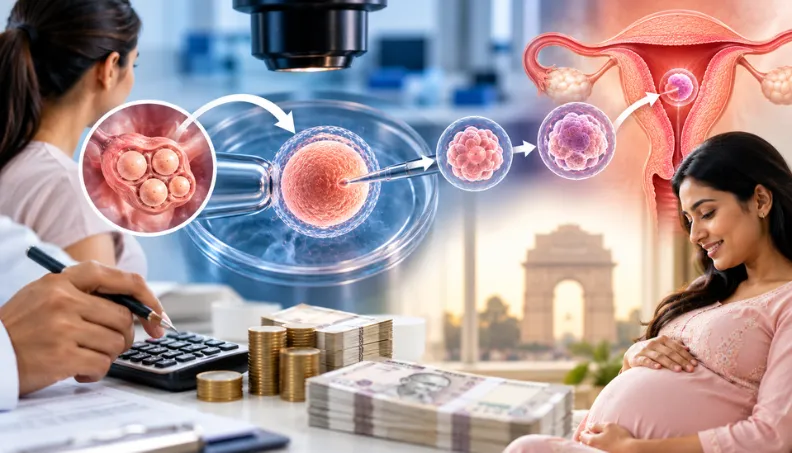
This image is AI-generated and intended for illustrative purposes only.
If your doctor has recommended donor eggs, one of your first questions is likely to be, “How much will donor egg IVF cost in India?”
Based on currently published Indian fertility pricing, a practical planning range is around ₹2.5 lakh to ₹4.5 lakh per treatment attempt, but the final cost depends on what your clinic includes, your treatment plan, medicines, laboratory procedures, and whether additional procedures are needed.
I’m Dr. Mannan Gupta, an IVF specialist at Dr. Mannan IVF Centre in New Delhi. I often tell patients that donor egg IVF should not be evaluated only by looking at the headline package price. You need to understand exactly what is included and what may be charged separately.
Key Takeaways
- Donor egg IVF in India may cost around ₹2.5 lakh to ₹4.5 lakh, depending on the treatment plan and clinic.
- The quoted amount may include donor-related costs, IVF laboratory work and embryo transfer, but this varies between clinics.
- Medicines, ICSI, embryo freezing, storage and genetic testing may increase the total cost.
- Donor eggs may be considered when using your own eggs is unlikely to provide a reasonable treatment option.
- Ask for a written, itemised treatment estimate before starting the cycle.
What is donor egg IVF and why might it be recommended?
Donor egg IVF is a form of IVF in which eggs from a screened donor are fertilised with sperm in the laboratory, and the resulting embryo is transferred into the recipient’s uterus.
I may discuss donor eggs when a woman’s own eggs are unlikely to provide a reasonable chance of creating a viable embryo.
This can happen with markedly reduced ovarian reserve, premature ovarian insufficiency, repeated IVF cycles with poor egg or embryo outcomes, or certain inherited genetic conditions.
The decision is not based on one test alone. I look at your age, ovarian reserve, previous IVF history, embryo development, medical history and the reason donor eggs are being considered.
If you are trying to understand the emotional and medical questions around this treatment, my detailed guide on Donor Egg IVF: The Questions Every Patient Has But Is Afraid to Ask can help before you make a decision.
How much does donor egg IVF cost in India?
A reasonable planning range for donor egg IVF in India is about ₹2.5 lakh to ₹4.5 lakh per attempt, based on currently published 2026 pricing from Indian fertility providers. This is an indicative range, not a standard national price.
The biggest problem with comparing prices is that different clinics include different services in their packages.
One clinic may include donor-related expenses, laboratory fertilisation and embryo transfer in one package. Another may quote these separately.
Your final estimate may depend on:
- Donor screening and donor-related charges
- Donor stimulation and egg retrieval
- IVF laboratory and embryo culture charges
- Recipient’s medicines and uterine preparation
- Embryo transfer
- ICSI, if clinically indicated
- Embryo freezing and storage
- Genetic testing, if recommended
- Additional scans, blood tests or procedures
A lower package price is not necessarily a lower total treatment cost. Always compare item by item.

Dr Mannan IVF Centre
Experience world-class fertility care with Dr. Mannan Gupta at the Best IVF Centre in Delhi
What does the donor egg IVF cost usually include?
The exact package differs between clinics, but donor egg IVF generally involves costs related to both the donor cycle and your own treatment.
The donor side may involve medical screening, ovarian stimulation, monitoring and egg retrieval. The recipient side may involve preparation of the uterine lining, medicines, monitoring and embryo transfer.
The IVF laboratory also has an important role. After the donor eggs are retrieved, they are fertilised with sperm and the resulting embryos are monitored before transfer or freezing. You can read more about our full range of IVF and donor programmes on our IVF Treatment page.
India’s Assisted Reproductive Technology (Regulation) Act, 2021 provides a legal framework for ART clinics and ART banks, including requirements related to oocyte donors, donor screening and handling of donated gametes.
This is one reason I advise patients not to arrange donor eggs independently or through informal sources. Donor treatment should be handled through an appropriately regulated fertility treatment pathway.
Why can donor egg IVF cost more than regular IVF?
Donor egg IVF can cost more than a conventional IVF cycle because there are additional donor-related steps.
With conventional IVF using your own eggs, your ovarian stimulation and egg retrieval are part of your treatment. With donor egg IVF, a separate donor cycle is involved.
The total treatment can therefore include:
- Donor medical screening
- Donor stimulation and monitoring
- Egg retrieval
- Laboratory fertilisation and embryo culture
- Recipient preparation
- Embryo transfer
- Additional laboratory procedures when needed
The cost is also affected by whether the clinic uses a fresh donor cycle or a frozen-oocyte pathway, and by the procedures required for your individual treatment.
Do medicines and injections come separately in donor egg IVF?
They may be included or billed separately, depending on the clinic’s package.
This is one of the first questions I recommend asking before you compare two IVF quotes.
For the recipient, medicines may be needed to prepare and support the uterine lining before embryo transfer. The exact medicines and duration depend on your treatment protocol.
The donor also undergoes ovarian stimulation and monitoring before egg retrieval. Some clinics include these costs in the donor programme, while others separate certain charges.
Ask your clinic specifically:
- Are recipient medicines included?
- Are donor medicines included?
- Are monitoring scans included?
- Are blood tests included?
- Is the egg retrieval included?
- Is embryo transfer included?
A written answer makes the financial planning much easier.
Is ICSI included in the donor egg IVF cost?
ICSI may be included in some donor egg IVF packages, but it should not be assumed.
ICSI, or intracytoplasmic sperm injection, involves injecting a single sperm directly into an egg. Whether it is appropriate depends on factors such as sperm quality, previous fertilisation history and the laboratory’s treatment plan.
If ICSI is being recommended, ask whether it is already included in your quoted donor egg IVF package or whether it is an additional charge.
I don’t recommend choosing ICSI simply because it sounds like a more advanced procedure. The right fertilisation method depends on the couple’s clinical situation.
What additional expenses should you ask about?
The safest way to estimate your total cost is to ask for every possible additional charge before treatment begins.
Some expenses may arise only if they become clinically necessary. These can include:
- ICSI
- Embryo freezing
- Embryo storage
- Frozen embryo transfer in a later cycle
- PGT or other embryo testing when indicated
- Additional blood tests or ultrasound scans
- Treatment of an underlying uterine problem before transfer
- Additional medicines
- Follow-up consultations
Not every patient needs these services.
I would be cautious about choosing multiple add-ons simply because they are offered. An additional procedure should have a clear clinical reason and should be discussed with your fertility specialist.
Does the donor's age affect the cost of donor egg IVF?
Donor eligibility is regulated, and donor selection is not simply a matter of choosing a younger donor for a higher price.
Under India’s ART Act, an ART bank may obtain oocytes from women aged 23 to 35 years, and the Act places specific restrictions on oocyte donation, including limits on how often an oocyte donor can donate and the number of oocytes retrieved.
This falls under the official mandate of India’s ART Act, administered by the Department of Health Research, Ministry of Health and Family Welfare.
The clinic and ART bank are responsible for following the applicable donor screening and regulatory requirements.
For you as the recipient, the more important question is whether the donor programme meets the required medical and legal standards, rather than trying to negotiate treatment around a particular donor.
Can donor egg IVF cost more if I need another embryo transfer?
Yes. A later frozen embryo transfer can create an additional cost if embryos are stored after the initial treatment.
For example, if embryos are frozen and a later transfer is planned, you may need to pay for thawing, preparation, monitoring and the embryo transfer procedure.
The initial donor egg IVF quote may not automatically include future frozen transfers.
Before treatment, ask:
- How many embryo transfers are included?
- Is embryo freezing included?
- How long is storage included?
- What is the cost of a later frozen embryo transfer?
- Are medicines for that transfer included?
These questions can give you a more realistic picture of the overall financial commitment.
Does donor egg IVF guarantee pregnancy because donor eggs are used?
No. Donor eggs can be an important treatment option, but they do not guarantee pregnancy or a live birth.
Donor egg treatment can reduce some of the limitations associated with poor egg quality, but pregnancy still depends on several factors, including embryo development, the uterus, sperm factors, medical conditions and the circumstances of the individual treatment cycle.
I also don’t recommend judging your chances from a single percentage published online. Success rates vary according to the patient group, treatment method, laboratory, reporting method and other clinical factors.
Your specialist should explain what the available data means for your own situation rather than promising a particular outcome.
Is donor egg IVF legally regulated in India?
Yes. Donor-based assisted reproductive treatment in India is regulated under the Assisted Reproductive Technology (Regulation) Act, 2021.
The Act establishes a regulatory framework for ART clinics and ART banks and contains provisions covering donor oocytes, screening, handling of gametes and the rights of children born through ART. It also states that a donor relinquishes parental rights over a child born from their gamete.
The law is important because donor treatment involves medical, ethical and legal considerations, not just the IVF procedure itself.
For patients, the practical point is simple: use a properly regulated ART pathway and discuss donor-related legal and consent requirements with your fertility clinic.
When should you consider donor egg IVF instead of another IVF cycle?
Donor egg IVF should be considered when your own eggs are unlikely to offer a reasonable treatment pathway, rather than simply because one IVF cycle has failed.
The decision may be discussed when there is:
- Markedly diminished ovarian reserve
- Premature ovarian insufficiency
- Repeated IVF cycles with poor embryo development
- Repeated treatment failure where egg-related factors are suspected
- A known genetic condition where using one’s own eggs carries a substantial concern
- Age-related decline in egg quality where the treating specialist believes donor eggs offer a more appropriate option
I don’t believe patients should be pushed towards donor eggs without understanding why the recommendation is being made.
If you’ve had repeated IVF failures, it can be useful to review what happened in previous cycles before deciding what to do next. My guide on why IVF can fail and what should be reviewed after a failed cycle covers this decision in more detail.
Frequently Asked Questions
1. How much does donor egg IVF cost in India?
A practical planning range is around ₹2.5 lakh to ₹4.5 lakh per attempt, but the final amount depends on what your clinic includes and whether additional procedures or medicines are required.
2. Is donor egg IVF more expensive than normal IVF?
It can be, because donor treatment involves additional donor-related medical and laboratory costs. The difference depends on how the clinic structures its treatment package.
3.Does donor egg IVF include medicines?
Not always. Some packages include recipient medicines and donor medications, while others charge them separately, so ask for an itemised estimate.
4. Is ICSI compulsory with donor eggs?
No. ICSI is not automatically required simply because donor eggs are being used. Your fertility specialist should recommend the fertilisation method based on the sperm and treatment history.
5. Can I choose the egg donor myself in India?
Donor treatment is regulated under India’s ART framework, and donor selection is handled through the authorised ART system rather than an informal direct-selection process. Discuss the applicable donor information and consent rules with your clinic.
6. Does donor egg IVF guarantee a baby?
No. Donor eggs can be an appropriate option for some patients, but no IVF treatment can guarantee pregnancy or a live birth.
7. Can donor egg IVF be done after 40?
It can be considered after 40 when medically appropriate. The decision depends on your overall health, uterine condition, previous fertility treatment and the clinical reason for considering donor eggs.
8. Can donor egg IVF involve frozen embryos?
Yes. Embryos created during treatment may be frozen when appropriate, and a later frozen embryo transfer may be planned depending on the clinical situation.
Final Thoughts
The cost of donor egg IVF is an important part of planning, but it shouldn’t be the only factor you consider.
A realistic budget starts with an itemised quote that clearly separates what is included from what may cost extra. Just as importantly, you should understand why donor eggs are being recommended and what alternatives may be appropriate for you.
If you’re considering donor egg IVF at Dr. Mannan IVF Centre in New Delhi, you can also find the clinic and directions through our Google Business Profile before planning your visit.
I encourage you to discuss your medical history, previous IVF results, treatment options and expected costs openly with your fertility specialist. The right treatment plan should be based on your individual situation, not on a package price or a success-rate number found online.
Medical Disclaimer:
This article is intended for general educational purposes only. It does not replace an individual medical consultation, physical examination, diagnosis, fertility assessment or personalised treatment plan. Donor egg IVF and its costs vary between patients and clinics.
