
What is the Best and Safest Egg Freezing Method in IVF Treatment?

Dr Mannan Gupta
Medically Reviewed by Dr. Mannan Gupta On Mar 13, 2026
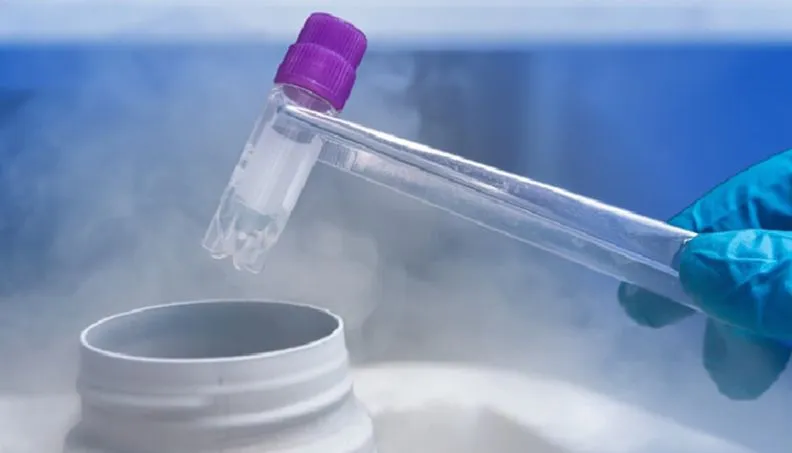
When you decide to preserve your fertility, you naturally want to ensure your future family is protected by the most advanced science available.
The best and safest egg freezing method currently available in IVF treatment is vitrification, an ultra-rapid cooling technique that prevents harmful ice crystals from forming inside the delicate egg cells.
As Dr. Mannan Gupta, an IVF Specialist, I frequently reassure patients at Dr. Mannan IVF Centre, New Delhi, that this modern approach has revolutionised reproductive medicine.
We combine this cutting-edge technology with deeply compassionate care to give you total confidence in your family planning journey.
Key Takeaways
- Vitrification is the clinical gold standard: This rapid flash-freezing method offers survival rates exceeding 90% for thawed eggs.
- Proactive health choices: Freezing eggs earlier in life preserves their quality and significantly reduces future genetic risks.
- Straightforward procedure: The egg retrieval process is minimally invasive, virtually painless, and requires very little downtime.
- Comprehensive medical support: Successful preservation involves careful physical monitoring, advanced laboratory techniques, and continuous emotional support.
Why might you need to consider freezing your eggs?
Women choose to pause their biological clocks for a multitude of valid, personal reasons. You might wish to focus on your career progression, or perhaps you simply have not yet met the right partner to start a family with.
When you visit an egg freezing in New Delhi, our initial focus is entirely on understanding your unique medical background and personal timeline.
We conduct comprehensive diagnostic evaluations, including detailed ultrasound scans and hormone blood tests, to accurately assess your current ovarian reserve.
Sometimes, preserving fertility is a vital medical necessity. If you are facing treatments such as chemotherapy that could harm your reproductive health, securing your healthy eggs beforehand is a crucial step in safeguarding your future motherhood.
How does the vitrification process actually work?
Historically, reproductive science relied on slow-freezing techniques to preserve biological material.
Because human eggs have a high water content, this slow cooling often allowed sharp ice crystals to form, which unfortunately damaged the cellular structure of the egg.
Today, strict clinical guidelines dictate the use of vitrification. This highly advanced technique uses protective solutions called cryoprotectants combined with instant, ultra-rapid cooling to transform the egg into a glass-like state safely.
Clinical Feature | Traditional Slow Freezing | Modern Vitrification |
Cooling Method | Gradual and lengthy temperature drop | Instant, ultra-rapid flash freezing |
Risk of Cell Damage | High risk due to ice crystal formation | Virtually eliminated |
Thaw Survival Rate | Roughly 60% | Exceeds 90% |
Medical Standard | Largely obsolete | The global gold standard |
Dr Mannan IVF Centre
Experience world-class fertility care with Dr. Mannan Gupta at the Best IVF Centre in Delhi
What do the clinical statistics say about vitrification success?
Before beginning any fertility treatment, it helps to understand the data backing the procedure. Vitrification has dramatically improved the success rates of IVF cycles using frozen eggs.
According to data from the [Human Fertilisation and Embryology Authority (HFEA)], the use of frozen eggs has increased exponentially. A key 2016 study revealed that the birth rate per embryo transferred was 27% for fresh embryos and an almost identical 26% for frozen-thawed embryos.
Modern rapid-freezing techniques offer pregnancy success rates that are nearly identical to those achieved using fresh eggs. This means your frozen eggs retain their original biological quality perfectly.
What is the step-by-step procedure at a freezing eggs hospital?
Your clinical journey begins with a carefully monitored phase of ovarian stimulation. You will administer gentle hormone medications designed to encourage your ovaries to safely mature multiple eggs at once.
Once your eggs reach the optimal stage of maturity, we perform the retrieval. This is a brief outpatient procedure conducted under light sedation, ensuring you remain entirely comfortable and pain-free throughout the process.
Immediately following the retrieval, our expert embryologists take over. As a leading eggs freezing hospital,New delhi we instantly apply the vitrification protocol to your mature eggs, suspending them safely in liquid nitrogen until you are ready to use them.
Expert Fertility Care Tailored to You
Protecting your reproductive future requires a team that combines clinical excellence with genuine empathy and transparent guidance. As a highly trusted Fertility Clinic in New Delhi, we are dedicated to supporting you through every single step of this empowering process.
Take control of your reproductive future today. Book your expert consultation by calling us to schedule an appointment at Dr. Mannan IVF Centre.
What is the Cost of egg freezing treatment in New delhi?
Investing in your future fertility is a significant decision. We believe in complete transparency about the costs involved.
Treatment/Service | Approximate Cost in Delhi |
Egg Freezing Cycle (Single) | ₹1,20,000 – ₹1,70,000 |
Annual Egg Storage Fee | ₹15,000 – ₹25,000 |
During your primary consultation, our team will provide a comprehensive, transparent breakdown of all anticipated expenses. We view this treatment as a profound investment in your future family, and we work diligently to ensure you have clear, stress-free financial guidance.
What are the recovery expectations and emotional impacts?
Physically, recovering from an egg retrieval is remarkably swift for most patients. You might experience some mild abdominal bloating or light spotting, but you can typically resume your normal daily activities within 24 to 48 hours.
However, the emotional aspect of fertility preservation is just as important as the physical recovery. Hormone medications can temporarily impact your mood, making you feel unusually fatigued or emotionally sensitive.
We actively encourage our patients to lean on our support networks and counselling resources whenever needed.
Conclusion
Making the decision to freeze your eggs is a powerful, proactive step towards protecting your future family.
By utilising vitrification, the safest and most effective method available, you can rest assured that your reproductive health is in the best possible hands.
At Dr. Mannan IVF Centre,New Delhi we are fully committed to guiding you with unwavering clinical expertise, deep compassion, and absolute transparency.
Your future is incredibly precious, and it is our greatest privilege to help you secure it.
Frequently Asked Questions
1. Is it scientifically better to freeze eggs or embryos before IVF?
This is a topic of scientific debate. Embryos (fertilised eggs) historically had higher survival rates after thawing. However, with modern vitrification, egg survival rates are now excellent and comparable. Freezing eggs offers more personal autonomy, as you do not need a sperm source at the time of preservation. The “better” option depends entirely on your personal circumstances and relationship status.
2. If I freeze my eggs, can I still try to conceive naturally later?
Absolutely. Freezing your eggs does not affect your natural fertility or prevent you from trying to conceive on your own. It simply acts as a backup plan if natural conception or later IVF with fresh eggs is not successful.
3. Will undergoing an egg freezing cycle use up all my eggs?
No, this is a common myth. The hormone medications used in an egg freezing cycle rescue and mature a group of eggs that your body would have naturally discarded during that specific menstrual cycle. It does not deplete your overall ovarian reserve.
4. Can I do IVF with some fresh eggs and also freeze some in the same cycle?
Yes, this is a common strategy called a “split cycle.” If a good number of eggs are retrieved, you can choose to fertilise a portion of them immediately for a fresh embryo transfer and freeze the remaining mature eggs for future use.
5. What happens if I freeze my eggs but never use them?
If you decide you do not need your frozen eggs, you have several options. You can choose to continue storing them, donate them to another individual or couple struggling with infertility, donate them for scientific research, or instruct the clinic to respectfully discard them.
