
Can High Blood Pressure in Pregnancy Turn Into Preeclampsia?

Dr Mannan Gupta
Medically Reviewed by Dr. Mannan Gupta On June 26, 2026
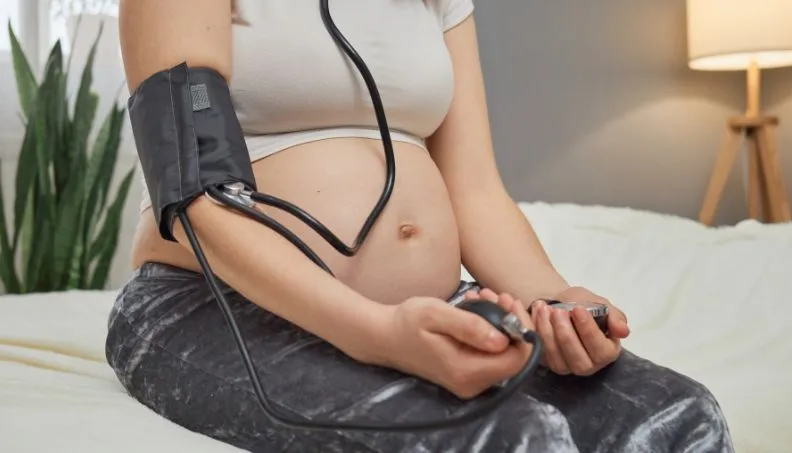
Your antenatal visit just flagged a high blood pressure reading. The doctor mentioned “preeclampsia,” and suddenly a routine checkup feels like a threat.
The fear is understandable, but the confusion between high blood pressure and preeclampsia is also extremely common, and that confusion can cost you critical time.
For anyone navigating a high-risk pregnancy and searching for preeclampsia treatment in New Delhi, this article draws the line clearly between what is serious, what is an emergency, and what you can actually do about it.
In this article, you will learn:
- The precise clinical difference between gestational hypertension and preeclampsia with a clear comparison
- What actually causes preeclampsia and who is most at risk
- Which symptoms are true emergencies versus ones patients routinely miss
- How diagnosis works and what treatment and prevention involve
- The long-term health risk after preeclampsia that almost nobody discusses
What Is the Difference Between High Blood Pressure and Preeclampsia in Pregnancy?
These are related but fundamentally different conditions, and treating them as interchangeable is one of the most common and consequential misunderstandings in pregnancy care.
- Gestational Hypertension: Elevated Pressure, No Organ Damage
Gestational hypertension is defined as a blood pressure reading of 140/90 mmHg or higher, recorded on two separate occasions at least four hours apart, arising after 20 weeks of pregnancy in a woman whose blood pressure was previously normal.
There is no protein in the urine, no evidence of organ damage, and no additional systemic features.
Many women with this diagnosis deliver healthy babies with appropriate monitoring and, where needed, blood pressure medication. It resolves after delivery in the overwhelming majority of cases.
- Preeclampsia A Systemic Disease, Not Just High Numbers
Preeclampsia is categorically different. It is not worse blood pressure it is a multi-organ disease driven by dysfunctional placentation.
The classic additional feature is proteinuria (protein in the urine, indicating kidney involvement).
However, updated ACOG 2013 diagnostic criteria confirm that preeclampsia can be diagnosed without proteinuria if there is evidence of other organ dysfunction including platelet count below 100,000, worsening kidney or liver function, fluid in the lungs, or new severe headache with visual disturbance.
Many patient-facing articles and even some clinicians still describe proteinuria as mandatory this is clinically outdated.
- Chronic Hypertension The Third Category
A third distinct diagnosis: chronic hypertension is high blood pressure that existed before pregnancy or was diagnosed before 20 weeks.
Women in this group can develop superimposed preeclampsia a particularly dangerous combination where the baseline abnormal readings mask new deterioration, making surveillance harder and risk higher.
Gestational Hypertension vs Preeclampsia Key Differences at a Glance
This table is included because this topic is a direct condition comparison and the clinical distinctions are genuinely complex enough that a structured overview improves patient understanding in a way prose alone cannot achieve.
Feature | Gestational Hypertension | Preeclampsia |
Blood pressure threshold | ≥140/90 mmHg after 20 weeks | ≥140/90 mmHg after 20 weeks |
Proteinuria (protein in urine) | Absent | Present in most cases; not always required for diagnosis |
Organ involvement | None | Kidneys, liver, brain, blood clotting system |
Symptoms beyond BP | Usually none | Headache, visual changes, upper abdominal pain, swelling |
Risk to baby | Mild monitoring required | Significant growth restriction, preterm delivery |
Can progress to seizures? | Rarely | Yes eclampsia is a direct complication |
Treatment | BP medication, monitoring | BP medication, magnesium sulphate, timed delivery |
Only cure | Delivery | Delivery |
Resolves after delivery? | Yes, typically within days | Yes, but may persist; long-term cardiovascular risk remains |
Risk in next pregnancy | Moderate recurrence risk | 15–25% recurrence; aspirin prophylaxis recommended |
Dr Mannan IVF Centre
Experience world-class fertility care with Dr. Mannan Gupta at the Best IVF Centre in Delhi
What Actually Causes Preeclampsia?
The full mechanism is not completely understood, but the core is well established and it begins with the placenta, not the blood pressure cuff.
- Abnormal Placentation From the Start
In a healthy pregnancy, the placenta embeds deeply into the uterine wall and remodels maternal blood vessels to create a high-flow, low-resistance circulation. In preeclampsia, this remodelling is incomplete.
The placental vessels remain narrow, creating a high-resistance, underperfused environment.
This triggers a cascade of inflammatory and anti-angiogenic signals that flood the maternal circulation damaging blood vessels throughout the body and driving the blood pressure rise, kidney damage, and systemic inflammation that define the condition.
- The sFlt-1 and PlGF Imbalance
Research published in the New England Journal of Medicine identifies an imbalance between sFlt-1 (an anti-angiogenic protein) and PlGF (placental growth factor, which promotes healthy vessel formation) as a central measurable driver of preeclampsia.
Elevated sFlt-1 relative to PlGF is now a validated biomarker available at specialist centres for early risk prediction particularly useful at 11–13 weeks combined with uterine artery Doppler and maternal history.
- Who Is Most at Risk?
First pregnancies carry the highest preeclampsia risk approximately 4% of all first-time pregnancies are affected.
Additional significant risk factors include prior preeclampsia history (which raises recurrence risk to 15–25%), multiple pregnancy, obesity, chronic hypertension, pre-existing diabetes, kidney disease, autoimmune conditions including lupus and antiphospholipid syndrome, and age over 35.
Women with two or more moderate risk factors should be classified as high-risk from the first trimester and managed accordingly.
If you are unsure whether your combination of risk factors places your pregnancy in the high-risk category, our article on what actually makes a pregnancy high-risk in India explains the clinical classification criteria clearly including where preeclampsia risk factors fit within the broader picture.
What Does Preeclampsia Feel Like and Which Symptoms Require Immediate Action?
- The Symptoms Most Women Miss
Mild preeclampsia frequently produces no noticeable symptoms. Sudden puffiness of the face and hands qualitatively different from normal pregnancy ankle swelling can be an early indicator.
Rapid unexplained weight gain of more than 1kg in a single week due to fluid retention is another.
These are easy to attribute to normal pregnancy changes, which is precisely why blood pressure measurement at every antenatal visit is not optional.
- The Emergency Warning Signs
Go to emergency care immediately if you develop any of the following: a severe, persistent headache unresponsive to paracetamol; visual disturbances including flashing lights, blurred vision, or temporary loss of vision; pain in the upper right abdomen or under the ribs; sudden shortness of breath; or severe, rapid-onset swelling of the face and hands.
These are the severe features of preeclampsia their presence indicates imminent risk of seizure, stroke, or organ failure and requires same-day clinical assessment, not a next-morning call.
- Silent Preeclampsia The Diagnosis You Don’t Feel Coming
This is the single most important gap in most health content on this topic. A substantial number of women with dangerously elevated blood pressure in pregnancy feel entirely well. No headache. No visual changes. Nothing that registers as a warning. Their preeclampsia is found only because a midwife checked their blood pressure at a routine visit.
This is the definitive clinical argument for attending every scheduled antenatal appointment without exception, regardless of how well you feel.
- Early Onset vs Late Onset Why Timing Changes Everything
Early-onset preeclampsia developing before 34 weeks is associated with more severe disease, greater likelihood of fetal growth restriction, and higher maternal and neonatal risk.
Late-onset preeclampsia, arising after 34 weeks, is more common and typically milder, though escalation can still occur quickly. Gestational age at onset is one of the most clinically significant prognostic variables.
How Is Preeclampsia Diagnosed?
- Blood Pressure Thresholds That Matter
The standard diagnostic threshold is 140/90 mmHg on two readings at least four hours apart. Severe-range hypertension begins at 160/110 mmHg this threshold requires immediate treatment initiation without waiting for a confirmatory second reading. The difference between these two thresholds is not just numerical; it determines the urgency of the clinical response.
- Urine Protein Assessment
Significant proteinuria is defined as a protein-to-creatinine ratio of 0.3 or higher on a spot urine sample, or 300mg or more of protein in a 24-hour urine collection.
Dipstick testing is a rapid screen only false positives and negatives are common, and abnormal dipstick results must be confirmed with quantitative testing before clinical decisions are based on them.
- Blood Tests and Organ Involvement
A standard preeclampsia blood panel includes full blood count (focusing on platelet count), liver enzymes (ALT and AST), kidney function markers (creatinine and urea), and uric acid.
Falling platelets, rising liver enzymes, and deteriorating renal function each signal escalating severity. These results directly determine hospitalisation decisions and delivery timing.
- Fetal Assessment
Umbilical artery Doppler measures placental blood flow resistance abnormal waveforms indicate fetal compromise from placental insufficiency.
Serial growth ultrasounds assess whether the baby is maintaining appropriate growth velocity.
Cardiotocography (CTG) provides real-time fetal heart rate monitoring. Together these tools answer the critical question: how long can this pregnancy safely continue?
How Serious Can Preeclampsia Get?
- Eclampsia When Seizures Occur
Eclampsia is the onset of generalised seizures in a woman with preeclampsia without another neurological explanation. It is a medical emergency.
Approximately 1 in 200 untreated or inadequately managed preeclampsia cases progresses to eclampsia.
Critically, seizures can occur before, during, or after delivery which is why postnatal blood pressure surveillance continues for a minimum of 48–72 hours post-birth.
- HELLP Syndrome The Severe Variant
HELLP syndrome Haemolysis (red blood cell breakdown), Elevated Liver enzymes, and Low Platelets is a severe complication of preeclampsia that can develop rapidly, sometimes before blood pressure reaches the classic diagnostic threshold.
It carries significant risk of liver rupture, placental abruption, and severe clotting dysfunction. HELLP syndrome requires immediate delivery regardless of gestational age there is no safe expectant management once this diagnosis is confirmed.
- The Long-Term Risk Nobody Tells You About
Women who develop preeclampsia carry a significantly elevated lifetime cardiovascular risk that extends well beyond the pregnancy itself.
Research from the American Heart Association and European Society of Cardiology confirms that preeclampsia is an independent predictor of hypertension, coronary artery disease, stroke, and heart failure in later life approximately doubling the baseline risk.
This is not cause for panic it is cause for awareness. Women with a preeclampsia history should inform future doctors, maintain healthy blood pressure, and receive cardiovascular risk assessment in the years following pregnancy.
It is also worth noting that autoimmune conditions like antiphospholipid syndrome which raise both preeclampsia and cardiovascular risk are among the most commonly missed causes of recurrent pregnancy loss; our article on repeated miscarriage and the hidden causes most doctors miss covers this connection in detail for women who have experienced both.
How Is Preeclampsia Treated?
- Why Delivery Remains the Only Cure?
Delivery of the baby and placenta is the only definitive treatment for preeclampsia.
This is not a clinical preference it is what the biology of the condition requires. At 37 weeks or beyond, delivery is recommended promptly.
Before 37 weeks, the decision involves weighing maternal safety against fetal maturity: mild disease without severe features may allow carefully monitored expectant management; severe features almost always mandate delivery irrespective of gestational age.
This level of decision-making requires continuous specialist oversight if you have been diagnosed with preeclampsia or are at elevated risk, the High-Risk Pregnancy Care in New Delhi page outlines the structured monitoring protocol and clinical support available throughout this process.
- Antihypertensive Medications
Blood pressure medication manages maternal risk while delivery timing is determined it does not treat the underlying disease.
Labetalol, nifedipine, and methyldopa are the agents most established for safety in pregnancy.
Severe-range blood pressure (160/110 or above) must be treated within 30–60 minutes to reduce stroke risk this is now a formally adopted patient safety standard in national and international obstetric guidelines.
- Magnesium Sulphate
Magnesium sulphate is administered intravenously to prevent eclamptic seizures in women with severe preeclampsia and to treat seizures if they have already occurred.
Evidence from the Magpie Trial a landmark study published in The Lancet established that magnesium sulphate halves the risk of eclampsia in affected women.
It is neurologically protective, not antihypertensive, and its role is distinct from blood pressure medication.
If you are managing elevated blood pressure in pregnancy or have received a preeclampsia diagnosis and want specialist obstetric oversight, Dr. Mannan Gupta at Dr. Mannan IVF Centre provides high-risk pregnancy care with the monitoring intensity these cases require. Visit drmannanivfcentre.com to arrange a consultation.
Can Preeclampsia Be Prevented?
- Low-Dose Aspirin The Evidence Is Clear
Low-dose aspirin (75–150mg daily), started between 12 and 16 weeks of pregnancy, is recommended by both WHO and ACOG for women at high risk of preeclampsia.
High-risk criteria include prior preeclampsia, multiple pregnancy, chronic hypertension, pre-existing diabetes, kidney disease, and autoimmune conditions as well as women with two or more moderate risk factors in combination.
If you meet any of these criteria and your doctor has not discussed aspirin prophylaxis with you, raise it directly at your next appointment. The window for maximum benefit closes after 16 weeks.
- Calcium Supplementation
WHO recommends 1.5–2g of elemental calcium daily for pregnant women with low dietary calcium intake a group that includes a large proportion of women in India.
Evidence shows this intervention reduces preeclampsia risk by approximately 50% in calcium-deficient populations. It is safe, inexpensive, and underutilised in routine Indian antenatal care.
- First-Trimester Screening
Combined first-trimester screening at 11–13 weeks integrating uterine artery Doppler, maternal blood pressure, PlGF blood levels, and clinical risk factors can identify high-risk women before symptoms develop.
This allows aspirin to begin at the optimal gestational window. It is not universally available at all antenatal centres, but it is available at specialist facilities and its uptake is expanding.
For women in New Delhi seeking this level of early-pregnancy risk assessment, the Obstetrics Care in New Delhi page details the antenatal surveillance offered at Dr. Mannan IVF Centre, including first-trimester screening for preeclampsia risk.
Final Thoughts
High blood pressure in pregnancy and preeclampsia are not the same diagnosis and the difference between them determines the level of risk, the intensity of monitoring, and the urgency of clinical decisions.
Gestational hypertension is manageable. Preeclampsia is serious but survivable with early detection and appropriate treatment. HELLP and eclampsia are emergencies that require immediate hospital response.
What every pregnant woman with elevated blood pressure needs to understand is this: attend every antenatal appointment, know the emergency warning signs by heart, ask your doctor directly whether you qualify for aspirin prophylaxis, and never let a normal-feeling day convince you that a high reading doesn’t matter.
The women who do best with preeclampsia are informed, engaged, and inside the healthcare system, not monitoring themselves at home.
Frequently Asked Questions
1. Can you have preeclampsia without high blood pressure?
This is rare but clinically recognised under updated ACOG 2013 criteria. A diagnosis of preeclampsia can be made without reaching the standard blood pressure threshold if there is clear evidence of organ involvement, such as severely abnormal liver enzymes, platelet count below 100,000, or significant kidney impairment. In the vast majority of cases, hypertension is present, but a normal blood pressure reading does not completely rule out the diagnosis when other organ markers are abnormal.
2.Does preeclampsia always mean early delivery?
Not always the timing depends on severity and gestational age. Mild preeclampsia without severe features before 37 weeks is often managed expectantly with intensive monitoring to allow further fetal maturity. Severe preeclampsia, HELLP syndrome, or eclampsia generally require delivery regardless of gestational age. At 37 weeks or beyond, delivery is recommended for all preeclampsia cases because the risks of continuing the pregnancy outweigh the benefits at that stage.
3.What happens to the baby if the mother has preeclampsia?
The primary risks to the baby are fetal growth restriction because placental dysfunction limits nutrient and oxygen delivery and preterm birth, either because delivery becomes medically necessary or because labour begins spontaneously. Most babies born to mothers with well-managed preeclampsia do well, particularly when delivered at or near term. Very preterm delivery before 32 weeks carries greater neonatal risk, which is why every week gained through careful expectant management has real value.
4. Will I get preeclampsia again in my next pregnancy?
A prior history of preeclampsia raises recurrence risk to approximately 15–25% in a subsequent pregnancy, with higher recurrence rates associated with early-onset or severe first episodes. Recurrence is not inevitable, and low-dose aspirin started in the first trimester of the next pregnancy meaningfully reduces that risk. A pre-conception review with a specialist to optimise any underlying risk factors is strongly advisable before the next pregnancy.
5. Is it safe to breastfeed while taking blood pressure medication after preeclampsia?
Yes, in most cases. Several antihypertensive medications commonly continued postnatally including nifedipine and labetalol are considered compatible with breastfeeding based on current evidence. Your doctor will review your specific medication regimen and advise accordingly. Blood pressure often worsens transiently in the first few days after delivery before gradually normalising over 6–12 weeks, so postnatal monitoring and medication continuation are typically necessary regardless of feeding choice.
