
Dr Mannan Gupta
Medically Reviewed by Dr. Mannan Gupta On June 24, 2026
There is a question that sits in the back of the mind of almost every person considering this path one they hesitate to say out loud even to their doctor: if this baby isn’t made from my egg, is it really mine?
That question deserves a direct, honest answer, not a deflection. For anyone exploring donor egg IVF in New Delhi, the answer is yes, in ways that are both emotionally true and scientifically supported.
But there is much more you need to understand before you walk into a clinic.
In this article, you will learn:
- Exactly who needs donor egg IVF and why
- How the process works, including what the recipient’s body goes through
- Real success rate data and what actually drives outcomes
- The science of why this baby is genuinely yours
- How to approach disclosure with your child and why it matters
What Is Donor Egg IVF and Who Actually Needs It?
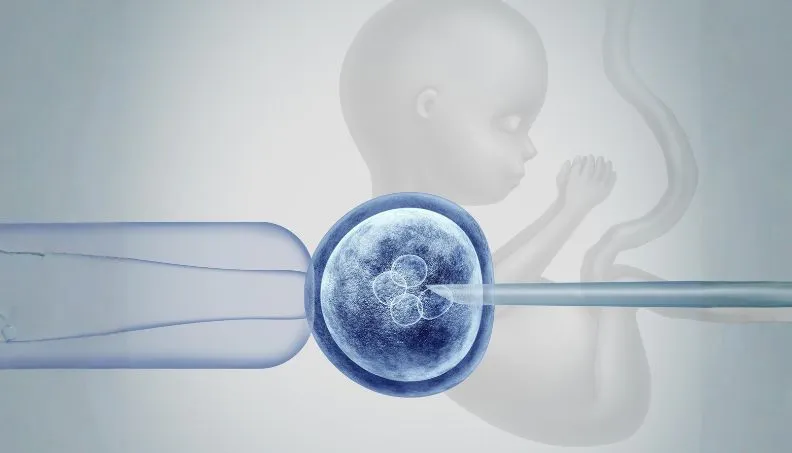
Donor egg IVF is IVF using eggs retrieved from a screened, healthy donor rather than the intended mother. The eggs are fertilized with the partner’s or donor sperm, and the resulting embryo is transferred into the recipient’s uterus.
The recipient carries the pregnancy, delivers the baby, and is the legal mother from the moment of birth.
- The Medical Conditions That Lead Here
Several distinct situations bring women to donor egg IVF. Premature ovarian insufficiency (POI) sometimes called premature menopause, causes the ovaries to stop functioning before age 40, leaving no viable eggs.
Diminished ovarian reserve (DOR) describes a significantly reduced egg count or poor egg quality, often confirmed through low AMH (anti-Müllerian hormone) levels and low antral follicle counts on ultrasound.
Women who carry genetic conditions they do not wish to pass on may also choose donor eggs. And a substantial number of patients arrive here after multiple failed IVF cycles with their own eggs a path that is exhausting, expensive, and emotionally bruising.
If you are at the beginning of understanding why conception has been difficult, our Female Infertility Treatment in New Delhi page outlines the full diagnostic and treatment pathway, including when donor eggs become the recommended next step.
- Age and Ovarian Reserve
Egg quality declines with age, and this decline accelerates after 35. By the mid-40s, even women with adequate egg counts often find that the eggs retrieved during IVF cycles are chromosomally abnormal at rates that make live birth with own eggs statistically unlikely.
Donor egg IVF bypasses this entirely by using eggs from donors typically aged 21–30, at peak reproductive health. This is why success rates with donor eggs remain high even when the recipient is in her late 40s.
If you have received an AMH result and are trying to understand what it means for your fertility options, including whether donor eggs are being recommended our detailed guide on what AMH levels mean and how they predict IVF success explains exactly how to read your numbers and what the clinical thresholds are.
- When Standard IVF Has Already Failed?
For women who have undergone multiple IVF cycles without success, particularly those with poor embryo quality despite good stimulation protocols, donor eggs often represent the clearest path to a successful pregnancy rather than a last resort.
The distinction matters: this is not giving up. It is redirecting to the most effective available option.
How Does the Donor Egg IVF Process Actually Work?
- Selecting and Screening the Egg Donor
Egg donors in India are recruited, screened, and managed by the fertility clinic or a licensed gamete bank. Under ICMR (Indian Council of Medical Research) guidelines, donors must be between 23 and 35 years of age, physically healthy, and must have completed their own family.
They undergo extensive medical screening, including infectious disease testing, genetic karyotyping, hormonal assessment, and psychological evaluation. No donor enters a program based on appearance alone; health and genetic screening are the non-negotiable foundation.
- Synchronizing Donor and Recipient Cycles
Before transfer can happen, the recipient’s uterus must be prepared to receive an embryo. This involves a hormone protocol, typically estrogen followed by progesterone, that builds the uterine lining to the optimal thickness for implantation.
The recipient does not undergo egg retrieval, ovarian stimulation, or any surgical procedure. Her role in the physical process is uterine preparation and embryo transfer, far less physically demanding than a standard IVF cycle.
- Fertilization, Embryo Development, and Transfer
The donor’s retrieved eggs are fertilized in the laboratory using the partner’s sperm (or donor sperm). Embryos develop over 3–5 days and the strongest candidate is selected for transfer.
Many clinics now recommend preimplantation genetic testing (PGT) of embryos before transfer to confirm chromosomal normality, which improves success rates further.
If you want to understand exactly what PGT-A involves, who it is recommended for, and what the evidence shows for success rates in donor egg cycles specifically, our guide on PGT-A Testing in IVF: Success Rate and Benefits answers all of this in depth. The transfer itself is a brief, non-surgical procedure.
- What the Recipient’s Body Goes Through?
This is the part most clinics explain poorly. Recipients take estrogen for approximately 2–3 weeks to grow the uterine lining, then add progesterone to trigger the receptive phase. Lining thickness of at least 7–8mm, confirmed by ultrasound, is the standard threshold before transfer proceeds.
After transfer, progesterone support continues until the placenta takes over hormone production at around 10–12 weeks. The medication burden is real daily injections or suppositories and regular monitoring scans, and patients should go in with clear eyes about what’s involved.
Dr Mannan IVF Centre
Experience world-class fertility care with Dr. Mannan Gupta at the Best IVF Centre in Delhi
What Are the Real Success Rates With Donor Eggs?
- Why Donor Egg IVF Outperforms Standard IVF?
Donor egg IVF consistently achieves the highest success rates of any IVF procedure, typically 50–60% per transfer in well-run programs, compared to 30–40% for standard IVF in younger women and significantly lower in women over 40 using their own eggs.
The reason is straightforward: egg quality, not uterine quality, is the dominant factor in IVF success. Using young, healthy donor eggs removes the primary variable responsible for failed cycles.
- Whose Age Actually Matters?
This is a point that surprises most patients. In donor egg IVF, the age of the donor determines embryo quality, not the age of the recipient.
A 46-year-old recipient using eggs from a 26-year-old donor has success rates closer to those of a 26-year-old than of a 46-year-old using her own eggs. The uterus retains its capacity to support pregnancy well into the late 40s in most women.
- What to Ask Your Clinic?
Before trusting any clinic’s published success rates, ask specifically: “What is your live birth rate per embryo transfer for donor egg cycles in the past 12 months?” The live birth rate is the only number that matters.
Pregnancy rate, positive beta rate, and clinical pregnancy rate all inflate the picture.
A reputable clinic will answer this directly. For families in New Delhi evaluating where to begin, the IVF Treatment in New Delhi page at Dr. Mannan IVF Centre provides an overview of the clinical approach to both standard and donor egg IVF cycles, including what a protocol evaluation before your first appointment looks like.
Will the Baby Be Genetically Related to Me?
- The Honest Genetic Answer
No, the baby will not carry the recipient mother’s nuclear DNA. The egg’s genetic material comes from the donor. If donor sperm is also used, neither parent contributes nuclear genetics.
This is the factual answer, and it is the one patients deserve to hear clearly rather than have softened into confusion.
- Epigenetics: The Science That Changes the Conversation
Here is what the science now tells us and what most competitor content completely ignores. Epigenetics is the study of how genes are expressed, switched on or off, by the environment they develop in.
The recipient mother’s uterus is that environment for nine months. Research published in leading reproductive science journals confirms that the gestational carrier, the woman who carries the pregnancy, influences gene expression in the developing baby through biochemical signals, nutrition, stress hormones, and the uterine microenvironment.
The baby grows inside you. Your body shapes how its genes behave. That influence is real, measurable, and meaningful.
- What “Yours” Really Means
Beyond genetics, parenthood is established through gestation, birth, nursing, and every moment of raising a child.
Legal parenthood in India is conferred on the birth mother, not the egg donor, from the moment of delivery. The question “Is this baby mine?” has a biological partial answer and an overwhelming yes in every other sense that matters.
How Are Egg Donors Screened in India?
- ICMR Guidelines and Legal Framework
India’s donor egg programs operate under ICMR guidelines and, increasingly, under the Assisted Reproductive Technology (Regulation) Act 2021, which brought formal legal structure to gamete donation in India.
Egg donation in India is anonymous and altruistic; donors cannot be paid beyond reasonable compensation for time and inconvenience, and recipients do not have the right to select donors by photograph or identity. Clinics maintain donor registries, but identities are protected.
- Medical and Genetic Screening Standards
Reputable clinics conduct karyotyping to rule out chromosomal abnormalities; screen for hereditary conditions; test for infectious diseases, including HIV, hepatitis B, and C, and perform hormonal assessment to confirm adequate ovarian reserve. Psychological screening is also required to ensure the donor understands and consents to the process without coercion.
- What You Can and Cannot Know About Your Donor?
Under Indian law, recipients can access non-identifying medical and physical information about the donor’s blood group, height, weight, complexion, and educational background but not name, photograph, or contact details. This anonymity is permanent and legally protected. Understanding this upfront prevents unrealistic expectations about future contact or identification.
What Does the Emotional Journey of Donor Egg IVF Actually Look Like?
- Grief Before Acceptance
Most people need to grieve the biological connection they hoped for before they can genuinely embrace donor egg IVF. This grief is legitimate, normal, and should not be rushed. Women describe mourning the genetic child they imagined a child with their eyes and their mother’s hands. Acknowledging that loss is not weakness; it is the honest emotional work that leads to genuine readiness rather than unresolved ambivalence.
- Partner Dynamics
Couples rarely arrive at this decision at the same emotional pace. One partner may be ready before the other. Forcing the timeline to accommodate medical scheduling before both partners are emotionally aligned creates a fragile foundation for the pregnancy ahead. Clinics that move quickly without checking emotional readiness are doing their patients a disservice.
- Why Psychological Counselling Is Not Optional?
ICMR guidelines recommend counseling for donor egg recipients, but in practice many clinics treat it as a checkbox rather than genuine support. Seek out clinics where a trained counselor, not just a nurse coordinator, is part of the process. The questions that arise during pregnancy (bonding, disclosure, identity) are far easier to navigate when they’ve been explored before the embryo transfer, not after.
How Should You Think About Telling Your Child?
- What the Research Actually Recommends?
Child psychology research is now consistent and clear: early, age-appropriate disclosure produces better outcomes than secrecy. Studies from the European Society of Human Reproduction and Embryology (ESHRE) and developmental psychology literature show that children told about their origins from early childhood, before age five, adjust more easily than those told as teenagers or adults. Discovery of concealed origins in adulthood is associated with significant psychological harm to the parent-child relationship.
- How to Start the Conversation?
The first conversation does not need to be complex. Young children can understand “we wanted you so much that we got a little help from a kind person to make you” long before they understand genetics. The language grows with the child. What matters is that it starts early, is told with warmth, and is treated as a normal part of the family’s story rather than a shameful secret.
- Why Secrecy Carries More Risk Than Openness?
With the advent of commercial DNA testing services like 23andMe and similar platforms available in India, genetic secrets are increasingly impossible to maintain. A child who discovers their donor conception through a DNA test, rather than from their parents, faces a far more destabilizing experience than one who has always known. The question is not whether to tell. It is when and how.
Final Thoughts
Ovarian torsion is a genuine emergency hidden inside what feels like ordinary stomach pain.
The women who do best are the ones who pushed for answers, went back to the emergency room when the pain returned, and found a gynecologist who took their symptoms seriously.
Early diagnosis and prompt surgery, specifically detorsion rather than removal, preserve both the ovary and fertility in the vast majority of cases.
If your gut tells you something is wrong, trust it. Persistent, one-sided pelvic pain that keeps coming back is not something to manage with painkillers and waiting. It deserves proper evaluation, urgently.
Frequently Asked Questions
1. Is ovarian torsion pain constant, or does it come and go?
It can do both, and this is exactly what makes it confusing. Some women experience continuous, escalating pain. Others, particularly those with intermittent torsion, describe episodes of severe pain that resolve completely, sometimes for hours or days at a time, before returning. Pain that comes and goes in episodes on one side of the pelvis should not be dismissed simply because it resolves between episodes.
2.How quickly does ovarian torsion need surgery?
As quickly as possible, ideally within hours of a confirmed or strongly suspected diagnosis. The ovary begins losing viable tissue as blood supply is cut off, and the window for successful detorsion narrows significantly after 24 hours. If you are in an emergency room with suspected torsion, advocate clearly for urgent gynecologic consultation rather than watchful waiting.
3.Can ovarian torsion resolve on its own without surgery?
Spontaneous detorsion, where the ovary untwists on its own, does occur, and it is what causes the intermittent pain pattern described above. However, an ovary that has torsed once is at high risk of twisting again, often more severely. Symptom resolution does not mean the problem has resolved. Spontaneous untwisting is not a reason to avoid evaluation; it is a reason to seek it urgently.
4. Can you still get pregnant after having an ovary removed due to torsion?
Yes. Losing one ovary reduces your total egg reserve but does not eliminate fertility. The remaining ovary takes over follicular production, and many women conceive naturally or through IVF after unilateral oophorectomy. If you are concerned about your fertility after ovarian surgery, an AMH test and antral follicle count from the remaining ovary will give you a clear picture of your current reserve.The Role of Ovarian Cysts
5. Can ovarian torsion happen during pregnancy?
Yes and it is more common in early pregnancy than most people realize. The corpus luteum cyst that forms after ovulation to support early pregnancy can enlarge enough to predispose the ovary to torsion. Ovarian torsion in pregnancy is managed the same way as outside pregnancy: laparoscopic detorsion, and it can be performed safely in the first and second trimesters. It should never be delayed because of the pregnancy.
