
Dr Mannan Gupta
Medically Reviewed by Dr. Mannan Gupta On Mar 30, 2026
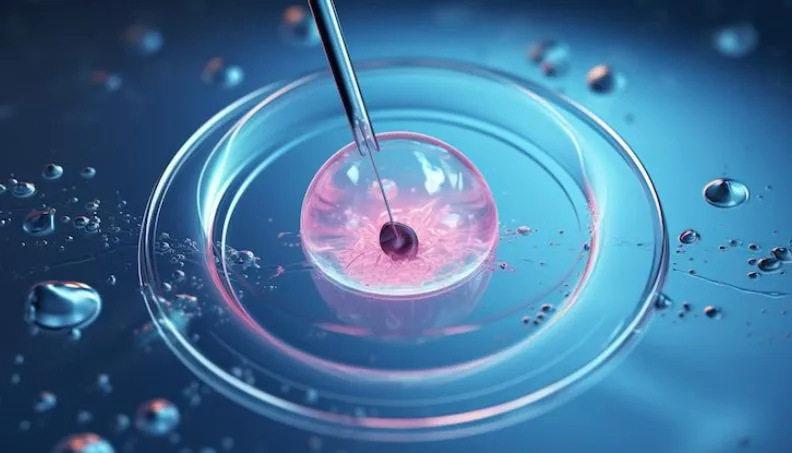
In vitro fertilization (IVF) is a medically proven assisted reproductive technology in which eggs and sperm are fertilized outside the body in a controlled laboratory environment, and the resulting embryo is then carefully transferred into the uterus to achieve pregnancy.
As an IVF specialist in new delhi with years of experience guiding couples through this journey, I — Dr. Mannan Gupta — want you to know something important from the very first line: IVF is not just a procedure. It is a path toward parenthood that is built on science, compassion, and hope.
At Dr. Mannan IVF Centre, New Delhi, we have walked this road with hundreds of families. Every couple that walks through our doors carries a unique story, and our goal is to give each one the most informed, personalized, and dignified care possible.
Key Takeaways
- IVF involves six core stages: initial assessment, ovarian stimulation, egg retrieval, fertilization in the lab, embryo transfer, and pregnancy confirmation.
- One complete IVF cycle typically takes 4 to 6 weeks from the start of medications to the pregnancy test.
- According to ICMR, IVF success rates in India range between 45–60% per cycle, varying by age and clinic quality.
- Advanced techniques like ICSI, PGT, and blastocyst culture significantly improve success rates.
- Emotional wellbeing is as important as physical preparation — both are managed at every stage.
- Women under 35 have the highest success rates; however, treatment can be customized for women of all reproductive ages.
Who Actually Needs IVF — and How Do Doctors Decide?
Not every couple struggling to conceive needs IVF immediately. As an IVF specialist clinic in New Delhi, the first thing we do is understand why conception is not happening naturally.
IVF is typically recommended when:
- Blocked or damaged fallopian tubes prevent the egg from meeting the sperm naturally
- Severe male factor infertility — significantly low sperm count, poor motility, or abnormal morphology — makes natural fertilization unlikely
- Ovulatory disorders such as polycystic ovarian syndrome (PCOS), where irregular ovulation disrupts natural conception
- Endometriosis — a condition where uterine-like tissue grows outside the uterus, affecting egg and embryo quality
- Unexplained infertility, where all standard tests appear normal but pregnancy has not occurred after 12 months of regular, unprotected intercourse
- Previous failure with less invasive treatments like IUI (intrauterine insemination)
- Advanced maternal age (above 35 years), where ovarian reserve naturally declines
Both partners undergo a thorough fertility evaluation before we proceed.
This includes hormonal blood panels, semen analysis, transvaginal ultrasound to assess ovarian reserve, and uterine cavity evaluation.
This diagnostic foundation allows us to tailor your treatment — not apply a one-size-fits-all protocol.
What Happens During the Initial IVF Consultation and Fertility Assessment?
The journey begins with an honest, unhurried conversation. When a couple visits us for an IVF consultation, I spend time understanding their complete medical history — previous pregnancies, surgeries, medications, lifestyle, and any prior fertility treatments attempted.
We then initiate a comprehensive pre-treatment workup, which includes:
- Ovarian Reserve Testing — AMH (Anti-Müllerian Hormone) levels and antral follicle count (AFC) via ultrasound to understand how many eggs your ovaries can potentially produce
- Hormonal Panel — FSH, LH, estradiol, and thyroid function tests on Day 2 or 3 of the menstrual cycle
- Semen Analysis — evaluating sperm count, motility, morphology, and DNA fragmentation
- Uterine Assessment — hysteroscopy or saline sonography to detect fibroids, polyps, or structural abnormalities inside the uterine cavity
- Infectious Disease Screening — for both partners, covering Hepatitis B, Hepatitis C, HIV, and other relevant markers
- Genetic Carrier Screening — where there is a family history of hereditary conditions
Based on all these findings, a customized IVF protocol is designed specifically for you. No two protocols at our center are identical — because no two patients are.
Dr Mannan IVF Centre
Experience world-class fertility care with Dr. Mannan Gupta at the Best IVF Centre in Delhi
How Does Ovarian Stimulation Work — and What Should You Expect?
Once the protocol is ready and the menstrual cycle begins, the active treatment phase starts.
The first major step is controlled ovarian stimulation (COS) — the process of encouraging your ovaries to produce multiple mature eggs rather than the single egg released in a natural cycle. More mature eggs increase the chances of obtaining viable embryos.
You will be prescribed gonadotropin injections — hormonal medications containing FSH (follicle-stimulating hormone) and LH (luteinizing hormone).
These are self-administered subcutaneous (under-the-skin) injections, and our nursing team provides detailed guidance on how to administer them with confidence.
Throughout this phase, which typically lasts 8 to 14 days, you will visit us every 2 to 3 days for monitoring ultrasounds and blood tests. We track:
- Follicular growth — the small fluid-filled sacs in the ovaries, each potentially containing a maturing egg
- Estradiol levels — to ensure hormonal response is appropriate and safe
- Risk of Ovarian Hyperstimulation Syndrome (OHSS) — a rare but manageable condition where the ovaries over-respond to stimulation, causing bloating and discomfort
When the follicles reach the right size (typically 18–20 mm), a trigger injection — usually hCG (human chorionic gonadotropin) or a GnRH agonist — is given to finalize egg maturation. Egg retrieval is then scheduled precisely 34 to 36 hours after this trigger shot.
What you may feel: Mild bloating, pelvic heaviness, breast tenderness, and mood changes are common and expected during this phase. These are signs your body is responding — not cause for alarm.
What Happens During Egg Retrieval — Is It Painful?
Egg retrieval, also called ovum pick-up (OPU), is a minor surgical procedure performed under light sedation (IV anesthesia) so you remain completely comfortable. It takes approximately 15 to 30 minutes.
Using transvaginal ultrasound guidance, a fine needle is gently passed through the vaginal wall into each ovarian follicle. The follicular fluid — which contains the eggs — is aspirated and immediately handed to our embryology team in the adjacent laboratory.
On the same day, your partner provides a fresh semen sample, which undergoes laboratory preparation to isolate the healthiest, most motile sperm.
In cases of severe male factor infertility, sperm may be retrieved surgically via procedures such as TESA (Testicular Sperm Aspiration) or PESA (Percutaneous Epididymal Sperm Aspiration).
After the procedure, you typically rest for an hour or two in our recovery area before going home. Mild cramping and spotting for a day or two are normal. We advise rest for 24 hours and avoidance of strenuous activity for about a week.
Ready to Begin Your IVF Journey?
If you have been trying to conceive and are wondering whether IVF is right for you, Dr. Mannan Gupta and our dedicated team at Dr. Mannan IVF Centre, New Delhi, are here to guide you — not just medically, but emotionally too.
How Are Eggs Fertilized in the IVF Lab — What Is the Role of ICSI?
Once eggs are retrieved, the fertilization phase begins in our state-of-the-art embryology laboratory. The two standard methods used are:
Conventional IVF Insemination — Eggs and prepared sperm are placed together in a culture dish and left overnight. The sperm fertilizes the egg naturally within this controlled environment.
ICSI (Intracytoplasmic Sperm Injection) — A single, carefully selected sperm is injected directly into a single mature egg using a very fine microinjection needle.
This technique is recommended when sperm count is very low, motility is poor, or previous IVF cycles resulted in poor fertilization. ICSI now accounts for a substantial proportion of ART cycles in India, particularly in cases of male-factor infertility.
By the next morning, we assess how many eggs have successfully fertilized — these are now called zygotes. Over the next 3 to 5 days, they are cultured in a controlled environment, monitored for healthy cell division, and graded by our embryologists.
The goal is to reach the blastocyst stage (Day 5), which is the ideal stage for transfer and offers the best implantation potential.
Where there is a family history of genetic disorders, we may recommend Preimplantation Genetic Testing (PGT) — a technique that screens embryos for chromosomal abnormalities before transfer, significantly improving success rates and reducing miscarriage risk.
What Is the Embryo Transfer Process — and Does It Hurt?
Embryo transfer is the final and most anticipated step of the IVF cycle. It is a simple, non-surgical, outpatient procedure that requires no anesthesia and takes only a few minutes.
Using ultrasound guidance, a thin, flexible catheter is gently passed through the cervix into the uterine cavity.
The selected embryo — suspended in a small volume of culture medium — is carefully deposited at the optimal implantation site within the uterus. Most patients describe the procedure as feeling similar to a routine pelvic exam.
We typically transfer one high-quality embryo (a practice called single embryo transfer or SET) to minimize the risk of multiple pregnancies while maximizing the chance of a healthy singleton birth. Any additional good-quality embryos can be vitrified (frozen) for future cycles.
After transfer, you are advised to rest for a short period, after which you may resume light, normal activities.
Progesterone supplementation — in the form of vaginal suppositories, injections, or oral tablets — is prescribed to support the uterine lining and help the embryo implant.
How Soon Will You Know If IVF Worked — What Is the Two-Week Wait?
The two-week wait (2WW) — the period between embryo transfer and the pregnancy test — is often the most emotionally challenging part of the IVF process for many couples. I understand this deeply.
Approximately 10 to 14 days after the embryo transfer, a blood test measuring beta-hCG (human chorionic gonadotropin) levels confirms whether implantation has occurred.
A rising hCG level indicates pregnancy. If positive, a follow-up ultrasound is scheduled at 6 to 7 weeks to confirm fetal cardiac activity and the number of gestational sacs.
If the result is negative, it is not the end of your journey. We review every aspect of your cycle — stimulation response, egg quality, fertilization outcomes, and embryo grading — to understand what can be adjusted or improved in the next attempt. Many successful pregnancies occur in the second or third IVF cycle.
What About Recovery, Lifestyle, and Emotional Wellbeing During IVF?
Physical recovery from an IVF cycle is generally quick. Most patients return to their normal routines within a day or two of egg retrieval. During the stimulation and post-transfer phase, I advise:
- A balanced, protein-rich diet with adequate hydration — this supports follicular development and endometrial health
- Avoiding vigorous exercise during stimulation, as enlarged ovaries can increase the risk of ovarian torsion
- Limiting caffeine and alcohol throughout the treatment cycle
- Adequate sleep and stress management — cortisol (the stress hormone) can impact hormonal balance and implantation
The emotional dimension of IVF is something I never underestimate. Anxiety, hope, disappointment, and resilience — couples experience all of these.
At Dr. Mannan IVF Centre, we encourage open conversations, involve both partners in counseling where appropriate, and ensure no one feels alone in the process. Many couples also find support groups or peer networks helpful during this time.
A Fertility Clinic in New Delhi that truly supports you is one that walks beside you at every step — not just in the procedure room, but in the waiting room too.
Are There Risks Involved in IVF — What Should Every Patient Know?
IVF is safe and well-regulated in India under the ART (Regulation) Act, 2021, but like any medical procedure, it carries certain risks that every patient deserves to understand clearly:
Ovarian Hyperstimulation Syndrome (OHSS) — In mild form, this is quite common and resolves on its own. Severe OHSS is rare and requires close monitoring and management.
Multiple pregnancy — If more than one embryo is transferred, twins or higher-order multiples can occur. We minimize this risk through our single embryo transfer policy wherever clinically appropriate.
Ectopic pregnancy — In rare cases, the embryo may implant outside the uterus (usually in the fallopian tube), requiring immediate medical attention.
Emotional strain — This is a real and significant risk that deserves the same attention as physical risks.
The good news is that with careful protocol design, vigilant monitoring, and experienced clinical judgment, most of these risks can be significantly reduced.
Conclusion: Your Journey to Parenthood Is Worth Every Step
IVF is one of modern medicine’s most remarkable achievements — offering the gift of biological parenthood to couples who might otherwise not have had that chance.
At Dr. Mannan IVF Centre, New Delhi, our approach is grounded in clinical excellence, ethical practice, and genuine care for every patient’s wellbeing.
Whether you are just beginning to explore your fertility options or have already tried other treatments, we invite you to come in for an open, pressure-free consultation with Dr. Mannan Gupta.
Together, we will understand your situation, answer every question you have, and chart the most appropriate path forward — one that respects your body, your emotions, and your dream of building a family.
Frequently Asked Questions
1. Is IVF the only option for infertility, or are there alternatives I should try first?
No. IUI, ovulation induction, or surgery are often tried first. IVF is recommended when simpler options fail or infertility is severe.
2. Can lifestyle factors truly affect IVF success, or is it mostly about biology?
Both matter, but biology leads. Lifestyle (BMI, smoking, stress) influences outcomes, yet age, ovarian reserve, and embryo quality remain the strongest predictors.
3. Does the number of IVF cycles matter — how many attempts are considered reasonable?
Up to 3 cycles is the general benchmark. Cumulative success improves with each attempt, and protocol adjustments after failed cycles often make a meaningful difference.
4. Is the child born through IVF at a higher risk for health problems compared to naturally conceived children?
Not significantly. The vast majority of IVF-conceived children are healthy. Any marginal risks observed in research are low and likely tied to underlying infertility, not the procedure itself.
5. Can IVF be done using frozen eggs or embryos — is the success rate the same as fresh cycles?
Yes, and frozen transfers (FET) often match or outperform fresh cycles because the uterus is more receptive without active stimulation hormones.
