

Dr Mannan Gupta
Medically Reviewed by Dr. Mannan Gupta On Mar 11, 2026
Navigating the world of fertility treatments can bring up many questions. As an IVF Specialist with over 10 years of experience, one of the most common queries I, Dr. Mannan Gupta, address is whether egg freezing is a required step before starting In Vitro Fertilisation (IVF).
To put it simply, no, it is not necessary to freeze your eggs before every IVF cycle. The standard IVF process uses fresh eggs, but freezing them beforehand is a strategic option that offers significant benefits in specific circumstances.
This choice depends entirely on your personal health, reproductive goals, and timeline.
Key Takeaways
- Not a Standard Requirement: Egg freezing is not a mandatory prerequisite for IVF. Most IVF cycles proceed with freshly retrieved eggs.
- A Strategic Choice: It is a valuable tool for preserving fertility, especially if you need to delay IVF due to medical treatments, career goals, or personal reasons.
- Preserves Egg Quality: Freezing allows you to “bank” your eggs at their current biological age, which is a major factor in IVF success.
- Personalised Decision: The choice to freeze eggs first should be made after a thorough consultation with a fertility specialist to weigh the pros and cons for your unique situation.
Understanding when and why you might consider this path is crucial.
At our IVF treatment specialist clinic in New Delhi, we are dedicated to providing clear, personalised guidance to help you make the best decision for your future family.
What is egg freezing, and how does it relate to IVF?
Egg freezing, known clinically as oocyte cryopreservation, is a method of fertility preservation.
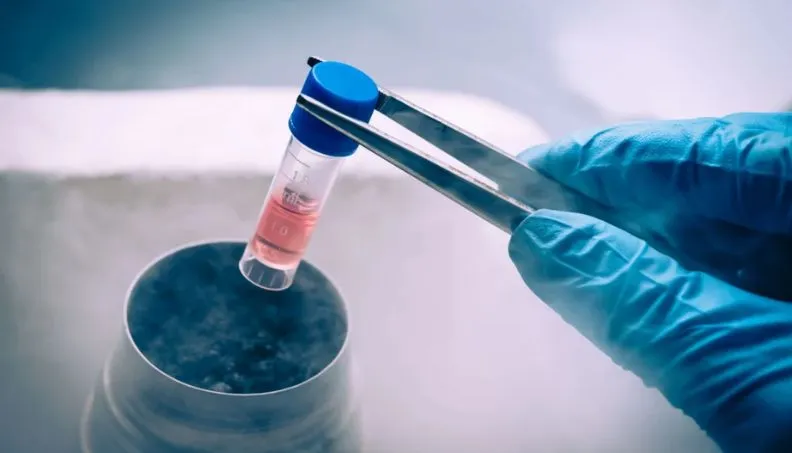
It involves stimulating the ovaries to produce multiple eggs, which are then retrieved and flash-frozen using a technique called vitrification. These eggs are stored in liquid nitrogen, effectively pausing their biological clock.
The relationship to IVF is straightforward: when you are ready to start a family, these frozen eggs can be thawed, fertilised with sperm in our laboratory to create embryos, and then transferred into the uterus.
Understanding how freezing eggs works? is the first step in seeing it as a powerful preliminary tool that feeds directly into a future IVF cycle, offering you control over your reproductive timeline.
When is egg freezing recommended before IVF?
While not essential for every patient, there are several scenarios where freezing eggs before an IVF cycle is a highly recommended and beneficial strategy.
- For Medical Reasons: If you are about to undergo medical treatments like chemotherapy or radiation for cancer, which can damage ovarian function, freezing eggs beforehand is critical for preserving your ability to have biological children later.
- For Awaiting a Partner: If you know you want children in the future but do not currently have a partner, freezing your eggs gives you the freedom to wait for the right person without the pressure of a declining egg supply.
- For Personal or Professional Timing: Many women choose to delay parenthood to focus on their careers, education, or other personal goals. Egg freezing allows you to pursue these ambitions while keeping your family-building options open.
- For Declining Ovarian Reserve: If you have been diagnosed with a low ovarian reserve or have a family history of early menopause, banking eggs can provide a crucial safety net.
Dr Mannan IVF Centre
Experience world-class fertility care with Dr. Mannan Gupta at the Best IVF Centre in Delhi
What are the benefits of freezing eggs before IVF?
Opting to freeze eggs before proceeding with IVF offers several distinct advantages. The most significant benefit is preserving the quality and genetic health of your eggs at a younger age. An egg frozen at 30 remains a 30-year-old egg, even if used for IVF at 40.
This approach provides invaluable flexibility, allowing you to plan your IVF journey when you are emotionally, physically, and financially ready.
It can also reduce the emotional stress and pressure of needing to undergo repeated ovarian stimulation cycles in the future, especially if your egg quality is expected to decline over time.
Thinking about your fertility options can be complex. At a specialised freezing eggs hospital in new delhi our team provides the expert, compassionate care needed to guide your decision.
What are the limitations of freezing eggs before IVF?
While beneficial, this two-step approach has considerations. The most apparent is the additional cost. The initial egg freezing cycle and annual storage fees are separate from the future costs of the IVF cycle itself.
The process also requires time and commitment for the initial stimulation and retrieval.
Furthermore, while technology is excellent, patients often ask, can frozen eggs guarantee a successful pregnancy?
The reality is that there is no 100% guarantee; not every egg will survive the thawing process or fertilize successfully.
This is why freezing an adequate number of eggs based on your age and ovarian reserve is a critical part of our strategic planning
If you’re wondering whether to proceed with IVF now or to preserve your options for later, we can help you find the right path.
Schedule a consultation at the Dr. Mannan IVF Centre by visiting our website at Dr mannan ivf centre or by calling our patient care team directly.
How does the process of freezing eggs work?
The clinical journey for egg freezing is identical to the first phase of a standard IVF cycle.
- Ovarian Stimulation: For about 10-14 days, you will self-administer hormone injections to encourage your ovaries to mature multiple eggs.
- Monitoring: During this time, we will monitor your progress closely with regular ultrasounds and blood tests.
- Egg Retrieval: This is a short, minimally invasive procedure performed under light sedation. We use an ultrasound-guided needle to gently collect the mature eggs from your ovaries.
- Vitrification: Our skilled embryologists immediately assess the eggs, and the mature ones are flash-frozen and stored securely in our advanced laboratory.
How do frozen eggs compare to fresh eggs in IVF?
Thanks to the advancement of vitrification, the “flash-freezing” technique, the clinical outcomes for frozen eggs are now excellent.
Studies show that the survival, fertilisation, and pregnancy rates for thawed eggs are comparable to those of fresh eggs used in a standard IVF cycle.
The success of a cycle using frozen eggs is highly dependent on the quality of the embryology lab and the expertise of the team.
A proficient Fertility Clinic in New Delhi will have established protocols to ensure the highest possible survival and success rates for your precious eggs.
What are the emotional aspects of freezing eggs before IVF?
Deciding to freeze your eggs can bring a profound sense of relief and empowerment. It’s a proactive step that can lift the weight of the “biological clock” from your shoulders.
However, it can also be accompanied by anxiety over the cost, the physical process, and the uncertainty of the future outcome.
It is completely normal to experience a range of emotions. We strongly encourage open conversations with your support system—your partner, friends, and family.
Professional counselling can also provide invaluable tools for managing stress and navigating your feelings throughout this journey.
Is freezing eggs before IVF the right choice for you?
This decision is deeply personal and should be based on a comprehensive evaluation of your individual circumstances. Key factors to consider include:
- Your Age and Ovarian Reserve: These are the most critical factors in determining potential success.
- Your Reproductive Goals: How many children do you hope to have, and what is your ideal timeline?
- Your Personal and Professional Life: Are there immediate goals you wish to achieve before starting a family?
- Your Medical History: Are there any underlying conditions that might impact your future fertility?
A detailed consultation with a fertility specialist is the best way to explore these questions and create a plan that aligns with your life.
Conclusion
Freezing your eggs is not a mandatory step for IVF, but it is a powerful and strategic tool that gives you control over your reproductive timeline.
It separates the process of egg collection from embryo creation and transfer, allowing you to preserve your fertility at its peak.
While the decision requires careful consideration of the costs and emotional investment, it can provide invaluable peace of mind and significantly improve your chances of building a family when the time is right for you.
At Dr. Mannan IVF Centre, we are here to provide the expert, honest, and supportive care you need to make the best choice for your future.
Frequently Asked Questions
1. Is it scientifically better to freeze eggs or embryos before IVF?
This is a topic of scientific debate. Embryos (fertilised eggs) historically had higher survival rates after thawing. However, with modern vitrification, egg survival rates are now excellent and comparable. Freezing eggs offers more personal autonomy, as you do not need a sperm source at the time of preservation. The “better” option depends entirely on your personal circumstances and relationship status.
2. If I freeze my eggs, can I still try to conceive naturally later?
Absolutely. Freezing your eggs does not affect your natural fertility or prevent you from trying to conceive on your own. It simply acts as a backup plan if natural conception or later IVF with fresh eggs is not successful.
3. Will undergoing an egg freezing cycle use up all my eggs?
No, this is a common myth. The hormone medications used in an egg freezing cycle rescue and mature a group of eggs that your body would have naturally discarded during that specific menstrual cycle. It does not deplete your overall ovarian reserve.
4. Can I do IVF with some fresh eggs and also freeze some in the same cycle?
Yes, this is a common strategy called a “split cycle.” If a good number of eggs are retrieved, you can choose to fertilise a portion of them immediately for a fresh embryo transfer and freeze the remaining mature eggs for future use.
5. What happens if I freeze my eggs but never use them?
If you decide you do not need your frozen eggs, you have several options. You can choose to continue storing them, donate them to another individual or couple struggling with infertility, donate them for scientific research, or instruct the clinic to respectfully discard them.
