

Dr Mannan Gupta
Medically Reviewed by Dr. Mannan Gupta On Mar 07, 2026
Welcome to our comprehensive guide on preserving your reproductive future. I am Dr. Mannan Gupta, an IVF Specialist with over 10 years of experience, and I understand that planning a family is a deeply personal and often complex journey.
If you are wondering about the science behind fertility preservation, the answer is quite straightforward.
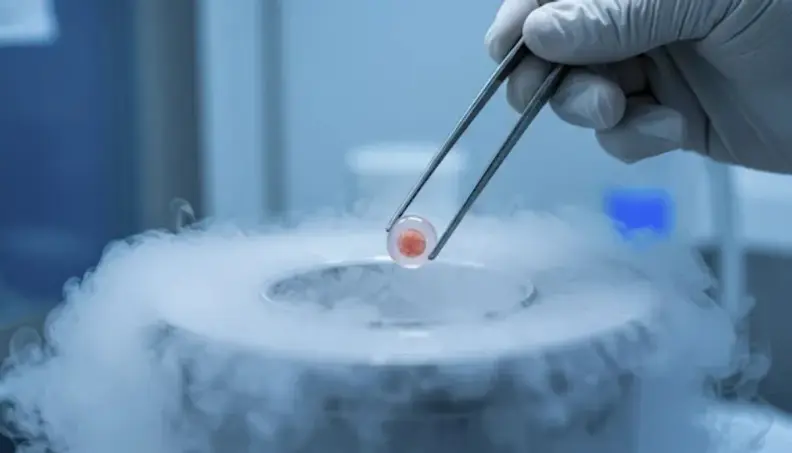
Freezing eggs works by stimulating your ovaries with specific hormones to produce multiple mature eggs, which are then gently retrieved and rapidly flash-frozen using advanced laboratory technology to safely preserve your fertility for the future.
Key Takeaways
- Preserves fertility: Egg freezing collects and stores your eggs safely for future family building.
- Age matters: The procedure is most effective when performed before the age of 35 to ensure optimal egg quality.
- Step-by-step process: The journey involves a medical consultation, hormone stimulation, a minor egg retrieval procedure, and rapid freezing (vitrification).
- Empowering choice: It provides emotional relief and reproductive autonomy for women delaying pregnancy or facing medical treatments.
Choosing the right time to start a family is entirely up to you, and having the right medical guidance makes all the difference.
At our egg freezing specialist clinic in New Delhi, we empower women to make informed reproductive choices without feeling rushed by a biological clock.
What is egg freezing, and why is it done?
Egg freezing treatment, clinically known as oocyte cryopreservation, is a highly advanced method of assisted reproductive technology (ART). It allows us to extract, freeze, and store a woman’s eggs, essentially pausing their biological ageing.
Many women choose this path to delay pregnancy whilst they focus on their career, education, or personal goals. It is a brilliant way to keep your options open until you feel truly ready to start a family.
Additionally, we often recommend this procedure for women facing medical treatments like chemotherapy, which can severely impact fertility.
It is also highly beneficial for patients managing conditions like polycystic ovary syndrome (PCOS) or endometriosis, and for transgender individuals undergoing gender-affirming care.
Who should consider freezing their eggs?
The ideal candidates for egg freezing are women in their late twenties to early thirties. During this window, your ovaries naturally produce the highest quantity of premium, genetically healthy eggs.
We also strongly advise patients with a family history of early menopause to consider fertility preservation early on. Catching a declining ovarian reserve in time can drastically improve your chances of future biological motherhood.
Furthermore, anyone diagnosed with an illness that requires pelvic surgery or toxic medical therapies should consult a specialist immediately. Taking proactive steps before treatment begins can safeguard your family-building dreams.
Recent clinical data indicates that for women under 35, the post-thaw survival rate of flash-frozen eggs exceeds 90%. Furthermore, preserving 15 to 20 mature eggs at this age provides a highly reassuring statistical probability of a future live birth.
Dr Mannan IVF Centre
Experience world-class fertility care with Dr. Mannan Gupta at the Best IVF Centre in Delhi
How does the egg freezing process work?
The clinical journey is carefully structured to ensure your absolute safety and maximum success. It generally spans about two to three weeks and consists of four main phases.
Consultation and Diagnostic Testing
Your journey begins with an initial consultation where we evaluate your overall reproductive health. We perform a transvaginal ultrasound and specific hormone blood tests, such as your AMH (Anti-Müllerian Hormone) levels, to assess your current ovarian reserve.
Ovarian Stimulation
To maximise our success, we need your body to mature multiple eggs in a single cycle. You will self-administer small, daily hormone injections for about 10 to 14 days, whilst we closely monitor your follicle growth through regular ultrasounds.
Egg Retrieval
Once your follicles reach the ideal size, we perform a minimally invasive procedure under light sedation. Using ultrasound guidance, a fine needle is passed through the vaginal wall to gently gently extract the fluid containing your mature eggs.
Vitrification (Freezing)
Immediately after retrieval, our embryologists assess the eggs for maturity. The viable eggs are then flash-frozen using liquid nitrogen in a process called vitrification, which prevents damaging ice crystals from forming inside the cells.
Feature | Egg Freezing | Embryo Freezing |
Definition | Freezing unfertilised eggs for future use. | Freezing fertilised embryos for future use. |
Process | Eggs are retrieved and frozen without fertilisation. | Eggs are fertilised with sperm before freezing. |
Suitable For | Women who do not have a partner or prefer to preserve their eggs. | Couples or individuals with fertilised embryos. |
Storage Duration | Can be stored for years; governed by regulations. | Can also be stored for extended periods. |
Success Rates | Lower as fertilisation happens later. | Higher as embryos are already viable. |
Flexibility | Offers more flexibility for future fertilisation options. | Fertilised, so requires fewer future steps. |
Both options provide a means of preserving fertility and depend on individual circumstances and preferences.
What are the risks and side effects of egg freezing?
Like any medical procedure, egg freezing comes with some potential side effects, though they are generally mild.
During the stimulation phase, you might experience bloating, mood swings, fatigue, and mild breast tenderness due to the elevated hormone levels.
A rare but manageable clinical risk is Ovarian Hyperstimulation Syndrome (OHSS), where the ovaries become swollen and painful.
We closely monitor your hormone levels and adjust your medication dosages daily to effectively prevent this complication.
Following the retrieval, some mild cramping and spotting are entirely normal.
However, please rest assured that modern vitrification techniques are incredibly safe and do not increase the risk of birth defects in future pregnancies.
What should you expect during recovery?
The recovery following an egg retrieval is usually swift and uncomplicated. Most patients only need to rest for 24 to 48 hours before returning to their normal daily routines.
It is very common to feel a sense of fullness or mild abdominal cramping as your ovaries return to their normal size.
Over-the-counter pain relievers and a warm heating pad are usually more than enough to manage this mild discomfort.
We advise you to avoid strenuous exercise, heavy lifting, and sexual intercourse for at least a week after the procedure.
Listening to your body and giving yourself grace during this recovery window is paramount.
How successful is egg freezing in achieving pregnancy?
The scientific advancements in cryopreservation have drastically improved clinical outcomes. Today, over 90% of eggs successfully survive the freezing and thawing process without any structural damage.
Once thawed, the fertilisation rates in the laboratory stand at an encouraging 70% to 80%.
However, the ultimate chance of a live birth is heavily dependent on the age at which you initially froze your eggs.
For instance, women who freeze their eggs before turning 35 and retrieve an adequate number of mature oocytes have excellent prospects for future biological motherhood.
Our laboratory’s rigorous quality control plays a massive role in ensuring these high success rates.
Age Bracket | Fertilisation Rates (%) | Estimated Live Birth Rates (%) |
Under 35 | 70–80 | 50–60 |
35–38 | 65–75 | 35–50 |
38+ | 50–65 | 15–25 |
These statistics highlight the importance of considering egg freezing at an earlier age to maximise the chances of a successful live birth in the future.
However, individual outcomes can vary depending on numerous factors, including health and the number of eggs retrieved
How can you prepare for the egg freezing process?
Your lifestyle choices in the months leading up to your cycle can positively influence your egg quality.
We recommend maintaining a nutrient-rich, balanced diet, staying well-hydrated, and engaging in moderate, stress-relieving exercises.
It is absolutely crucial to stop smoking and drastically limit alcohol and caffeine intake during your preparation phase. These substances are known to negatively impact ovarian response and overall cellular health.
Finally, adhere strictly to the medication schedule provided by your clinical team. Setting reminders for your daily injections and attending all monitoring appointments will keep your cycle perfectly on track.
What are the emotional aspects of egg freezing?
Fertility treatments can sometimes feel like an emotional rollercoaster, and it is completely normal to feel overwhelmed.
The temporary influx of hormones can heighten feelings of anxiety or stress throughout the cycle.
We always encourage our patients to lean on their support systems, whether that means a partner, a close friend, or family members.
Open communication about your fears and expectations can profoundly lighten your emotional load.
If you find the process particularly taxing, please speak to us. We can connect you with specialised fertility counsellors or support groups who offer incredible comfort and coping strategies.
What are the long-term benefits of egg freezing?
The most significant benefit of freezing your eggs is the profound sense of reproductive autonomy it provides.
It effectively hits the pause button on your biological clock, allowing you to build your family strictly on your own terms.
Knowing you have healthy eggs safely stored away removes the intense societal and biological pressure to conceive immediately. It grants you the freedom to prioritise your personal growth, career, or finding the right partner.
Furthermore, long-term cryogenic storage is incredibly stable. Whether you return to use your eggs in three years or ten years, their biological quality remains exactly as it was on the day they were frozen.
Conclusion
Egg freezing is a remarkable, scientifically proven method to protect your reproductive future.
Whether you are preserving your fertility for medical reasons or personal timing, taking proactive steps today can offer immense peace of mind for tomorrow.
At Dr. Mannan IVF Centre, we are dedicated to providing compassionate, ethical, and expert care every step of the way. If you are ready to explore your options, we are here to offer the clarity and confidence you deserve.
Frequently Asked Questions
1. What is the best age to freeze eggs?
The ideal time to freeze your eggs is during your late twenties to early thirties. During this time, your ovarian reserve is robust, and the genetic quality of your eggs is at its peak.
2. How long can frozen eggs be stored?
Eggs are stored in liquid nitrogen at sub-zero temperatures and can be kept indefinitely. Time in cryogenic storage does not degrade the quality or viability of the eggs.
3. Is egg freezing painful?
The daily hormone injections use very fine needles and are generally well-tolerated. The actual egg retrieval is completely painless, as it is performed whilst you are under light intravenous sedation.
4. Can I freeze my eggs if I have PCOS?
Yes, women with PCOS are often excellent candidates for egg freezing. However, because PCOS patients have many follicles, we monitor the stimulation phase extremely closely to prevent Ovarian Hyperstimulation Syndrome (OHSS).
5. Does egg freezing guarantee a future pregnancy?
Whilst freezing your eggs significantly improves your chances of having a biological child later in life, it is not a 100% guarantee. Success depends on various factors, including your age at the time of freezing and how many healthy eggs were successfully stored.
