
Poor Ovarian Response Treatment in New Delhi
Maximize egg quality and quantity with tailored stimulation protocols. Increase IVF success rates even in challenging cases for hopeful pregnancies.
Key Facts
- Low egg response
- IVF challenge
- Fewer eggs
- AMH testing
- AFC scan
For any IVF / Fertility related query, concern or help, just call us
At Dr Mannan IVF Centre in New Delhi, one of the most common concerns I address is, “Will my body produce enough eggs for IVF?”
A diagnosis of Poor Ovarian Response (POR) can be disheartening, often leaving you feeling like your own body is working against you.
I want to reassure you that this diagnosis is not the end of your fertility journey; it is simply a signpost guiding us toward a more specialised and personalised treatment path.
My purpose here is to explain what POR means in clear, simple terms, discuss how we diagnose it, and outline the advanced, evidence-based strategies we use at our Delhi clinic to maximise your chances of success.
We believe in empowering you with knowledge, providing compassionate support, and creating a realistic, hopeful plan together.
What is Poor Ovarian Response?
Poor Ovarian Response is a medical term used when a woman’s ovaries do not respond well to the hormonal medications used in an IVF cycle. Instead of producing an ideal number of eggs (typically 8-15), the ovaries produce only a few mature eggs, or sometimes none at all.
This is different from Diminished Ovarian Reserve (DOR), which refers to a low number of eggs remaining in the ovaries, though the two conditions often go hand-in-hand.
Think of your ovaries as a garden. In an ideal IVF cycle, stimulation medication helps many flower buds bloom at once. With POR, fewer buds bloom despite our best efforts.
Our job as fertility specialists is to find the right “fertiliser” and conditions to encourage as many healthy blooms as possible.
For those navigating this challenge, seeking specialized Poor Ovarian Response Treatment in New Delhi ensures you have access to protocols designed specifically for low ovarian reserve treatment.
What Causes Poor Ovarian Response?
Understanding the cause helps us tailor the treatment. Several factors can contribute to how your ovaries respond.
- Advanced Maternal Age:
Age is the most significant factor. As a woman approaches her late 30s and 40s, the quantity and quality of her eggs naturally decline, making the ovaries less responsive to stimulation. - Genetic Factors:
Certain genetic predispositions can affect ovarian function and reserve from a younger age. - Previous Ovarian Surgery:
Surgeries on the ovaries, such as for removing cysts or endometriosis, can sometimes reduce the amount of healthy ovarian tissue, impacting egg supply. - Medical Treatments:
Past treatments like chemotherapy or radiation for cancer can significantly damage ovarian tissue and diminish its reserve. - Lifestyle and Environmental Factors:
While less direct, factors like smoking, severe endometriosis, or autoimmune conditions can negatively influence ovarian health and response.
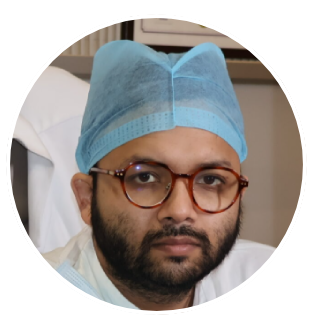
Dr Mannan IVF Centre
Experience world-class fertility care with Dr. Mannan Gupta at the Best IVF Centre in Delhi
How Do We Diagnose Poor Ovarian Response?
A diagnosis of POR is typically made during or after an IVF cycle that yields a low number of eggs.
However, we can often predict the risk of POR before starting treatment. At my IVF clinic in New Delhi, we use a combination of precise diagnostic tools to assess your ovarian reserve testing.
Anti-Müllerian Hormone (AMH) Test
This simple blood test measures the level of AMH, a hormone produced by developing follicles in the ovaries. A low AMH level often indicates a lower egg count and a higher risk of poor response.
Antral Follicle Count (AFC)
Using a transvaginal ultrasound, we count the number of small, resting follicles (antral follicles) visible in your ovaries at the start of your menstrual cycle. A low AFC (typically under 5-7) suggests a lower reserve.
Basal Follicle-Stimulating Hormone (FSH) Test
We may check your FSH level on day 2 or 3 of your cycle. An elevated FSH level indicates that your brain is working harder to stimulate the ovaries, which can be a sign of diminishing reserve.
These tests, combined with your age and medical history, give us a comprehensive picture and help set realistic expectations for your IVF cycle and whether you may need personalised IVF treatment for low ovarian reserve.
Personalised Treatment for Poor Ovarian Response
The core principle for treating POR is customisation. A standard IVF protocol will not work. We need to create a strategy that is unique to you. This is where a tailored IVF for low ovarian reserve approach makes the difference.
Mild and Minimal Stimulation Protocols
Instead of using high doses of medication, which can sometimes be counterproductive in POR, we may use a “less is more” approach.
Mild or minimal stimulation protocols use lower doses of hormones to gently coax a few high-quality eggs to develop. This can reduce costs, side effects, and the emotional strain of a cycle.
For suitable patients, personalised ovarian stimulation for IVF may be considered after reviewing ovarian reserve and previous treatment respons
The Luteal Phase Stimulation or Dual Stimulation (DuoStim)
This innovative approach involves two rounds of egg collection within a single menstrual cycle. After the first retrieval, we immediately begin another round of stimulation to mature a second cohort of follicles.
This strategy can maximise the number of eggs collected over a shorter period, which is invaluable for women with low reserve.
Depending on your individual response, we may discuss DuoStim for poor ovarian response as one of the treatment options.
Adjuvant Therapies
Based on the latest scientific evidence, we may recommend certain supplements or medications in the months leading up to your IVF cycle to potentially improve egg quality improvement.
These can include DHEA and Coenzyme Q10. We will also ensure your testosterone and Vitamin D levels are optimised, as they play a crucial role in follicular development.
The choice of low ovarian reserve IVF treatment depends on your ovarian reserve, age, previous IVF response, and overall fertility history.
Cost of Poor Ovarian Response Treatment in Delhi
Managing POR requires expertise and advanced protocols, and we believe in being transparent about the POR treatment cost in Delhi.
Treatment | Approximate Cost in Delhi |
IVF for Poor Ovarian Response (per cycle) | ₹1,75,000 – ₹2,50,000 |
Why does the cost vary?
The cost depends entirely on the personalised protocol designed for you. A minimal stimulation cycle will be at the lower end.
A more complex approach like DuoStim, which involves two stimulation and retrieval phases, will be at the higher end.
The final cost includes medications, monitoring, lab procedures, and the expertise required to manage these delicate cycles. During your consultation, we will provide a clear and detailed cost estimate.
To get an actual cost estimate for your personalised treatment plan, please book a POR consultation to book a consultation.
If you are comparing poor ovarian response IVF cost in Delhi, remember that the final expense depends on the stimulation protocol, medications, monitoring, egg retrieval, and laboratory procedures involved.
Parenthood Starts with One Brave Conversation
Schedule a consultation with Dr. Mannan Gupta for honest answers and personalized fertility care.
Why Choose Dr. Mannan Gupta’s IVF & Fertility Centre?
Navigating a diagnosis of POR requires a specialist who is not only an expert but also a compassionate partner. Many patients search for the best IVF doctor for low AMH in Delhi — here’s why they choose us.
- Specialised Expertise in POR:
My practice has a dedicated focus on managing patients with low ovarian reserve and providing personalised low AMH IVF treatment in Delhi based on individual ovarian reserve and previous treatment response. - Patient-Centric, Ethical Care:
We will never push you into a treatment that is not right for you. Our philosophy is to provide honest guidance and support your decisions. - State-of-the-Art IVF Lab:
The success of an IVF cycle with few eggs depends heavily on the embryology lab. Our lab is equipped with cutting-edge technology to give every single egg and embryo the best possible chance to develop. - Holistic and Emotional Support: We understand the profound emotional toll of a POR diagnosis. Our team offers dedicated counselling and a supportive environment to help you cope with the stresses of treatment.
Conclusion
A diagnosis of Poor Ovarian Response can feel like a setback, but I urge you to see it as a redirection.
It is a challenge that calls for a higher level of expertise, a more tailored approach, and a deeper partnership between you and your fertility doctor.
With the right strategy and a team that believes in you, achieving pregnancy is still a very real possibility.
Are you ready to explore your options?
Don’t let a diagnosis define your future. Book a consultation with me, Dr Mannan Gupta,IVF Specialist, Obstetrician & Gynaecologist in Delhi and let’s work together to create a personalised plan that maximises your chances of building a family.
Frequently Asked Questions (FAQs)
1. If I have Poor Ovarian Response, does it mean I am going into early menopause?
Not necessarily. POR is related to IVF stimulation response, while menopause is the complete cessation of periods. While women with low reserve may enter menopause earlier, POR itself is not a diagnosis of menopause.
2. Can I improve my egg quality with diet?
A healthy, balanced diet rich in antioxidants (found in fruits, vegetables, and nuts) can support overall cellular health, including egg health. However, diet alone cannot reverse age-related decline or significantly increase your egg count.
3. Is using a donor egg the only option for Poor Ovarian Response?
No. While donor eggs are a wonderful option for some, many women with POR can conceive using their own eggs with specialised IVF protocols like minimal stimulation or DuoStim. We always strive to use your own eggs first, if that is your wish.
4. How many IVF cycles are recommended for someone with POR?
There is no set number. Success with POR is often about persistence. Some patients may succeed on their first specialised cycle, while others may choose to do a few cycles to “bank” embryos, increasing their cumulative chances of success.
5. Does stress affect ovarian response?
Chronic stress can disrupt hormonal balance, which may indirectly affect ovarian function. While it’s not a direct cause of POR, managing stress through mindfulness, yoga, or counselling is an important part of supporting your overall well-being during fertility treatment.
