
IVF Treatment in New Delhi
Create embryos outside the body for higher success in overcoming infertility barriers.Personalized cycles with monitoring for healthy pregnancies on your timeline.
Key Facts
- Assisted reproduction
- Fertilisation outside
- Bypasses natural barriers
- Age dependent success
- Multiple infertility causes
For any IVF / Fertility related query, concern or help, just call us
At Dr Mannan IVF Centre, I understand that deciding to undergo IVF can bring many questions: Is IVF right for you? What tests will you need? How long will the process take? What will it cost?
IVF Treatment in New Delhi involves several carefully planned stages, from fertility assessment and ovarian stimulation to egg retrieval, fertilisation, embryo development and embryo transfer.
I start by understanding your fertility history, previous treatments, age, ovarian reserve, sperm parameters and any underlying condition that may affect conception.
IVF is not the right treatment for every couple, so the treatment plan should be based on your individual medical findings rather than a fixed protocol.
What is In Vitro Fertilisation (IVF)?
In vitro fertilisation, commonly called IVF, is a fertility treatment in which eggs are collected from the ovaries and fertilised with sperm in a laboratory. The resulting embryo is then transferred into the uterus.
In natural conception, fertilisation usually occurs inside the fallopian tube. IVF allows fertilisation to take place outside the body, which can help overcome certain barriers to natural conception.
An IVF cycle generally involves ovarian stimulation, monitoring, egg retrieval, fertilisation, embryo culture and embryo transfer. Depending on your situation, your doctor may recommend conventional IVF or ICSI, where a single sperm is injected directly into an egg.
IVF does not guarantee pregnancy. The number and quality of eggs retrieved, embryo development, age, sperm factors, uterine health and other medical factors can influence the outcome.
If you are considering IVF treatment in Delhi, the first step is a fertility consultation to understand whether IVF or another treatment is appropriate for you.
Who May Need IVF Treatment?
IVF is not automatically required for every couple experiencing infertility. I first assess the likely cause of infertility and consider whether simpler treatment options may be appropriate.
IVF may be considered in situations such as:
- Blocked or severely damaged fallopian tubes: IVF can bypass the fallopian tubes, allowing the egg and sperm to be brought together in the laboratory.
- Male factor infertility: Low sperm count, poor sperm movement or certain other sperm problems may require IVF, sometimes along with ICSI.
- Endometriosis: IVF may be considered when endometriosis affects fertility or when other treatment options have not resulted in pregnancy.
- Unexplained infertility: IVF may be considered when pregnancy has not occurred despite evaluation and appropriate earlier treatment.
- Reduced ovarian reserve or increasing reproductive age: Treatment planning may need to take egg quantity and quality into account.
- Previous unsuccessful fertility treatment: IVF may be considered when treatments such as IUI have not resulted in pregnancy.
- Certain genetic concerns: IVF may be combined with embryo testing in selected cases when there is an appropriate medical indication.
Your age, fertility history, ovarian reserve, sperm parameters, previous treatment and overall reproductive health all matter when deciding whether IVF is appropriate.
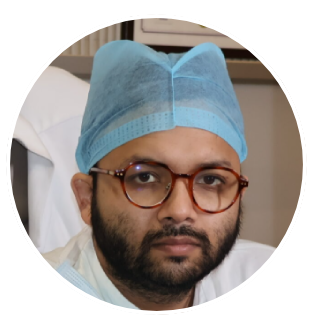
Dr Mannan IVF Centre
Experience world-class fertility care with Dr. Mannan Gupta at the Best IVF Centre in Delhi
The IVF Process: Step-by-Step
Understanding the IVF treatment process step by step can make the treatment easier to prepare for. Your exact protocol may differ depending on your medical history and response to medication.
1. Ovarian Stimulation
Hormonal medicines are used to stimulate the ovaries so that multiple follicles can develop during the cycle. Your response is monitored through ultrasound examinations and, when required, blood tests.
The medication and dosage are adjusted according to your response rather than following the same dose for every patient.
2. Egg Retrieval
When the follicles are ready, egg retrieval is performed using a procedure guided by ultrasound. Medication or anaesthesia is used to keep you comfortable during the procedure.
The number of eggs retrieved varies between patients and depends on factors such as age and ovarian reserve.
3. Fertilisation
The retrieved eggs are taken to the embryology laboratory and combined with sperm. Conventional IVF may be used, while ICSI may be considered when there are specific sperm-related or fertilisation concerns.
4. Embryo Culture
After fertilisation, embryos are monitored as they develop in the laboratory. Some embryos may continue developing to the blastocyst stage.
Not every retrieved egg becomes a usable embryo. This is an important part of understanding why IVF outcomes can differ between patients.
5. Embryo Transfer
When an embryo is selected for transfer, it is placed into the uterus using a thin catheter. The procedure is generally brief and does not usually require anaesthesia.
Depending on your treatment plan, a fresh or frozen embryo transfer may be considered.
6. Pregnancy Testing
After embryo transfer, you will be advised when to take a pregnancy test. A blood test for beta-hCG may be recommended to determine whether implantation has resulted in pregnancy.
The timing of testing should follow your fertility specialist’s instructions rather than relying on an early home pregnancy test.
Success Rates and Realistic Expectations
IVF outcomes vary from one patient to another. Age is an important factor, particularly because egg quantity and quality generally change with age, but it is not the only factor.
Other factors that may influence IVF outcomes include:
- Ovarian reserve and response to stimulation
- Egg quality
- Sperm quality
- Embryo development
- Uterine and endometrial factors
- Cause and duration of infertility
- Previous IVF or fertility treatment
- Certain medical conditions
For this reason, I prefer to discuss your expected outcome after reviewing your fertility assessment rather than quoting one success rate that applies to everyone.
IVF may result in pregnancy in one cycle for some patients, while others may require further treatment. There is no guaranteed number of IVF cycles or guaranteed pregnancy outcome.
Cost of IVF Treatment in New Delhi
The approximate costs associated with IVF treatment are:
Treatment | Approximate Cost in Delhi |
Standard IVF Cycle | ₹1,25,000 – ₹1,75,000 |
IVF with ICSI | ₹1,50,000 – ₹2,00,000 |
Embryo Freezing (Optional) | ₹30,000 – ₹50,000 |
These figures should be treated as approximate, not as a fixed quotation. Treatment costs can vary depending on medication requirements and additional procedures such as ICSI, laser-assisted hatching or PGT when medically indicated.
Your final IVF treatment cost in New Delhi may depend on:
- Diagnostic tests
- Medicines
- Treatment complexity
- Type of fertilisation
- Number of treatment cycles
- Embryo freezing
- Additional procedures
- Individual treatment requirements
For this reason, it is advisable to discuss the expected cost with your fertility specialist before starting treatment.
Parenthood Starts with One Brave Conversation
Schedule a consultation with Dr. Mannan Gupta for honest answers and personalized fertility care.
Why Choose Dr Mannan IVF Centre?
When choosing an IVF centre, it is important to understand the doctor’s expertise, the fertility assessment process and how your treatment plan will be personalised.
At Dr Mannan IVF Centre, patients can expect:
- Specialised fertility care: Dr. Mannan Gupta is an IVF Specialist and Obstetrician-Gynaecologist with a focus on reproductive medicine.
- Individual fertility assessment: Your fertility history, previous treatments and relevant medical factors are considered before planning treatment.
- Personalised treatment planning: IVF, ICSI, IUI or another fertility treatment may be recommended depending on your individual fertility assessment and treatment needs.
- Reproductive medicine expertise: Treatment planning considers factors such as ovarian reserve, sperm parameters, age and previous fertility treatment where relevant.
- Patient-focused consultation: You can discuss your fertility concerns, required investigations, treatment options, expected timeline and potential costs during consultation.
- Convenient New Delhi location: Dr Mannan IVF Centre is located at Elantis – Super Speciality Hospital, Lajpat Nagar IV, New Delhi.
If you are looking for an IVF specialist in New Delhi, a consultation can help you understand whether IVF is appropriate for your situation and what your next treatment steps may be.
Emotional Support and Wellness
IVF can be physically and emotionally demanding. Hormonal medication, repeated appointments, uncertainty about the outcome and the waiting period after embryo transfer can all create stress.
Try to keep your routine manageable during treatment. Eat a balanced diet, follow your prescribed medicines, avoid smoking and discuss alcohol use with your doctor.
Regular sleep and appropriate physical activity can also support general health.
You do not need to manage every concern on your own. If you feel anxious about your treatment, discuss it with your fertility team so that your concerns can be addressed during the process.
Conclusion
IVF can provide a treatment option for couples who are unable to conceive naturally because of certain fertility problems. However, the right treatment depends on your individual diagnosis, age, ovarian reserve, sperm parameters, previous treatment and reproductive health.
At Dr Mannan IVF Centre, the first step is to understand your fertility history and assess whether IVF is appropriate for you.
If you are considering treatment, a consultation with Dr. Mannan Gupta can help you understand the required tests, treatment options, expected timeline and likely costs for your situation.
If you are ready to discuss your fertility concerns, you can book an appointment with Dr. Mannan IVF Centre in New Delhi and discuss your next steps with a fertility specialist.
Frequently Asked Questions (FAQs)
1. Is the egg retrieval procedure painful?
Egg retrieval is performed using medication or anaesthesia to keep you comfortable. You may experience mild cramping, pelvic discomfort or bloating after the procedure, but your recovery depends on your individual response.
2. Does IVF increase the chance of twins or triplets?
The risk of multiple pregnancy can increase when more than one embryo is transferred. Single embryo transfer can reduce this risk, although the appropriate number of embryos to transfer depends on your individual treatment plan.
3. How many days do I need to take off work?
The time needed away from work varies according to your treatment and how you feel. Many routine IVF appointments do not require a full day off, while egg retrieval may require time for the procedure and recovery.
4. What happens to extra embryos?
Suitable embryos remaining after a transfer may be frozen using embryo-freezing techniques. If you later need another embryo transfer, frozen embryos may allow treatment without repeating ovarian stimulation and egg retrieval.
5. Are IVF babies healthy?
Most children born after IVF are healthy. However, some risks can be influenced by factors such as parental age, underlying infertility and other medical conditions.
6. How long does IVF treatment take?
The IVF timeline varies according to the treatment protocol, ovarian response, embryo development and type of embryo transfer planned. Your fertility specialist can provide a more specific timeline after assessment.
7. What tests are needed before IVF?
The tests depend on your medical and fertility history. Your doctor may recommend ovarian reserve assessment, ultrasound, hormone testing, semen analysis and other investigations when clinically appropriate.
8. Is IVF suitable for everyone with infertility?
No. IVF is not automatically the first treatment for every patient with infertility. The appropriate treatment depends on the cause of infertility, age, ovarian reserve, sperm parameters, previous treatment and other reproductive factors.
9. What is the IVF treatment cost in New Delhi?
The approximate standard IVF cycle cost is ₹1,25,000–₹1,75,000, while IVF with ICSI may cost approximately ₹1,50,000–₹2,00,000. Embryo freezing may cost approximately ₹30,000–₹50,000. Actual expenses can vary according to the individual treatment plan.
10. When should I consult an IVF specialist?
You should consider a fertility consultation when pregnancy has not occurred despite appropriately timed attempts, or sooner when there is a known fertility problem. Conditions such as blocked tubes, significant sperm abnormalities or reduced ovarian reserve may require earlier specialist assessment.
